How to Surf: A Step-by-Step Guide for Your First Waves
Content
Surfing transforms how you see the ocean. Instead of a backdrop for beach days, waves become puzzles to solve, energy to harness, and a medium for one of the most exhilarating feelings available on Earth. But between watching professionals carve effortless lines and actually standing on your own board lies a learning curve that trips up most beginners.
This guide walks you through everything from selecting your first board to catching waves independently within your first month. You'll learn the physical techniques that matter, the safety knowledge that keeps you out of trouble, and the common traps that make people quit before they experience their first real ride.
What You Need Before Hitting the Water
Walking into a surf shop without preparation means you'll likely leave with the wrong equipment. Sales staff often push what they need to move, not what suits a true beginner. Your first purchases set the tone for your entire learning experience.
Choosing Your First Surfboard
Forget the sleek shortboards you see in magazines. Those six-foot performance boards are designed for surfers who've spent years developing balance, timing, and wave knowledge. As a beginner, you need maximum stability and wave-catching ability.
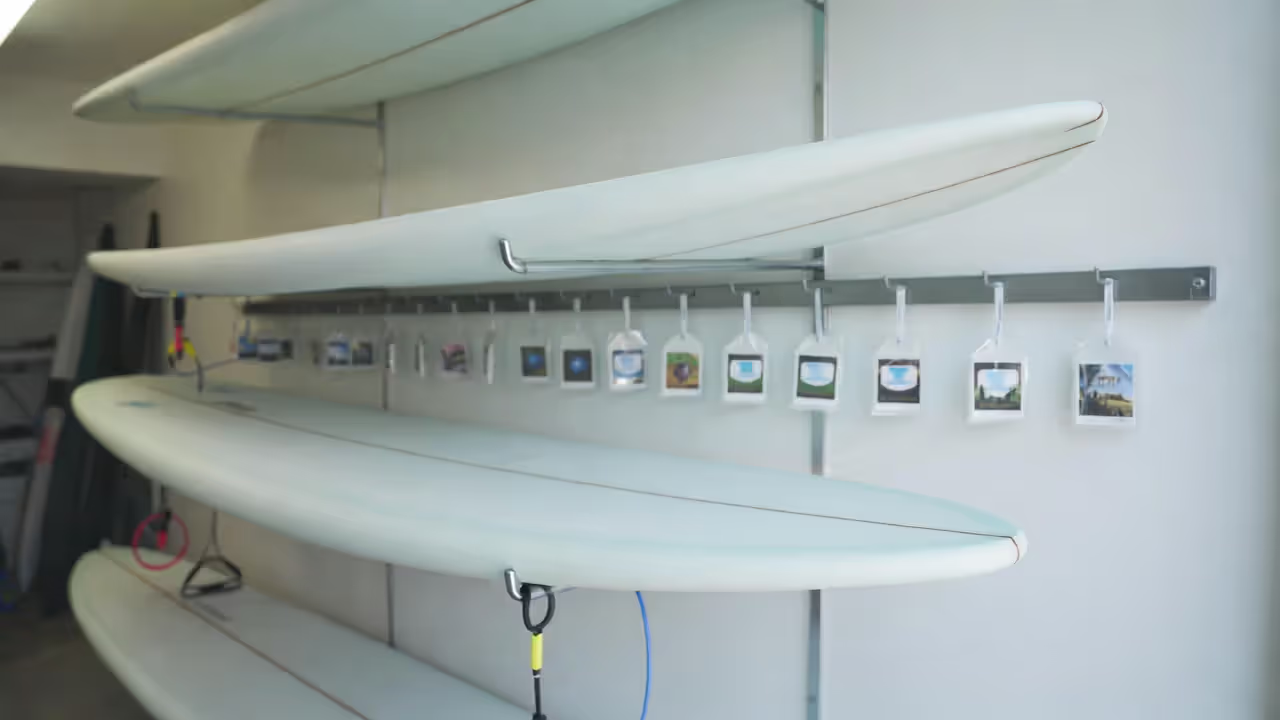
The ideal first board measures between 8 and 9 feet long with high volume—typically 70 to 90 liters depending on your weight. More foam means more buoyancy, which translates to easier paddling and a more stable platform when you attempt to stand. A wider board (at least 22 inches across) forgives the balance mistakes you'll inevitably make.
Soft-top foam boards dominate beginner surfing for good reason. The foam deck cushions your falls, and the flexible construction makes collisions with your own board less dangerous. You'll hit yourself with your board more times than you'd expect during your first sessions.
| Board Type | Length | Volume | Stability | Price Range | Best For |
| Soft-top foam | 8-9 ft | 70-90 L | Excellent | $200-$400 | Complete beginners, first 3-6 months |
| Longboard (epoxy/fiberglass) | 8.5-10 ft | 75-95 L | Very good | $400-$900 | Beginners ready for traditional boards |
| Funboard | 7-8 ft | 55-75 L | Good | $350-$700 | Transitioning from longboard after 6+ months |
Author: Logan Merrick;
Source: 2templatedesign.site
Essential Gear Checklist for New Surfers
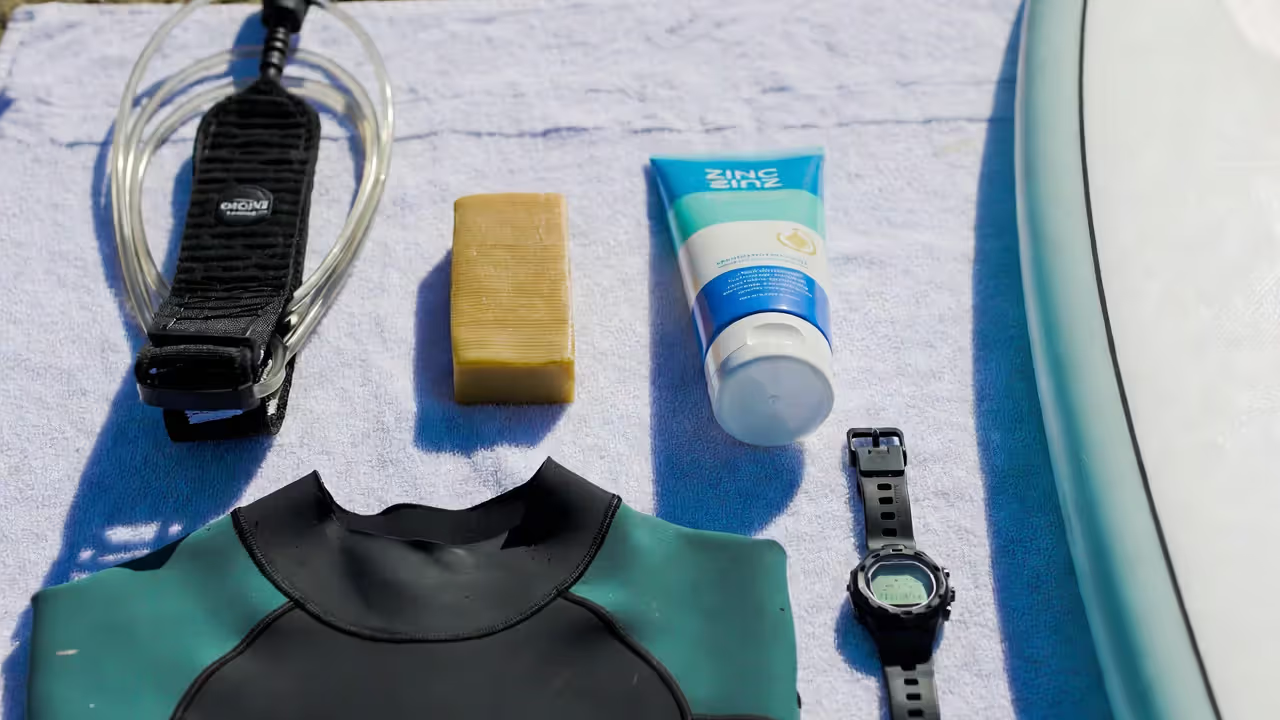
Beyond the board itself, you need surprisingly little to start. A leash connects your ankle to the board—without one, you'll spend half your session swimming after a runaway surfboard. Match leash length to board length: 8-foot board, 8-foot leash.
Water temperature determines whether you need a wetsuit. Below 65°F, a 3/2mm full suit (3mm on the torso, 2mm on the limbs) keeps you comfortable. Between 65-75°F, a spring suit or wetsuit top works. Above 75°F, board shorts or a swimsuit suffice.
Wax creates traction on your board's deck. Different wax formulas match different water temperatures—cold water wax in warm conditions melts into a slippery mess. Apply a base coat first, then a top coat in small circular motions until you've built up a bumpy texture.
Most beginners overlook sunscreen designed for water sports. Regular sunscreen washes off within 20 minutes of paddling. Zinc-based formulas stick to your face and shoulders through hours of exposure. The ocean reflects UV rays upward, burning areas you wouldn't normally protect.
Author: Logan Merrick;
Source: 2templatedesign.site
Understanding Ocean Conditions and Safety
The ocean operates by rules that don't care about your plans. Learning to read water movement and identify hazards separates surfers who progress safely from those who get rescued or injured.
Reading Waves and Identifying Beginner-Friendly Breaks
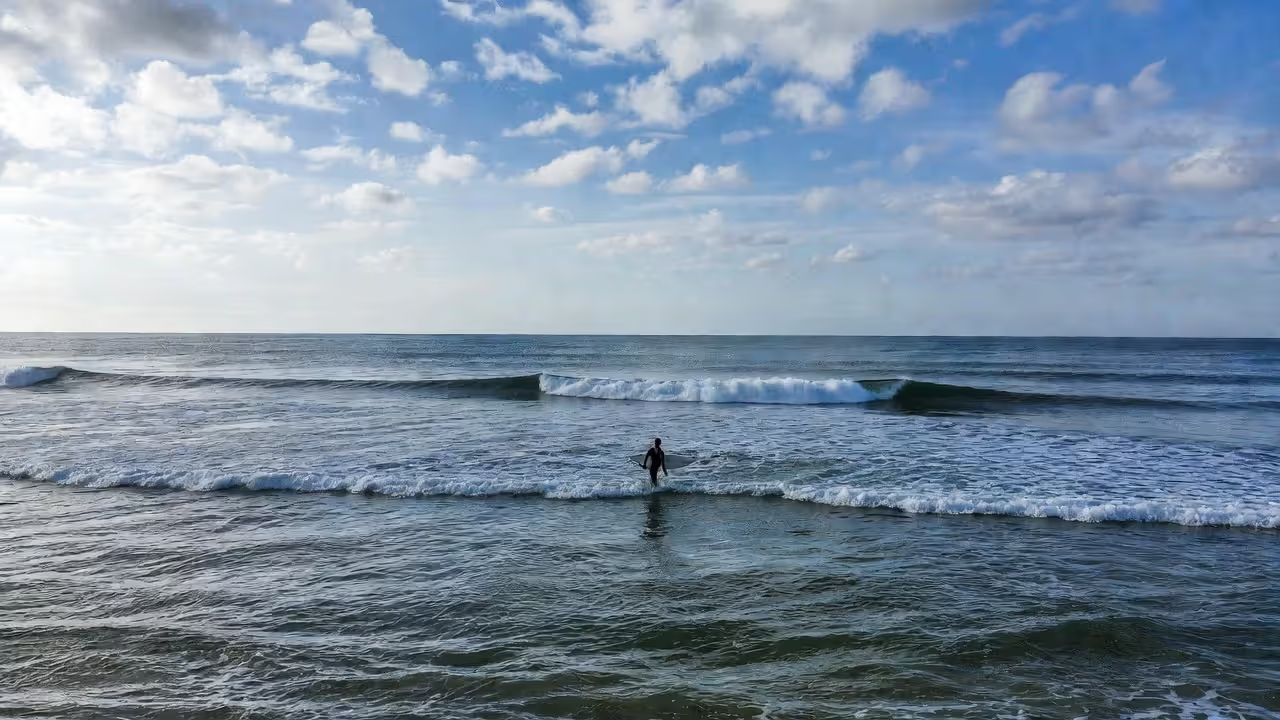
Not all waves suit learning. You want small (2-3 feet), slow-moving waves that break gently rather than dumping their energy all at once. Beach breaks—where waves break over a sandy bottom—offer the safest environment because wipeouts don't involve rocks or reef.
Watch the water for at least ten minutes before paddling out. Waves arrive in sets, typically 3-5 waves followed by a lull. This pattern helps you time your paddle out during the calm period between sets. Count the seconds between waves. Longer intervals (12+ seconds) mean more powerful waves with more energy—too much for your first sessions.
Look for white water, the foam that remains after a wave breaks. Beginners should practice in this zone before attempting to catch unbroken green waves. White water pushes you toward shore with less speed and power, letting you focus purely on standing up without worrying about wave selection or positioning.
Avoid days when waves exceed 4 feet or when strong onshore winds (blowing from ocean to land) chop the surface into messy, unpredictable conditions. Early mornings typically offer the cleanest conditions before afternoon winds arrive.
Author: Logan Merrick;
Source: 2templatedesign.site
Rip Currents and Beach Hazards Every Beginner Should Know
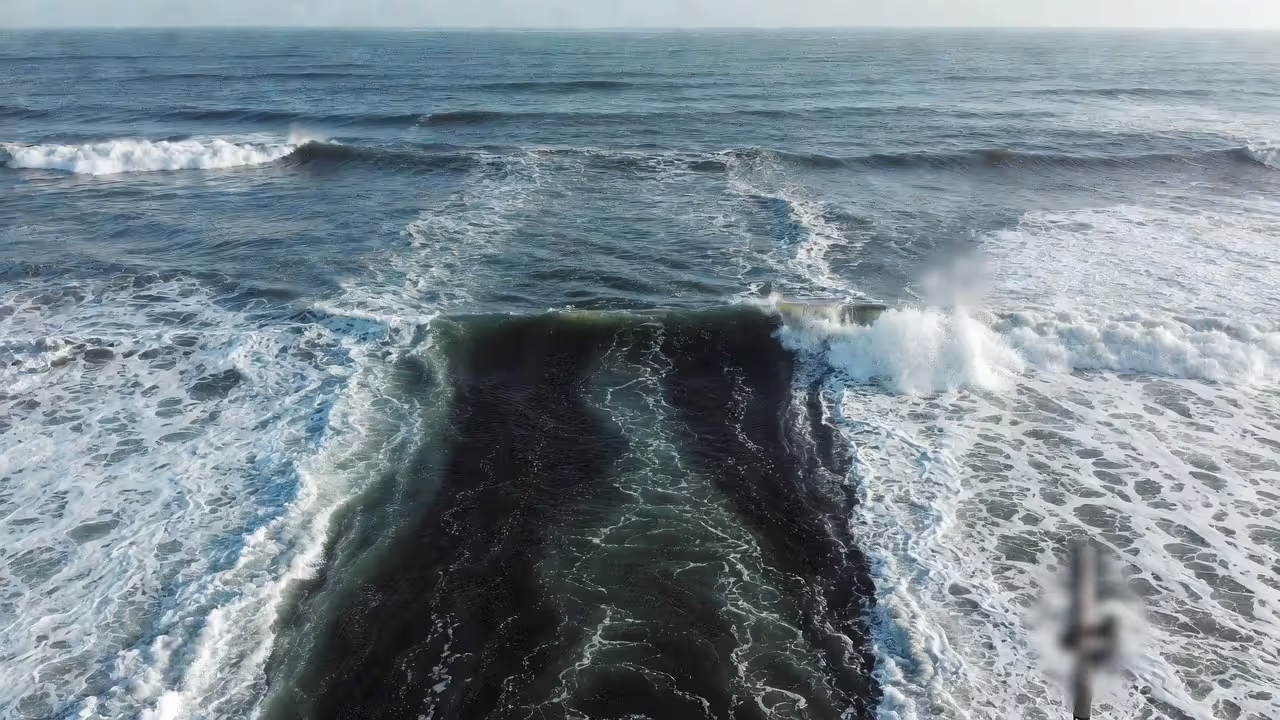
Rip currents kill more beachgoers than any other hazard. These channels of water flow from shore back out to sea, often reaching speeds of 5 mph—faster than Olympic swimmers. You can't fight them by paddling directly toward shore.
Identify rips by looking for gaps in the wave pattern where fewer waves break, darker water (indicating deeper channels), or foam and debris moving steadily seaward. If caught in a rip, paddle parallel to the beach until you escape the current's pull, then angle back toward shore.
Submerged rocks, piers, and other surfers create collision hazards. Always surface with your hands protecting your head—your board can pop up underneath you. When falling, fall flat rather than diving deep; shallow water hides closer than it appears.
Check local surf reports for warnings about marine life. Jellyfish, stingrays, and sea urchins pose more realistic threats than sharks. Shuffle your feet when walking in shallow water to avoid stepping directly on a stingray buried in sand.
Author: Logan Merrick;
Source: 2templatedesign.site
Mastering the Pop-Up: How to Stand Up on a Surfboard
The pop-up—transitioning from lying prone to standing—happens in one explosive motion lasting barely a second. Most beginners break this movement into multiple steps, which guarantees failure once you're on an actual wave.
The Beach Practice Drill
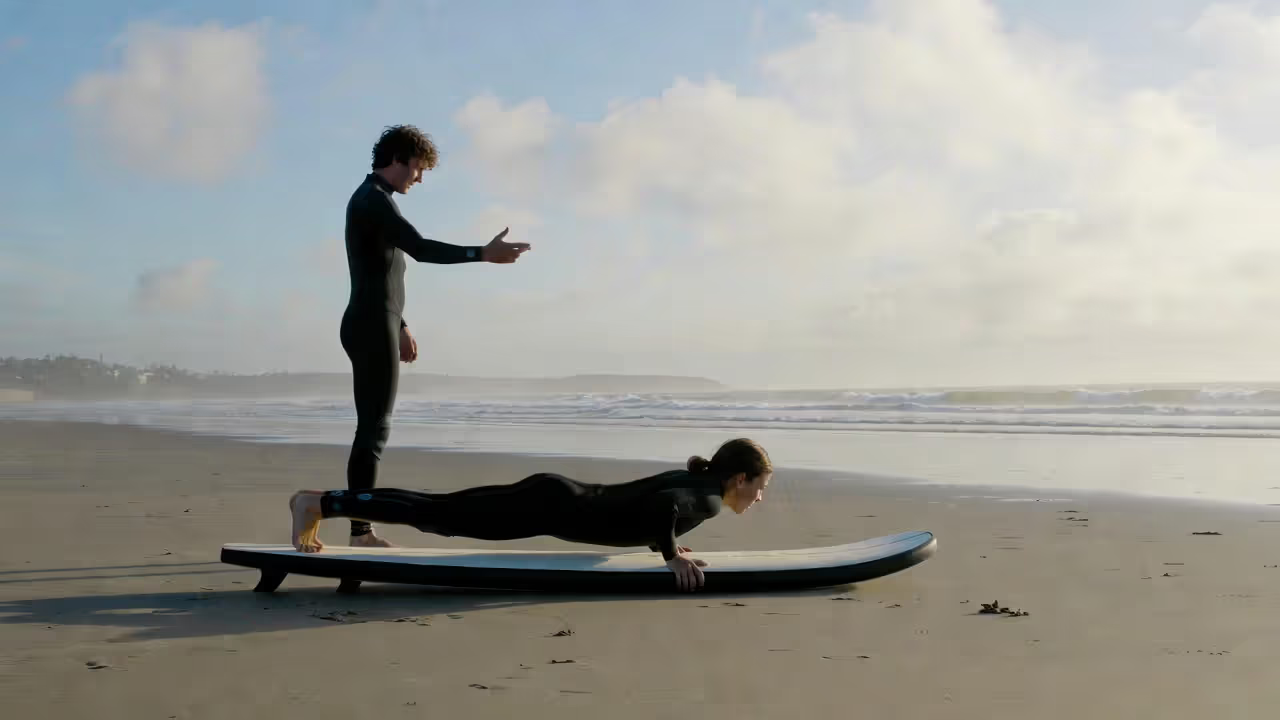
Before touching the water, practice 50 pop-ups on the beach. Draw a surfboard outline in the sand or use your actual board.
Start lying flat, hands positioned beneath your shoulders as if at the top of a push-up. In one motion, press your upper body up while bringing your back foot forward and planting it between your hands. Your front foot follows immediately, landing near the board's center. You should land in a low crouch, knees bent, arms out for balance.
Most people get the foot positioning wrong. Your feet should be perpendicular to the board's length, roughly shoulder-width apart. Front foot points toward the nose, positioned over the board's center point. Back foot angles slightly forward, placed over the fins.
Practice until the motion becomes automatic. When you're on a wave, you won't have time to think through each step. Muscle memory takes over—but only if you've built it through repetition.
Author: Logan Merrick;
Source: 2templatedesign.site
Common Pop-Up Mistakes That Keep Beginners From Standing
Putting your knees down first seems intuitive but kills your momentum. The wave moves faster than you can transition from knees to feet. By the time you stand, the wave has passed beneath you.
Grabbing the board's rails (edges) during the pop-up throws off your balance and slows the movement. Your hands should only touch the deck, positioned flat beneath your shoulders.
Looking down at your feet instead of forward toward the beach disrupts balance. Your body follows your gaze. Look where you want to go, not at the board beneath you.
Standing with feet parallel to the board's length, as if on a skateboard, provides no stability in the forward-backward direction. Waves push you forward; you need your stance oriented to control that motion.
The pop-up is where 90% of beginners fail, not because it's physically difficult, but because they're thinking instead of doing. You can't think your way onto a wave—your body has to know the motion so well that it happens before your brain catches up.
— Gerry Lopez, Pipeline Master and surf legend
Your First Hour in the Water: Paddling and Wave Selection
Paddling looks simple until you try it. Efficient paddling technique determines how many waves you catch, how quickly you improve, and whether you'll have energy left after 30 minutes.
Lie centered on your board with your body positioned so the nose floats 2-3 inches above water. Too far forward and the nose dives underwater. Too far back and you can't paddle efficiently.
Cup your hands slightly and pull through the water alongside the board's rails, not underneath the board. Reach forward and pull all the way to your hip in a long, smooth stroke. Alternate arms in a steady rhythm rather than frantic splashing.
When a wave approaches, increase your paddle speed. You need to match the wave's velocity for it to carry you. Three or four powerful strokes as the wave reaches you make the difference between catching it and watching it pass underneath.
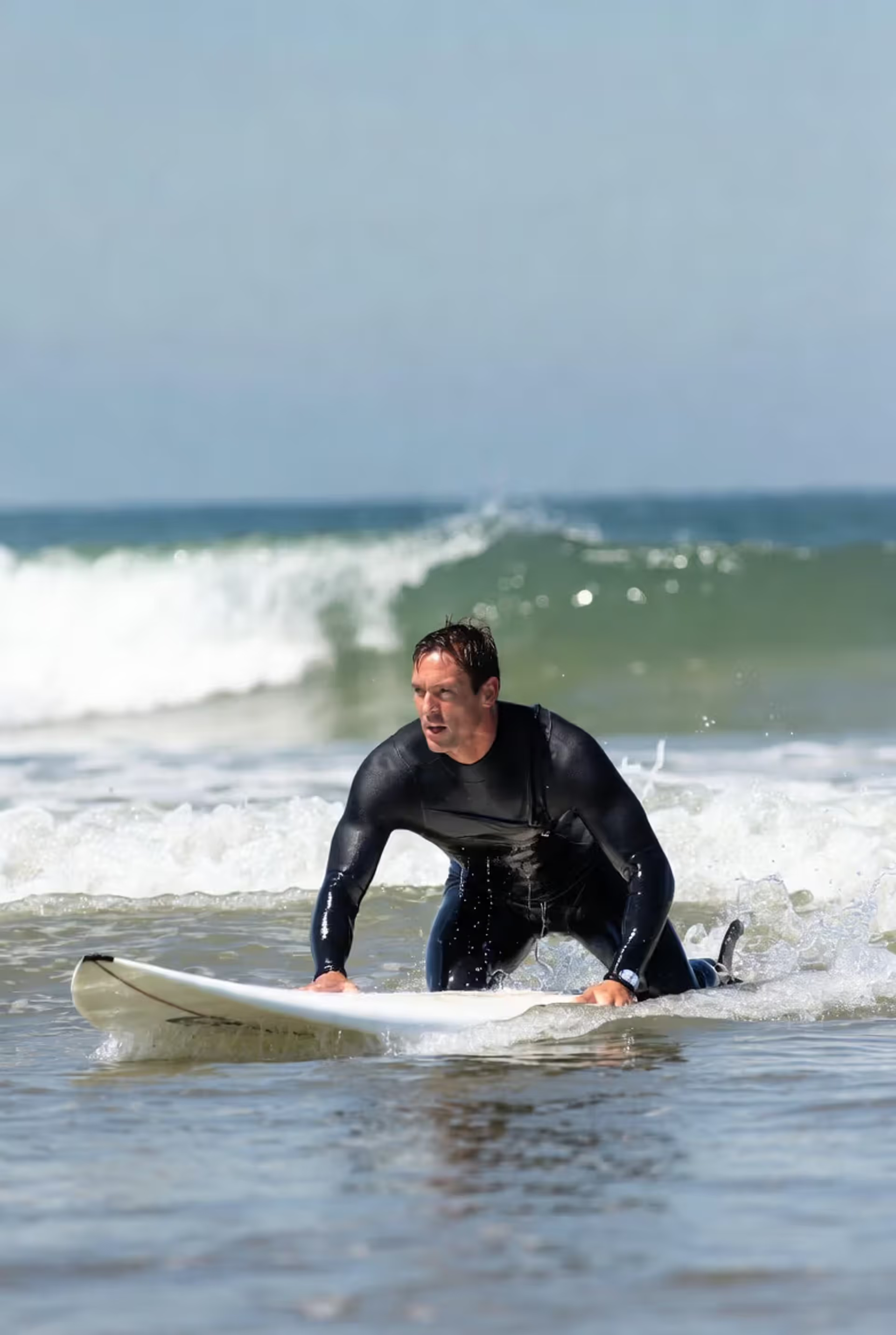
Start in the white water zone where waves have already broken. Position yourself waist-to-chest deep, facing the beach. When white water approaches, turn your board toward shore, lie flat, and paddle hard. As the foam reaches you, feel the board accelerate. That's when you pop up.
The turtle roll helps you get past breaking waves when paddling out. As a wave approaches, grip the rails, roll yourself and the board upside down underwater, and let the wave pass over you. Roll back upright and continue paddling. This technique works better with thinner boards; beginners on high-volume boards often need to simply hold tight and let the white water push them backward, then paddle forward again.
Wave selection matters more than most beginners realize. Don't paddle for every wave. Watch for waves that match the ones you've successfully caught. Too small and they won't carry you. Too large and you'll get worked. Consistency beats ambition during your first sessions.
Position yourself where waves just begin to break, not where they've already exploded into white water. This "impact zone" is where you'll eventually learn to catch green waves, but for now, stay slightly inside where the white water has formed but still has pushing power.
Five Mistakes Every Beginner Surfer Makes (And How to Avoid Them)
Wrong Board Choice
Renting or buying a shortboard because it looks cool guarantees frustration. Pride doesn't help you stand up. Swallow your ego and ride the biggest, most stable board you can find. You'll progress faster and actually enjoy your first sessions instead of flailing in the water.
Skipping the Warm-Up
Paddling engages shoulders, back, and core muscles in ways most exercises don't. Going from zero to full-intensity paddling invites shoulder injuries and exhaustion. Spend five minutes doing arm circles, torso twists, and light stretching before entering the water.
Poor Positioning
Beginners either sit too far inside (where waves have already broken completely) or too far outside (where waves haven't broken yet). The sweet spot is where you can catch white water that still has push. This zone is typically 20-30 feet from where waves initially break. Watch where other beginners successfully catch waves and position yourself nearby.
Standing Too Early
Popping up before the wave has actually caught your board means you stand up just as the wave passes underneath you. Wait until you feel definite acceleration and forward momentum. The board should be planing on the wave's face before you attempt to stand. This timing comes from experience—expect to blow it repeatedly at first.
Giving Up Too Soon
Most people quit after two or three sessions because they haven't stood up successfully. Realistic expectations prevent this. You might catch a few white water waves on day one, but actually riding a wave for more than three seconds usually takes 4-6 sessions. Standing up consistently takes most people 8-12 sessions. Progress isn't linear—you'll have breakthrough sessions followed by frustrating ones where nothing works.
From First Wave to Confident Rider: Your 30-Day Practice Plan
Structured progression beats random practice. This timeline assumes three sessions per week, each lasting 60-90 minutes. Adjust based on your schedule, but maintain consistency—three short sessions beat one marathon session.
| Week | Focus Areas | Time Commitment | Milestone Goals |
| Week 1 | Beach pop-up drills (50 reps/day), white water wave catching, paddling endurance | 3 sessions, 60 min each | Catch 5+ white water waves per session, attempt pop-up on moving water |
| Week 2 | Timed pop-ups (under 2 seconds), standing on white water, basic balance | 3 sessions, 75 min each | Stand up successfully on 3+ waves per session, ride for 3-5 seconds |
| Week 3 | Angling across the wave face, turtle rolls, reading wave patterns | 3 sessions, 90 min each | Ride waves all the way to shore, begin steering with weight shifts |
| Week 4 | Catching small green waves, bottom turns, consistent pop-ups | 3 sessions, 90 min each | Catch unbroken waves before they reach you, ride 10+ seconds consistently |
Week one focuses purely on fundamentals. Don't worry about style or technique beyond the basic pop-up. Your goal is to feel comfortable in the ocean environment and build paddling endurance. Your shoulders will ache—this is normal.
Week two introduces actual wave riding. You should stand up on at least a few waves per session. If you're not standing by the end of week two, you're likely making one of the pop-up mistakes covered earlier. Film yourself or ask someone to watch and identify the problem.
Week three transitions from pure beginner to developing surfer. You'll start angling across the wave face instead of riding straight toward the beach. This opens up longer rides and introduces the concept of working with the wave's shape.
Week four pushes you toward catching green waves—unbroken waves that haven't reached shore yet. This requires better timing, positioning, and paddling power. Don't rush this progression. Solid white water skills make green wave surfing much easier.
After 30 days of consistent practice, you should feel comfortable paddling out, reading basic wave patterns, and catching waves independently. You're not an intermediate surfer yet—that takes months or years—but you're no longer a complete beginner either.
The next phase involves refining your bottom turn (the turn at the wave's base that sets up everything else), developing cutbacks, and learning to generate speed through weight shifts rather than just coasting. But those skills build on the foundation these first 30 days establish.
FAQ
Learning to surf requires patience with yourself and respect for the ocean's power. Your first sessions won't match the images you've seen in videos—you'll spend more time falling than riding, and your body will discover muscles you didn't know existed.
But somewhere around your fifth or tenth session, you'll catch a wave that carries you all the way to shore. For those few seconds, everything clicks. The board glides beneath your feet, the wave pushes you forward, and you understand why people structure their entire lives around this feeling.
Start with the right equipment, practice your pop-up until it's automatic, and commit to consistent sessions over your first month. Focus on fundamentals rather than style. Every surfer, regardless of current skill level, started exactly where you are now—unable to stand, unsure of positioning, and intimidated by the ocean's size.
The difference between people who become surfers and people who tried surfing once is simply persistence through the awkward learning phase. Give yourself 10-12 solid sessions before deciding whether surfing is for you. That's enough time to experience actual wave riding, not just the struggle to stand up.
The ocean will be there tomorrow, next week, and next year. Your progression isn't a race against others—it's a personal journey toward understanding a completely different environment and way of moving through it.