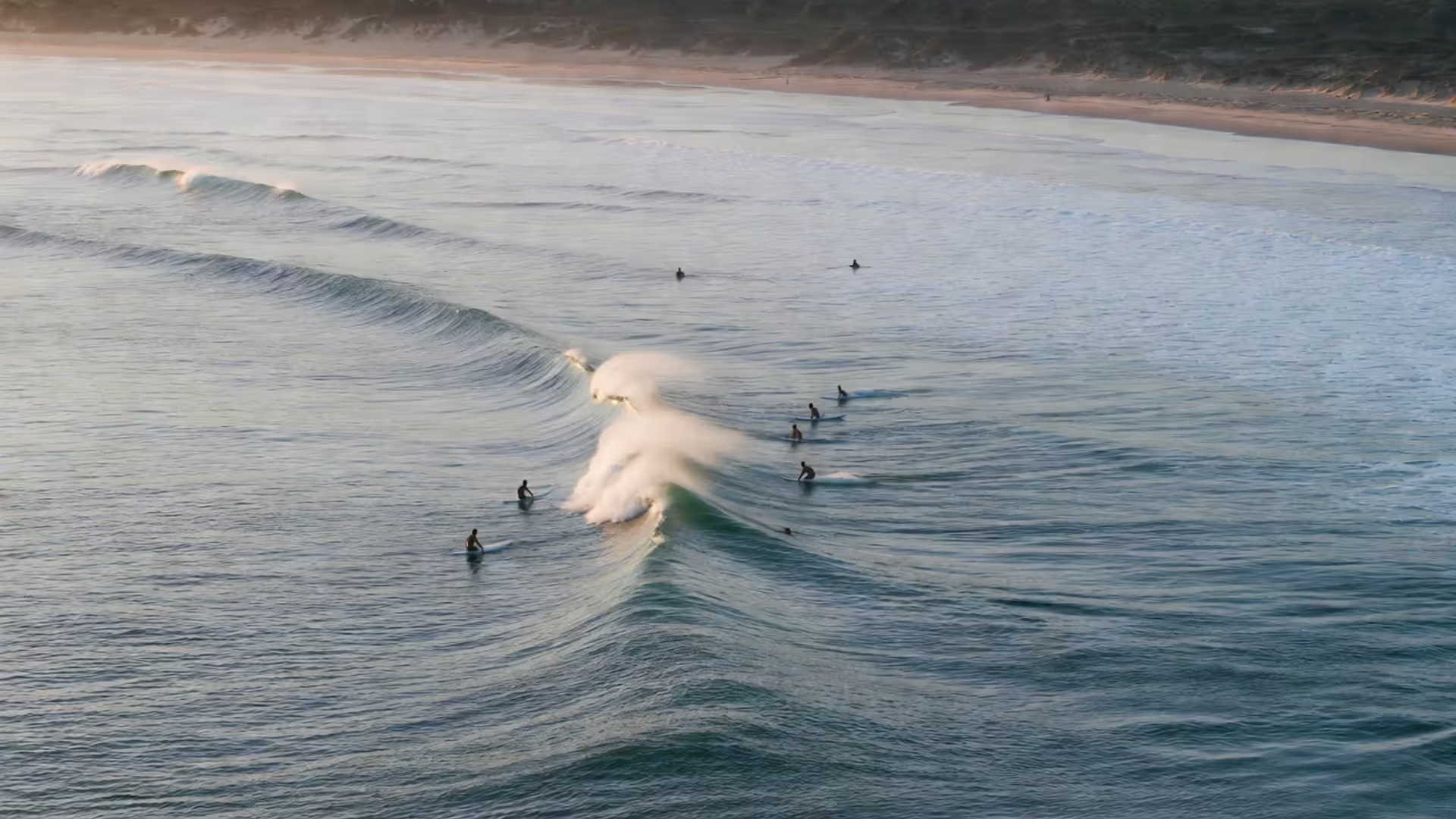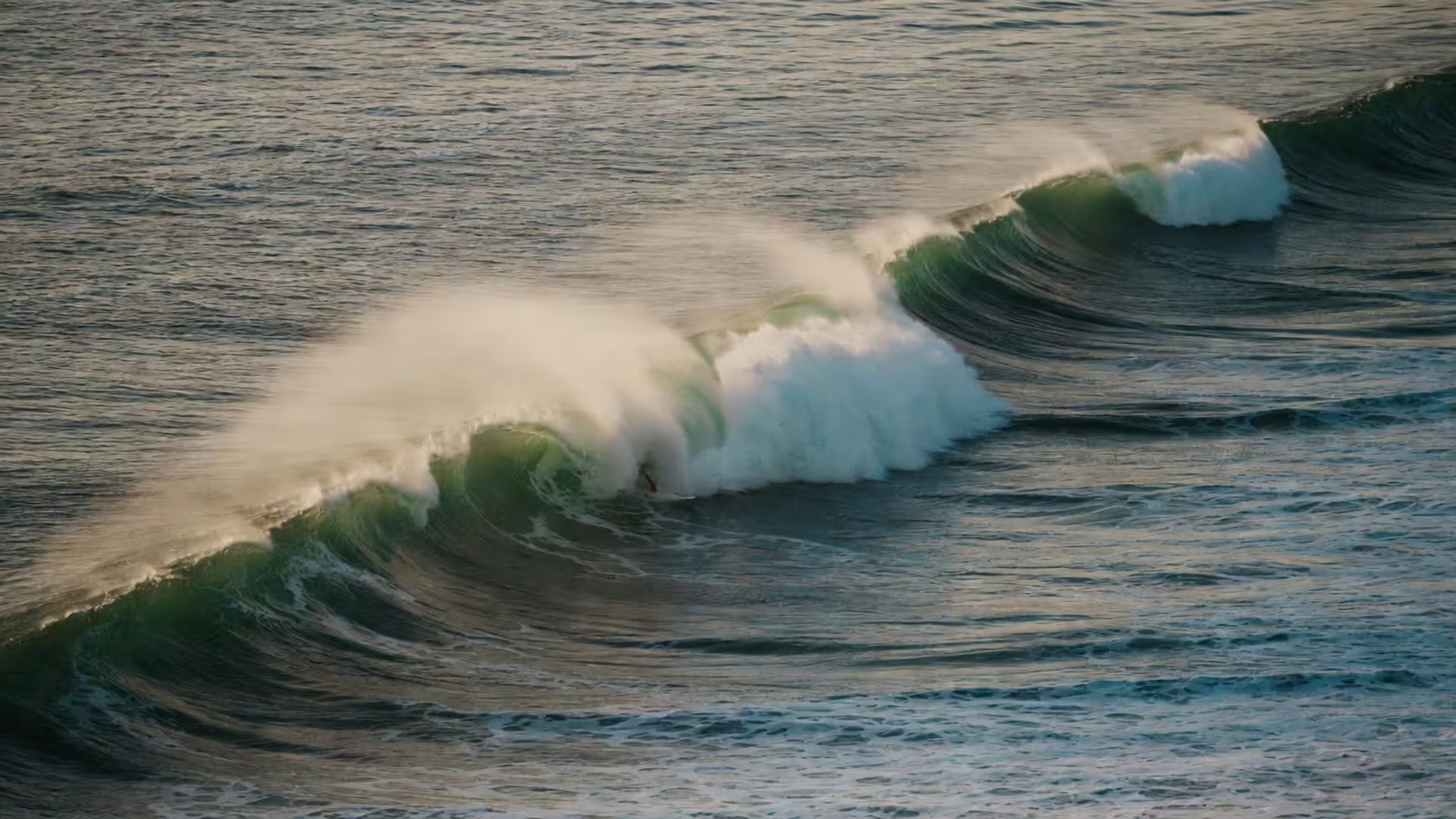
The pocket is where the wave’s power lives
Surfing: The Complete Guide to Riding Waves as Sport and Lifestyle
Content
What Is Surfing and Why Does It Captivate Millions?
Picture yourself standing on a piece of foam and fiberglass, racing along a moving wall of water that originated from a storm hundreds of miles away. That's surfing—using specialized boards to ride ocean waves, channeling raw hydrological power into forward momentum. You paddle into position, time your takeoff perfectly, pop to your feet, and balance while this liquid energy carries you toward shore.
Around 23 million people chase waves regularly across the globe. In the US, roughly 3.5 million paddlers hit the water with some consistency. But numbers don't capture the full picture.
Ask surfers why they do it, and you'll get wildly different answers. Some describe it as moving meditation—sitting in the lineup watching set waves roll in creates a headspace impossible to find anywhere else. Others live for the adrenaline spike when you drop down a steep face. Then there's the environmental connection: you're playing in an ecosystem, reading its moods, becoming part of its rhythms rather than dominating it.
The sport welcomes everyone from weekend warriors catching three sessions per month to professional athletes who've structured entire careers around competition. A retiree on a longboard at a mellow point break experiences genuine stoke. So does a 20-year-old throwing aerial maneuvers at a beach break. Neither approach beats the other.
From Ancient Polynesia to Modern Beaches: How Surfing Evolved
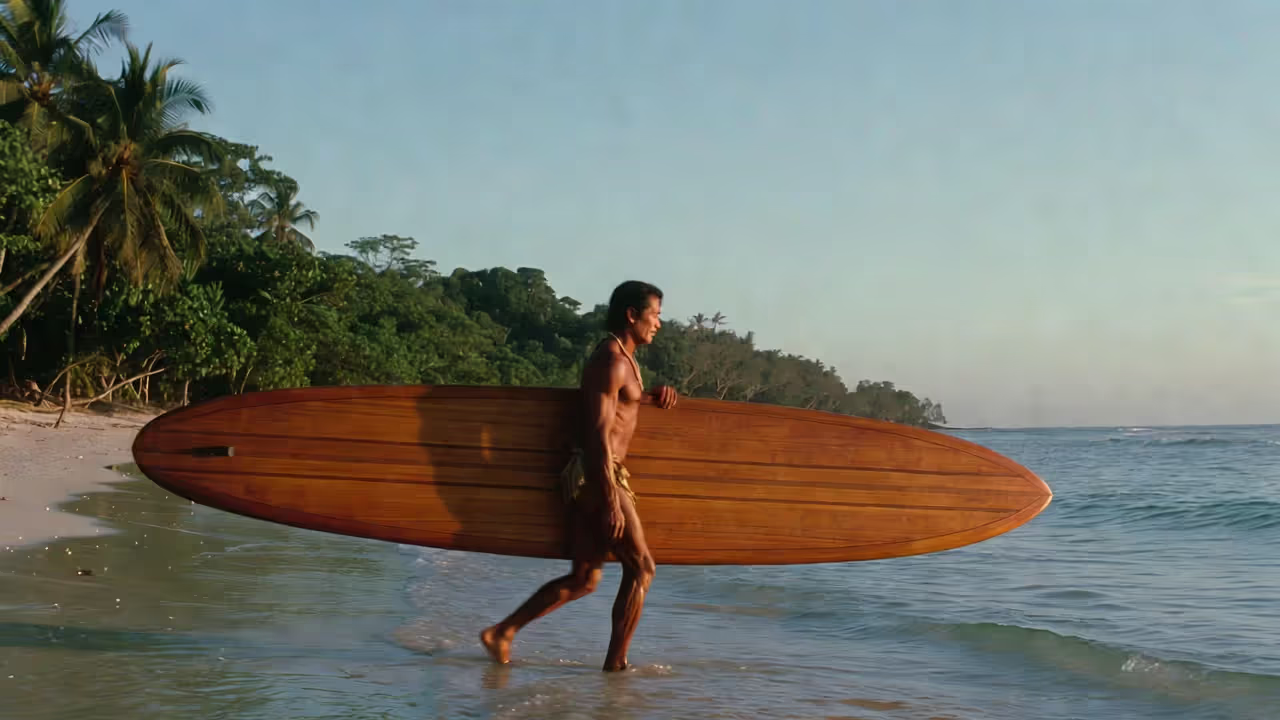
Polynesians were riding waves over a thousand years before anyone thought to call it "surfing." Hawaiian culture developed the most sophisticated wave-riding traditions, calling the practice he'e nalu (literally "wave sliding"). This wasn't casual recreation—chiefs proved their leadership through superior wave-riding skills, special koa or wiliwili trees were selected through religious ceremonies before being shaped into boards, and high-stakes competitions sometimes resolved territorial disputes.
Christian missionaries arrived in the 1820s and nearly killed the whole thing. They viewed wave riding as wasteful and morally questionable, part of a broader campaign to suppress indigenous traditions. By the late 1800s, the practice had withered to almost nothing. Only a handful of Hawaiians kept the knowledge alive, mostly practicing away from missionary oversight.
Enter the early 1900s. A group of Waikiki beachboys—native Hawaiians who earned money teaching tourists to paddle outriggers and ride waves—began reviving the tradition. Duke Kahanamoku stood out among them. Already an Olympic swimming champion, Duke traveled internationally for competitions between 1912 and 1920. During these trips to California, Australia, and Europe, he brought surfboards and demonstrated wave riding to crowds who'd never imagined such a thing existed. He personally planted the seeds in places that would eventually become surfing hotspots.
California's scene emerged slowly through the 1930s and 1940s around breaks like San Onofre and Malibu. Post-WWII economic expansion helped—people had money and leisure time. Manufacturing advances mattered even more. Heavy solid-wood boards gave way to lighter hollow designs, then foam-and-fiberglass construction revolutionized everything. Suddenly boards weighed 25 pounds instead of 70. By the 1960s, surfing exploded into American youth culture through Beach Boys songs, movies like Gidget and The Endless Summer, and a growing counterculture movement that rejected conventional career paths.
Australia built its own surf identity during these same decades. Sydney, Gold Coast, and Margaret River each developed distinct regional approaches. Australian surfers would eventually dominate professional competitions and push equipment design forward through constant experimentation.
Author: Brandon Hale;
Source: 2templatedesign.site
Key Milestones That Shaped Competitive Surfing
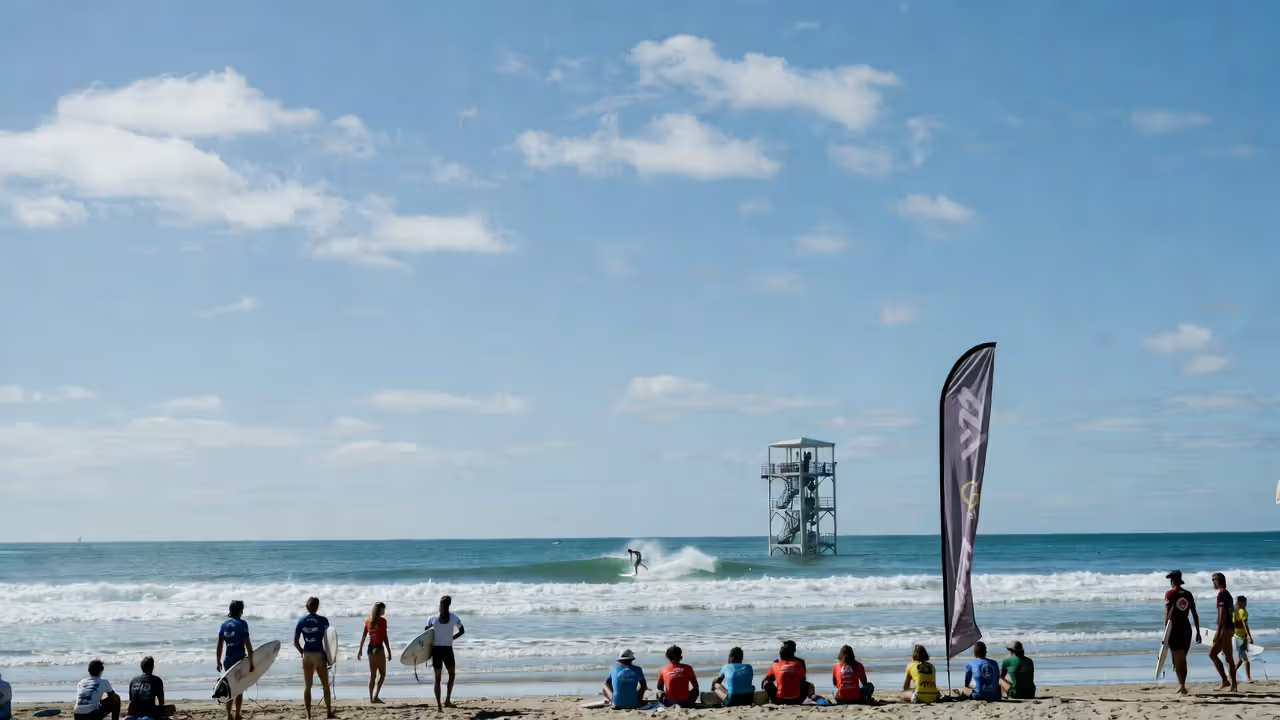
Ancient Hawaiians held competitions, but modern organized contests began in the 1960s. The first World Surfing Championships ran in 1964 at Manly Beach, Australia, establishing protocols for international events. The 1970s brought prize money into the equation, transforming elite surfers from countercultural rebels into professional athletes earning actual income.
In 1976, the International Professional Surfers tour launched, later becoming the Association of Surfing Professionals in 1983. That organization evolved into today's World Surf League (2013 rebranding), which governs elite competitive surfing. The WSL Championship Tour showcases top-ranked athletes at the planet's best waves—Pipeline in Hawaii, Teahupo'o in Tahiti, Jeffreys Bay in South Africa.
Surfing's 2020 Olympic debut (delayed to 2021) brought the sport onto the world's biggest athletic platform. The Olympic format differs from traditional contests, sometimes using artificial wave pools alongside ocean venues. Purists debate whether competition captures surfing's essence, but Olympic inclusion has undeniably pumped funding into athlete development programs and increased mainstream visibility.
Author: Brandon Hale;
Source: 2templatedesign.site
How Wave Riding Actually Works: Physics and Technique Breakdown
Wind blowing across open ocean transfers energy into the water, creating ripples that organize into swells traveling thousands of miles. When these swells encounter shallow coastal zones, their lower portion drags against the seafloor. This friction slows the wave, forcing it to steepen and compress vertically until it breaks. That moment just before collapse—steep face, water still organized—creates the rideable surface.
Surfers generate speed through gravity, plain and simple. Position yourself on the steepest section of the wave face, and you're essentially sliding downhill. Same principle as skateboarding a ramp, except your ramp constantly moves forward. The trick is adjusting your position to stay in the "pocket"—that powerful zone right ahead of the whitewater where the wave has maximum energy.
Standing on your board means balancing on an unstable platform that's moving through an equally unstable medium. The board floats due to its volume and buoyancy. Rails (edges) and fins provide directional control. Shift your weight, angle the board's rails into the wave face, and you carve turns. Advanced surfers "pump" for extra speed—a rhythmic compression-extension movement that works with the wave's energy flow rather than fighting it.
Wave quality depends on more than height. A three-foot wave with a 15-second period (meaning it traveled far from its source storm) packs way more energy than a three-foot wave with a 6-second period (choppy local wind swell). Experienced surfers read swell period, direction, and tide charts before deciding whether conditions warrant paddling out.
The best surfer out there is the one having the most fun.
— Phil Edwards
The Five Core Maneuvers Every Surfer Learns
Every advanced move builds from the bottom turn—that carved arc at the wave's base redirecting your momentum back up the face. Skip this fundamental, and you can't progress. Yet beginners often ignore it, trying to turn at the top before they've properly engaged the wave's power.
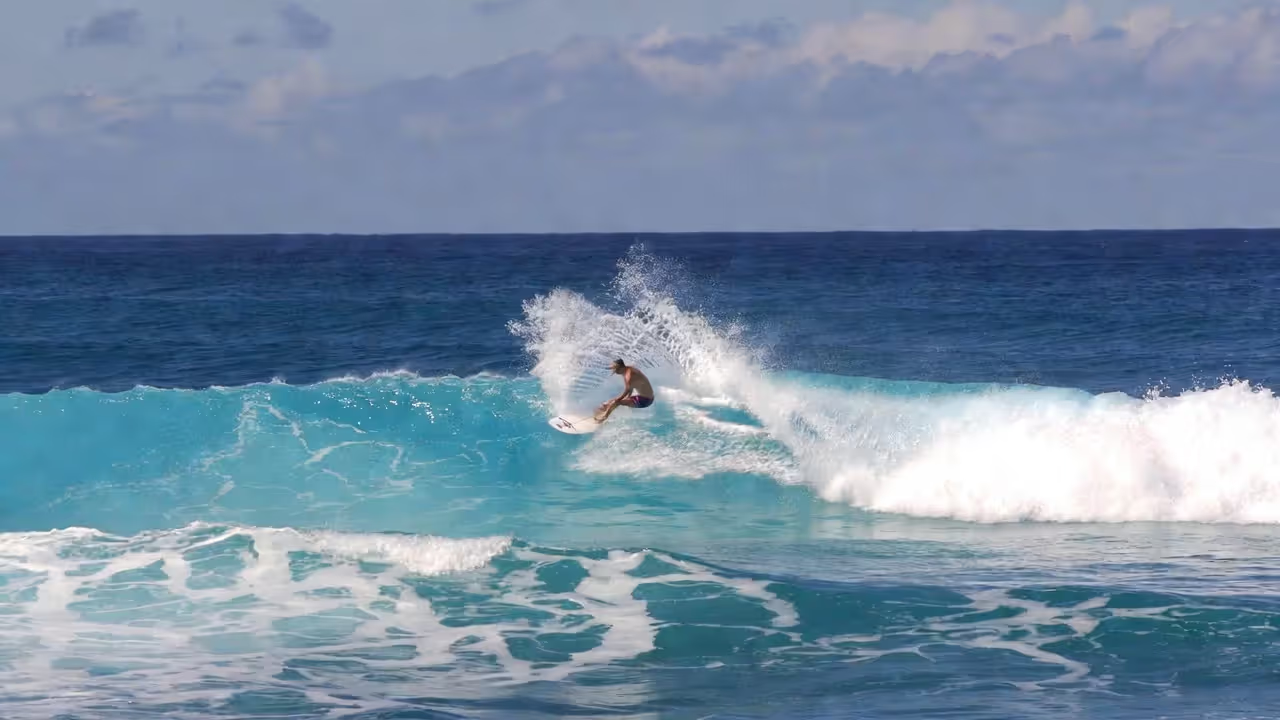
The cutback brings you back toward the breaking section after you've raced too far onto the shoulder (the unbroken, less powerful part). This keeps you in the pocket where energy lives. You carve a smooth arc back toward the whitewater, usually followed by a redirect to continue down the line.
A top turn or "snap" happens at the wave's crest. You pivot sharply off the lip (the top edge where the wave breaks), generating spray and changing direction quickly. Timing is everything—go too early and your fins lose grip; too late and the lip crushes you.
Floaters involve riding across the top of a breaking section, essentially floating on foam momentarily before dropping back onto the wave face. Surfers use these to maintain speed through sections that would otherwise close out completely.
Tube riding—getting inside the hollow cylinder formed when a wave's lip throws forward—represents surfing's peak experience. You're inside a moving cave of water with an opening you must outrun before it collapses on you. Only specific waves form proper barrels: hollow reef breaks or beach breaks with the right swell direction, bottom contour, and wind alignment.
Author: Brandon Hale;
Source: 2templatedesign.site
Essential Gear and What Each Piece Does
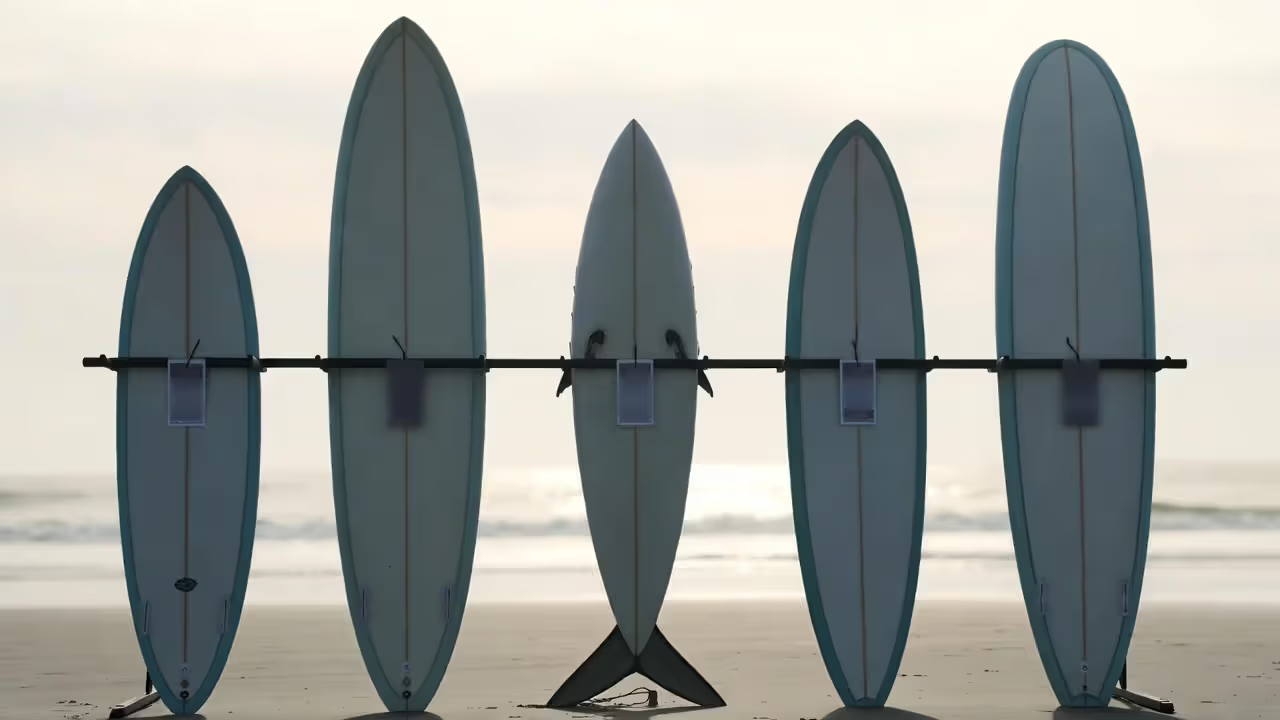
Surfboards vary wildly in shape, with each design targeting specific waves and skill levels. Length jumps out as the obvious difference, but volume distribution, rocker (the curve along the bottom), and rail shape affect performance just as much.
Shortboards (5'6" to 6'6") dominate modern performance surfing. Their compact size allows quick direction changes and fits into tight pockets on steep faces. The downside? They're incredibly difficult to paddle and catch waves on. Beginners on shortboards spend most sessions falling rather than riding. The board simply doesn't have enough volume to support their weight at slow speeds.
Longboards (8'0" to 10'0"+) provide stability, easy paddling, and early wave entry thanks to all that volume and length. Traditional longboarding emphasizes smooth, flowing style and nose riding (walking forward until your toes hang over the front). These boards work beautifully in smaller, weaker surf where shortboards fail. The trade-off? Reduced maneuverability and the hassle of lugging a nine-foot plank around.
Fish designs (5'2" to 6'4") feature wider outlines with distinctive swallow tails. Originally developed for small, gutless waves, they pack more volume than equivalent-length shortboards while maintaining maneuverability. Many intermediate surfers find fish boards unlock sessions they'd otherwise skip due to small conditions.
Funboards or mini-mals (6'6" to 8'0") split the difference between short and longboards. Stable enough for easy wave catching but short enough for responsive turning. These work well for progressing surfers who've outgrown beginner boards but aren't ready for high-performance shortboards.
Guns (7'0" to 10'0"+) are specialized big-wave equipment—narrow outlines with significant rocker built to handle waves exceeding 10 feet. The extra length provides paddle speed to catch fast-moving swells, while the shape prevents nosedives on steep drops. Most surfers never need one.
Author: Brandon Hale;
Source: 2templatedesign.site
| Board Type | Length Range | Ideal Wave Conditions | Skill Level | Best For |
| Shortboard | 5'6"–6'6" | Shoulder-high to overhead, powerful hollow waves | Intermediate to advanced | High-performance turns, tight pockets |
| Longboard | 8'0"–10'0"+ | Knee to head-high, rolling waves | Beginner to advanced | Easy paddling, nose riding, weak days |
| Fish | 5'2"–6'4" | Waist to head-high, less powerful surf | Intermediate | Small-wave speed, fun sessions |
| Funboard | 6'6"–8'0" | Waist to head-high, most conditions | Beginner to intermediate | Skill progression, all-around use |
| Gun | 7'0"–10'0"+ | Double overhead and larger, serious power | Advanced to expert | Big-wave charging, heavy water |
Wetsuits provide thermal insulation in water below roughly 70°F. Thickness gets measured in millimeters—a 4/3mm suit (4mm torso, 3mm limbs) handles mid-50s to low-60s water, while 3/2mm works for 60–68°F. Warmer locations might only need a spring suit (short arms/legs) or just a rash guard. Fit matters tremendously. Too loose and water flushes through, destroying the thin warming layer your body heat creates. Too tight and you restrict movement.
A leash connects your ankle to the board, preventing it from washing ashore after wipeouts. Seems simple, but leashes fundamentally transformed surfing when introduced in the 1970s. Before them, every wipeout meant swimming after your board—sometimes hundreds of yards. Leashes enabled surfers to attempt bigger, more powerful waves without risking long swims. The downside? An attached board can snap back and hit you, creating real danger in heavy surf.
Wax creates traction on your board's deck. Different formulas exist for various water temperatures. Cold-water wax stays firm in cool conditions; warm-water wax won't melt on hot decks. Many surfers apply a hard base coat topped with softer wax, building texture that grips your feet.
Fins provide directional stability and turning ability. Most modern boards use removable fin systems with different setups: single fin (traditional longboard), twin fins (loose, skatey feeling), thruster (three fins—most common configuration), quad (four fins), or five-fin boxes allowing multiple arrangements. Fin size, shape, and positioning dramatically affect board performance. Stiffer fins provide drive and control; flexible fins offer forgiveness and looseness.
Understanding Surf Culture: More Than Just a Sport
Surf culture encompasses unwritten rules, environmental values, and lifestyle choices that extend well beyond riding waves. Understanding these elements matters as much as your pop-up technique when entering surfing communities.
Surf etiquette prevents lineup chaos. The fundamental rule: whoever's closest to the peak (where the wave starts breaking) has priority. "Dropping in" on someone—taking off when another surfer is already riding—is the sport's worst violation. You risk collisions and will instantly earn a terrible reputation. Other key principles include not "snaking" (paddling around someone to steal position), communicating before taking off on questionable situations, and apologizing immediately when you mess up.
Localism refers to territorial attitudes some surfers display at their home breaks. At certain spots—particularly high-quality waves that can only handle limited crowds—locals may aggressively defend access through intimidation, verbal confrontation, or even physical threats. This contradicts surfing's supposed laid-back vibe, yet stems from genuine frustration over crowding. When a break can only provide good rides for 10 people but 40 show up, conflict becomes inevitable. Visitors minimize problems by showing respect, not paddling straight to the peak on their first session, acknowledging others' good rides, and demonstrating they understand lineup dynamics.
Environmental consciousness runs deep in surf communities, born from direct ocean dependence. Surfers noticed declining water quality, disappearing marine life, and coastal development impacts before most environmental movements existed. Organizations like Surfrider Foundation emerged directly from surf culture, fighting for beach access, water testing, and coastal preservation. Many surfers adopt low-impact lifestyles, avoid single-use plastics, and support renewable energy—not from abstract philosophy but immediate self-interest in protecting the places they love.
Lifestyle aspects extend to career choices. Serious surfers often structure work around wave access, accepting lower incomes for flexible schedules or coastal proximity. This creates distinct demographics at surf towns: highly educated remote workers, seasonal employees maximizing water time, and entrepreneurs who built businesses compatible with dawn patrol sessions. The unemployed surf bum stereotype exists but represents a tiny minority.
Surfing's influence on music, art, and fashion has ebbed and flowed over decades. The 1960s surf rock scene, 1970s soul surfing films, 1990s punk surf aesthetic, and current diverse musical landscape show how the culture absorbs broader trends while maintaining unique elements. Surf art ranges from Rick Griffin's psychedelic concert posters to contemporary photographers capturing perspectives impossible to see from shore.
How Professional Surfing Competitions Work
Professional contests use heat-based formats where surfers compete in timed rounds—typically 20 to 35 minutes depending on event level. Each heat usually features 2 to 4 surfers. Top scorers advance; others get eliminated or drop to secondary brackets.
Judges evaluate rides using a 0-10 point scale. They consider: how committed and difficult the maneuvers were, whether moves showed innovation and progression, how well major maneuvers combined together, the variety demonstrated, plus the speed, power, and flow throughout the ride. Your two highest-scoring waves determine your heat total, creating strategic calculations about which waves to pursue. In a 30-minute heat, you might paddle for 15 waves, ride 8, but have only your best 2 count toward advancement.
This system rewards risk-taking and progression. A safe ride with three moderate turns might score 5.0. An attempted aerial that ends in a wipeout scores zero. Competitors constantly calculate whether to protect their current score or gamble on improving it.
The World Surf League Championship Tour represents competitive surfing's pinnacle—top 34 men and 17 women surfing at 10 to 11 locations worldwide throughout the year. Events only run when conditions reach minimum quality thresholds, with waiting periods spanning several days to two weeks. Contest directors monitor forecasts and call competitions when waves look best, meaning athletes must stay on standby, ready to compete with only 12 to 24 hours notice.
Olympic format differs significantly from WSL events. Tokyo 2020 used ocean waves at Tsurigasaki Beach with shortened competition windows and different advancement structures. Future Olympics may incorporate artificial wave pools, providing perfectly consistent conditions but lacking the variability and power of ocean surf. Debate continues within the surf community about whether controlled environments capture the sport's essence or reduce it to something fundamentally different.
Major distinctions exist between competitive surfing and free surfing (non-competitive wave riding). Contests require performing within time limits, often in imperfect conditions, with pressure to execute scoring maneuvers rather than simply enjoying yourself. Many talented free surfers have zero interest in competitions, preferring to chase perfect waves without heat structures and judges. Conversely, some competitive specialists excel at gaming the format but show less creativity during free-surf sessions.
| Competition | Location | Typical Timing | Format | Why It Matters |
| Billabong Pipe Masters | Pipeline, Hawaii | December | WSL Championship Tour season finale | Crowns world champions; carries most prestige of any single event |
| US Open of Surfing | Huntington Beach, California | Late July through early August | WSL Challenger Series | America's largest surf contest; draws massive crowds; festival atmosphere |
| WSL Championship Tour | 10-11 locations worldwide | February through September | Professional circuit requiring qualification | Elite tier of competitive surfing |
| Olympic Games | Host country determines venue | Every four years during summer | Olympic competition structure | Brings mainstream global exposure; national pride element; format still evolving |
Prize purses vary dramatically. WSL Championship Tour events typically offer $100,000 to $607,800 total, with winners taking $20,000 to $100,000. Pipeline Masters, as the tour finale, carries prestige beyond monetary value. Olympics provide no prize money directly but offer government bonuses in many countries plus significant sponsorship value.
Common Beginner Mistakes and How to Avoid Them
New surfers frequently choose boards based on looks or what they see pros riding. A beginner on a 6'0" high-performance shortboard will spend entire sessions falling, unable to generate enough paddle speed to catch waves. The board lacks sufficient volume to support their weight at low speeds, creating frustration that convinces many they lack surfing ability. Starting on a board with adequate volume—typically a soft-top longboard or funboard in the 7'6" to 9'0" range—lets you actually catch waves and practice standing, building real skills before progressing to shorter equipment.
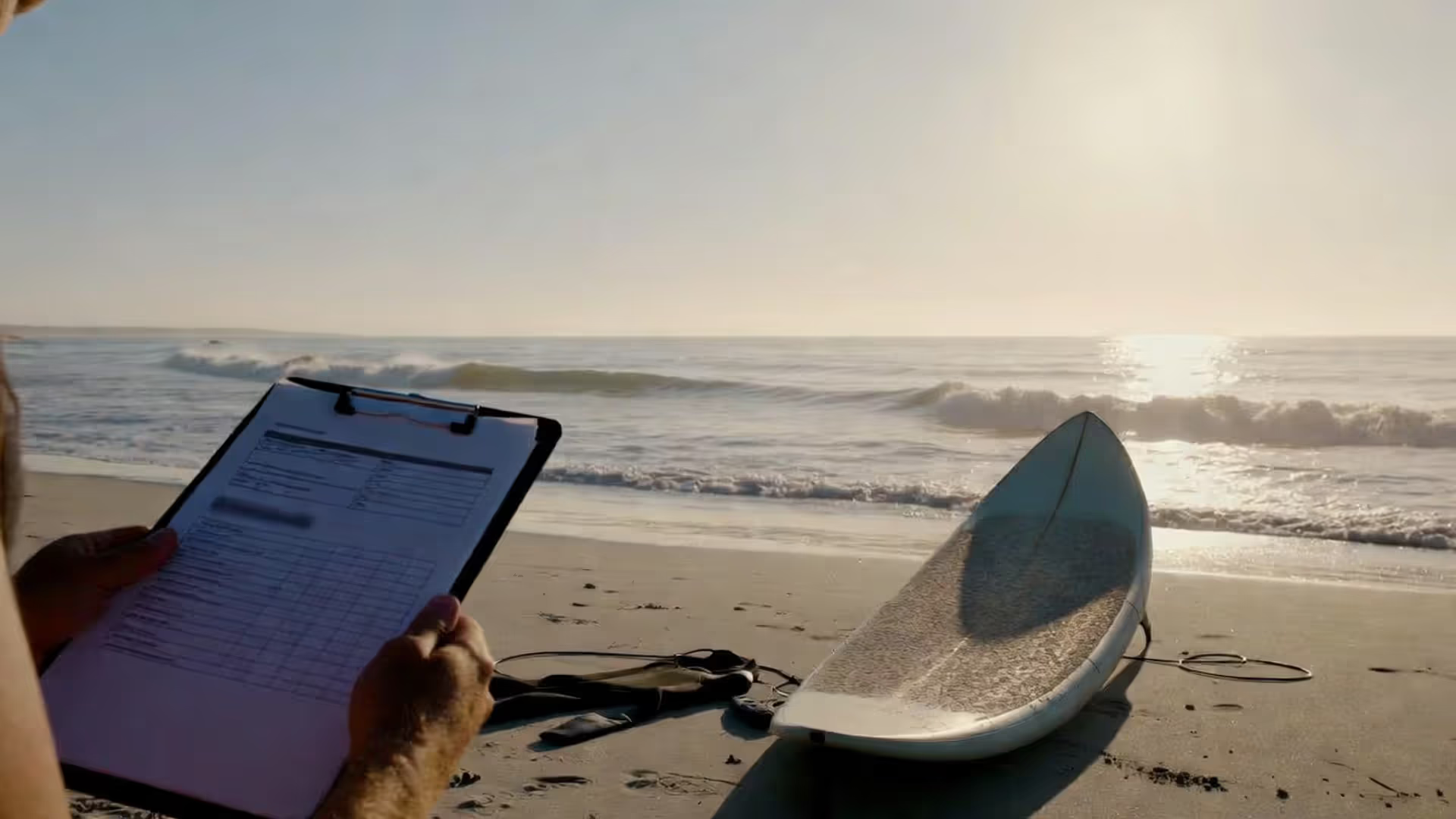
Ignoring surf etiquette marks you as clueless and creates dangerous situations. Beginners often don't understand priority rules, accidentally dropping in on others or paddling directly through the impact zone where people are riding. Before your first session at any new break, watch from shore for 15 to 20 minutes. Observe where people paddle out, where they position themselves in the lineup, and how they relate to the peak. This reconnaissance prevents most social mistakes and helps you understand how the wave behaves.
Poor beach selection dooms many first attempts. Beginners sometimes paddle out at advanced breaks during large swells, finding themselves in overhead waves with strong currents and frustrated locals. Ideal beginner conditions feature waist-to-chest-high waves with gentle, rolling breaks, minimal current, and sandy bottoms. Many coastal areas have designated beginner beaches where these conditions occur regularly. There's a reason surf schools operate at these locations—the environment allows progression rather than survival mode.
Paddling errors waste energy and prevent wave catching. New surfers often paddle with arms too far forward, creating splash rather than propulsion. Effective paddling uses a deep, smooth stroke. Your hand enters near the board's nose and pulls all the way to your hip. Your chest should arch slightly, positioning body weight over the board's center. Frantic, rapid paddling burns you out quickly. Longer, powerful strokes generate more speed with less effort.
Standing too early is nearly universal among beginners. The impulse to jump up the moment you feel the wave pushing results in standing on a board that hasn't achieved sufficient speed, causing it to stall while the wave passes underneath. Wait until you feel the board accelerating down the face—a distinct dropping sensation—before popping up. This requires patience and trust that the wave will keep pushing.
Safety oversights create preventable injuries and dangerous situations. Beginners sometimes surf alone, ignore rip current warnings, or paddle out in conditions beyond their ability. Basic safety protocols: never surf alone until you're experienced, always check conditions and forecasts beforehand, understand how to escape rip currents (paddle parallel to shore rather than fighting directly against the current), and honestly assess whether conditions exceed your skill level. Pride injures more surfers than any other factor.
FAQ: Your Surfing Questions Answered
Riding Into Your Surf Journey
Surfing resists simple categorization. It's simultaneously sport, hobby, and lifestyle while remaining something altogether different. The learning curve tests your patience. The ocean humbles your ego repeatedly. Yet that occasional perfect ride justifies every frustrating session spent paddling against currents or getting worked by whitewater.
Getting started requires less than most people assume: basic swimming ability, appropriate equipment, and willingness to look foolish while learning. The physical demands are real but accessible to most fitness levels. Progression comes through consistent practice rather than exceptional athleticism. Understanding wave dynamics, respecting ocean power, and integrating into surf culture matter as much as pop-up technique or turning ability.
The journey from first whitewater ride to confident wave selection happens gradually, measured in sessions rather than hours. Some days you'll paddle in frustrated after catching nothing. Other days you'll experience rides that remind you why people structure entire lives around wave forecasts. The community includes everyone from corporate executives sneaking dawn sessions before work to lifelong devotees who've arranged everything around swell charts.
Whether you're drawn by athletic challenge, nature connection, or simple curiosity about what keeps millions returning to the ocean, your first step is straightforward. Find a beginner-friendly beach, rent a longboard, and paddle out. Everything else unfolds from there.