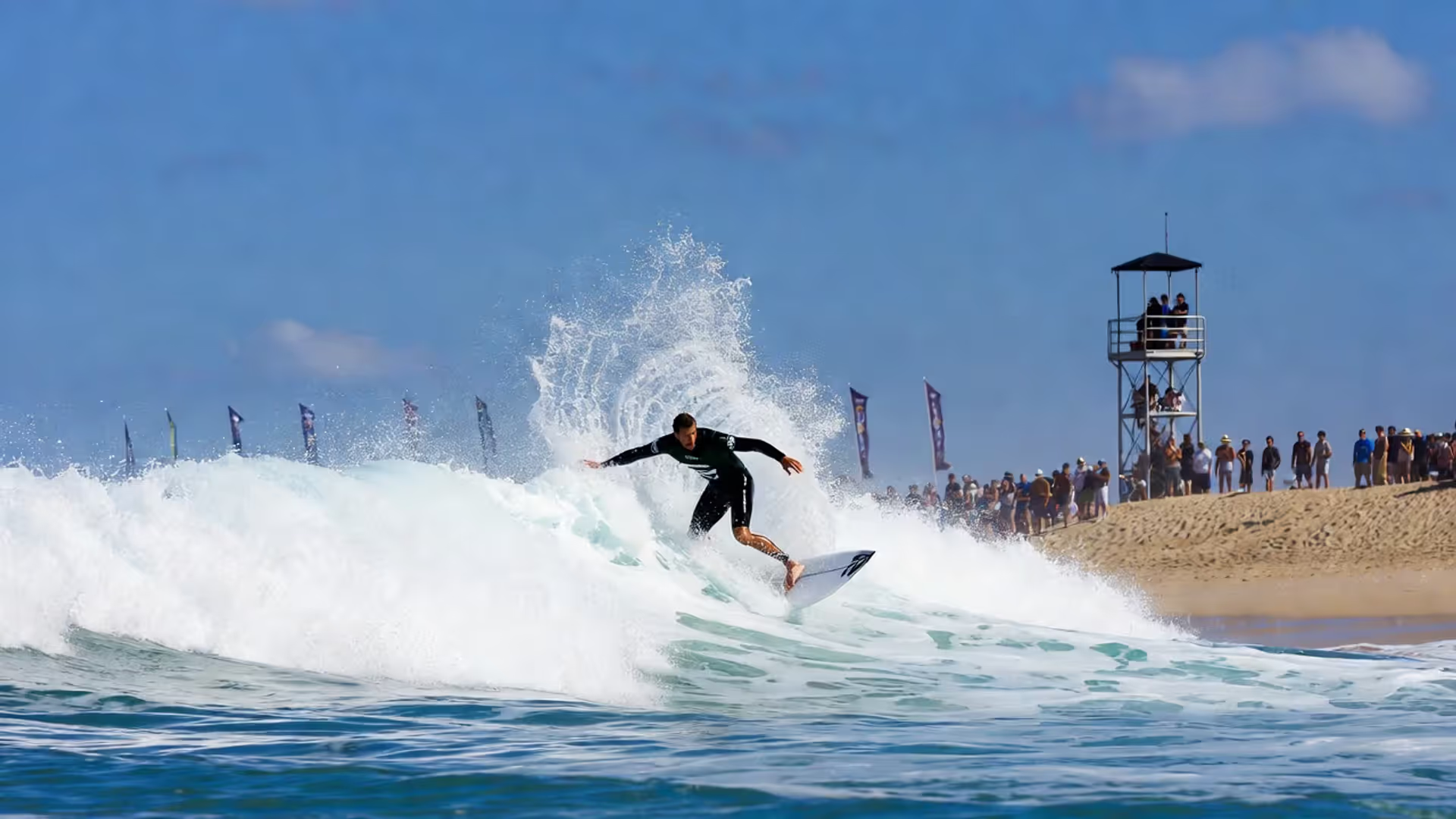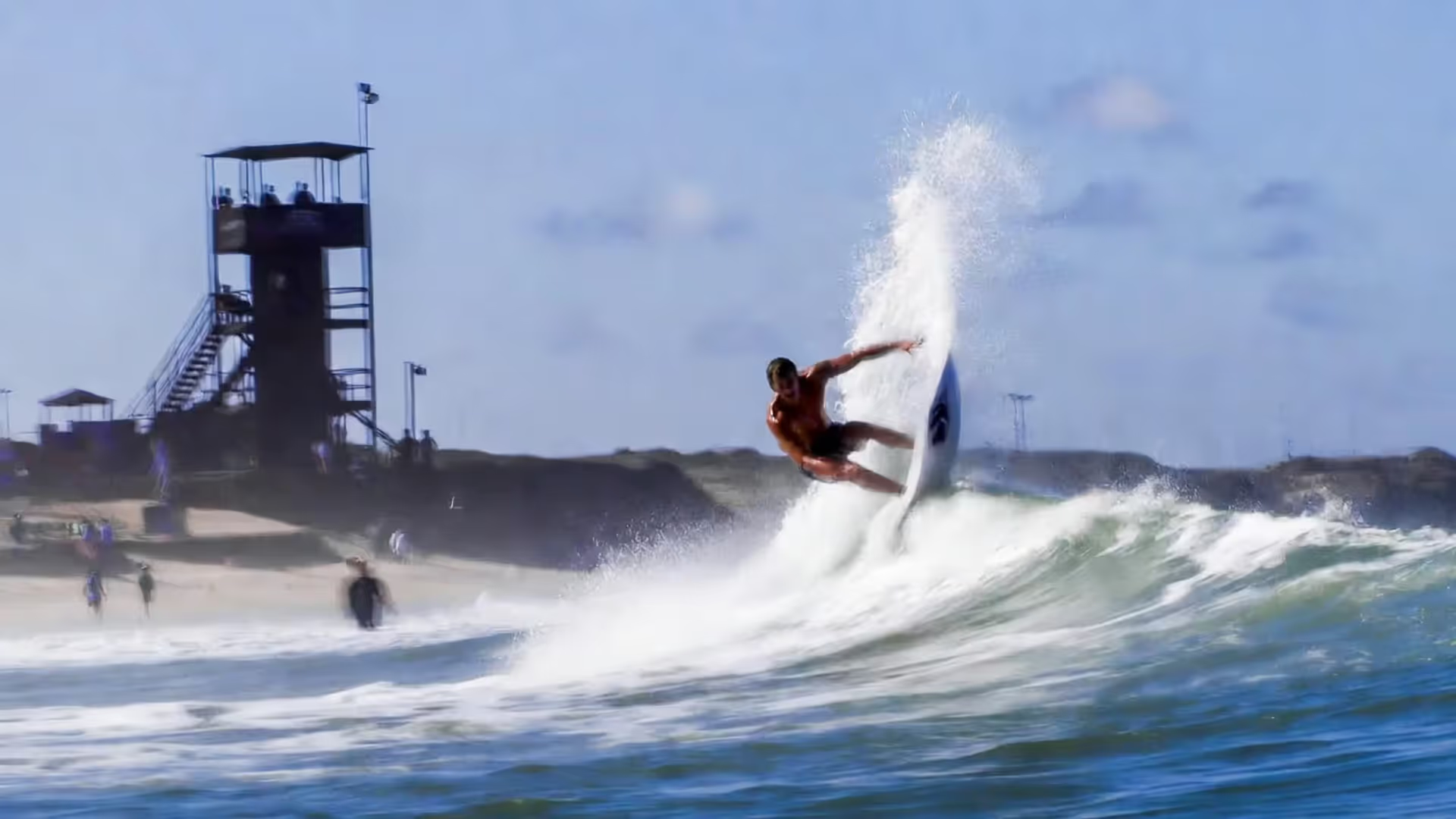
Judges reward risk, power, and complete wave control
How Surf Competitions Work: Judging, Scoring, and Event Formats Explained

Content
Ever watched a surf contest and wondered why one wave scored an 8.5 while another seemingly similar ride only got a 6.3? Professional surfing competitions run on specific rules that turn ocean sessions into structured athletic events. Here's how the whole system actually works—from what makes judges reach for high scores to why surfers sometimes just sit there watching perfectly good waves roll past.
What Makes a Wave Score High in Professional Surfing Competitions
Each wave gets rated on a scale from 0 to 10. Sounds simple, right? But five different factors determine where your ride lands on that scale: how committed and risky your approach was, the technical difficulty of what you pulled off, whether you threw in something innovative, how many maneuvers you linked together, and the speed/power/flow of your entire performance.
Commitment shows up when you drop into the nastiest, steepest part of the wave—not the safe shoulder section where it's already mellowing out. Taking off deep in a heaving barrel shows way more guts than casually angling into the same wave from the shoulder. That choice alone shifts your scoring potential upward before you've even done a single turn.
Technical difficulty covers two things: how gnarly the wave itself is, and how hard the tricks are that you're attempting. Landing a full-rotation aerial in solid six-foot surf? That's going to outscore a basic floater in the same conditions every time. When John John Florence started throwing frontside alley-oops in actual heats (not just freesurf sessions), judges immediately bumped up the scores because nobody else was doing that yet.
The innovation factor rewards progression. You don't necessarily need to invent a brand-new maneuver—but executing advanced techniques that rarely show up in competition earns extra credit. What counts as innovative depends partly on your own surfing history too. If you've never landed airs in competition, your first successful one carries more weight than the same move from someone who does it every heat.
Linking multiple maneuvers together beats isolated moves. A bottom turn flowing into a snap, then carving back to the pocket and finishing with a floater demonstrates complete wave control. Compare that to someone doing three disconnected snaps with awkward transitions between them. Judges want to see variety too—five identical cutbacks score lower than a mixed repertoire showing different skills.
Speed, power, and flow measure how well you're reading and using the wave's energy. Powerful surfing carves deep arcs that throw spray, maintains drive between sections, and looks effortless. Flow means smooth transitions without awkward positioning or momentum-killing stalls. If you're pumping frantically just to maintain speed, judges notice that struggle.
| Score Range | Performance Level | What You're Seeing | Typical Maneuvers |
| 9.0-10.0 | Exceptional | Multiple critical maneuvers in powerful sections, high risk, innovative elements, complete wave utilization | Getting deep in barrels with fins-free finishes, progressive aerial rotations, power carves in the critical pocket |
| 7.0-8.9 | Very Strong | Solid combination of major moves, smart wave choice, clean technical execution | Barrel coverage, standard aerial maneuvers, powerful vertical snaps, connected turns |
| 5.0-6.9 | Decent/Average | Adequate turns and sections, some variety, generally competent riding | Basic carves, small airs, standard cutbacks, reasonable positioning |
| 3.0-4.9 | Below Standard | Limited activity, poor positioning, execution problems, weak commitment | Single mediocre turn, shoulder riding, tentative approach |
| 0-2.9 | Poor | Minimal surfing, wipeouts, basically nothing noteworthy | Falls, straight rides with no maneuvers, completely missed wave |
Here's how the math works: five judges score each wave independently. The highest and lowest scores get tossed out (preventing one outlier opinion from skewing results), then the middle three get averaged for your final wave score. Your heat total comes from your two best waves added together. That means you need to catch enough waves to find at least two solid scoring opportunities, but there's no prize for quantity over quality.
Breaking Down the Heat Format: From Trials to Finals
Professional heats run on a clock—usually 20 to 35 minutes depending on the competition tier and wave conditions. Championship Tour heats typically get 30 minutes with anywhere from two to four surfers paddling against each other simultaneously.
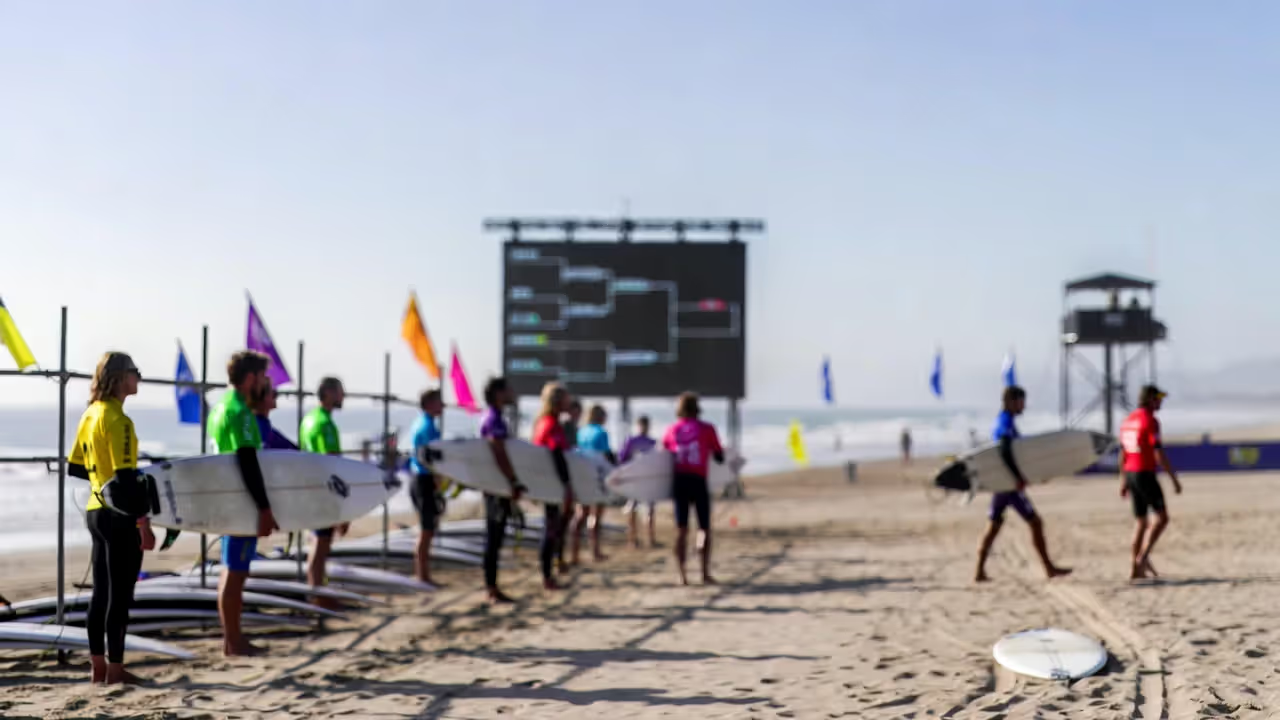
Competitions start with opening rounds where lower-seeded athletes face potential elimination right away. Win your first heat? You skip ahead to Round 3. Lose? You drop into Round 2, which is essentially the elimination bracket. Lose there and you're watching the rest of the contest from the beach. This double-elimination structure gives everyone a second chance, but forces losing surfers to fight through more heats while winners stay fresh.
Man-on-man heats (just two competitors) create the most intense battles and usually appear in quarterfinals and beyond. Three or four-person heats show up in earlier rounds when organizers need to process more athletes efficiently. Fewer bodies in the water generally produces better surfing since wave selection improves and everyone gets more opportunities.
Author: Brandon Hale;
Source: 2templatedesign.site
Priority Systems and Right-of-Way Rules
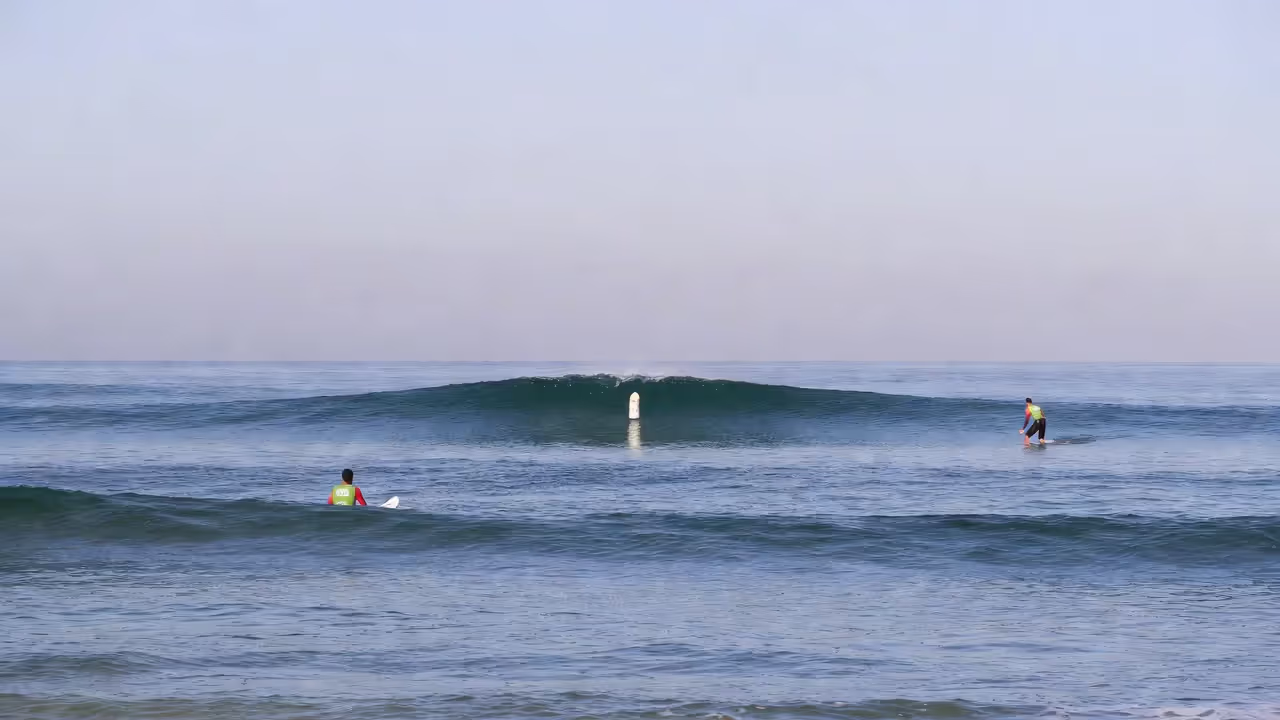
Priority determines who gets first dibs on waves. Hold priority and you can paddle for any wave you want without interference. Everyone else has to wait until you commit to a wave or pass on it before they're allowed to go.
At the opening horn, whoever's sitting closest to the peak gets priority. Once that person catches a wave, priority passes to the next surfer in rotation. After paddling back out, you join the back of the priority line. This rotation continues until time expires.
Interference penalties happen when a surfer without priority messes up someone else's scoring ride. Say you paddle for a wave while another competitor with priority is already riding it, and your positioning affects their performance—that's interference. The penalty typically slashes your second-best wave score (sometimes cutting it in half or capping it at 5.0 points). A single interference penalty can completely destroy your heat total and eliminate you from advancing.
Three-person heats get messy. You're tracking not just who has priority, but also your own spot in the rotation. Watch experienced competitors—they use hand signals and constant visual checks to avoid confusion. Lose track of priority and you're either missing waves you could've caught or catching interference penalties that tank your score.
Author: Brandon Hale;
Source: 2templatedesign.site
How Surfers Advance Through Competition Rounds
Tournament brackets map out your path through the event. Take a typical Championship Tour contest with 32+ surfers in Round 1. Win your first heat and you advance straight to Round 3. Lose and you drop to Round 2—the elimination round. Lose again there and you're done. Win and you move forward to Round 3 alongside the Round 1 winners.
This structure massively rewards winning early. Kelly Slater used to emphasize "winning your first heat" as fundamental strategy because it means surfing fewer total heats while your competitors burn energy fighting through elimination rounds.
Quarterfinals cut the field to eight surfers. Semifinals narrow it to four. The final determines the event winner. From quarters onward, you're usually seeing head-to-head matchups where psychology intensifies. Catching the first wave, controlling priority at crucial moments, forcing your opponent into marginal wave choices—it becomes mental chess on water.
The Five Judging Criteria That Determine Winners
Let's get specific about how judges actually apply these scoring criteria when watching heats unfold in real-time.
Commitment and degree of difficulty form the foundation of high scores. Gabriel Medina attempts backflip variations in competition knowing full well he might eat it hard. Judges reward that willingness to risk a wipeout for progression. A cautious ride on a mushy section won't outscore an aggressive attempt in a powerful pocket, even if the execution isn't flawless.
Innovation and progression push the sport forward. When Filipe Toledo brought his consistent aerial game to the Championship Tour, judges adapted their expectations. Suddenly airs weren't just bonus points—they became expected elements at the elite level. Innovation doesn't always mean inventing new tricks though. Sometimes it's executing advanced maneuvers that rarely appear under competition pressure. Your first competition barrel might be innovative for you, even if it's routine for someone else.
Combination and variety separate complete performances from one-trick rides. Stephanie Gilmore's flowing style—transitioning seamlessly between power carves and progressive sections—demonstrates this perfectly. Judges prefer watching a surfer link a bottom turn into a vertical snap, carve back toward the pocket, then finish with a floater rather than seeing three identical snaps with awkward pumping between them.
Speed, power, and flow evaluate whether you're working with the wave's energy or fighting against it. Powerful surfing generates spray, carves deep lines, and maintains momentum through sections. Flow means no awkward corrections, minimal pumping, and smooth positioning throughout the ride. Judges definitely notice when someone stalls unnecessarily, loses drive, or looks disconnected from the wave's natural rhythm.
Major maneuvers include aerials, barrels, critical power carves, and progressive variations on traditional moves. A wave with one major element scores lower than a wave linking multiple significant maneuvers together. The real challenge? Executing these moves in sequence while maintaining speed and flow. John Florence's ability to exit a deep barrel and immediately launch into an aerial shows complete mastery—and judges score it accordingly.
We're looking for surfers who commit to the critical part of the wave and perform maneuvers that match the wave's power. A surfer who does three average turns won't outscore someone who does one exceptional maneuver in the barrel or air. We reward risk and progression.
— Richie Porta
Major World Surfing Events and Competition Tiers
Professional surfing operates across multiple competitive tiers, each with different prestige levels, prize money, and qualification requirements.
The WSL Championship Tour sits at the top. The world's best 34 men and 17 women compete at legendary breaks like Pipeline, Teahupo'o, Bells Beach, and Jeffreys Bay. Event winners take home over $100,000, and the seasonal world title brings career-defining recognition. Getting onto the CT requires either finishing top-5 (or top-10 depending on gender) on the Challenger Series or maintaining your position from the previous year's Championship Tour.
The WSL Challenger Series functions as the qualification pathway upward. These events happen at quality waves worldwide but lack the Championship Tour's prestige and massive prize purses. Surfers accumulate points throughout the season—finish high enough and you earn that coveted CT spot for next year. This tier features hungry competitors battling for career-transforming opportunities, often producing desperate, high-intensity heats.
The Big Wave Tour focuses exclusively on massive surf—we're talking 20+ foot faces minimum. Events sit on standby all season, only running when swells produce genuinely dangerous conditions. Wipeouts can result in serious injury, so safety teams with jet skis remain on high alert throughout every heat. Judging criteria shift here: wave size selection, commitment to life-threatening situations, and successfully navigating extreme conditions matter more than progressive maneuvers. Kai Lenny, Grant "Twiggy" Baker, and Paige Alms dominate this specialized circuit.
ISA World Championships feature national teams competing across divisions: shortboard, longboard, stand-up paddle, and adaptive surfing. Unlike WSL events where surfers compete purely as individuals, ISA competitions combine individual results into team scores. Countries earn points based on how their surfers place, creating unusual team dynamics within what's traditionally an individual sport. The ISA also controls Olympic surfing qualification.
Olympic surfing made its debut in Tokyo 2020, exposing the sport to massive global audiences. The format compressed traditional competition structures into a shorter timeframe with limited country entries, making Olympic participation extremely selective. Judging criteria stayed consistent with professional standards, though the stakes and media attention exceeded typical tour stops.
| Competition Circuit | Annual Events | Winner's Prize | Qualification Path | Primary Locations | Season Timing |
| WSL Championship Tour | 10-11 | $100,000+ | Top CS finishers, CT re-qualification | Hawaii, Tahiti, Australia, California, Brazil, South Africa | February-September |
| WSL Challenger Series | 8-10 | $20,000-$40,000 | Open qualification, regional trials | Global rotation at various quality breaks | Year-round |
| Big Wave Tour | 3-6 (standby) | $50,000-$100,000 | Invitation based on big wave experience | Nazaré, Jaws, Mavericks, Puerto Escondido | October-March (winter swells) |
| ISA World Championships | 1 annual | Medals/National pride | National team selection process | Rotating host countries | September-October |
Common Mistakes Competitors Make in Their First Surf Contests
Author: Brandon Hale;
Source: 2templatedesign.site
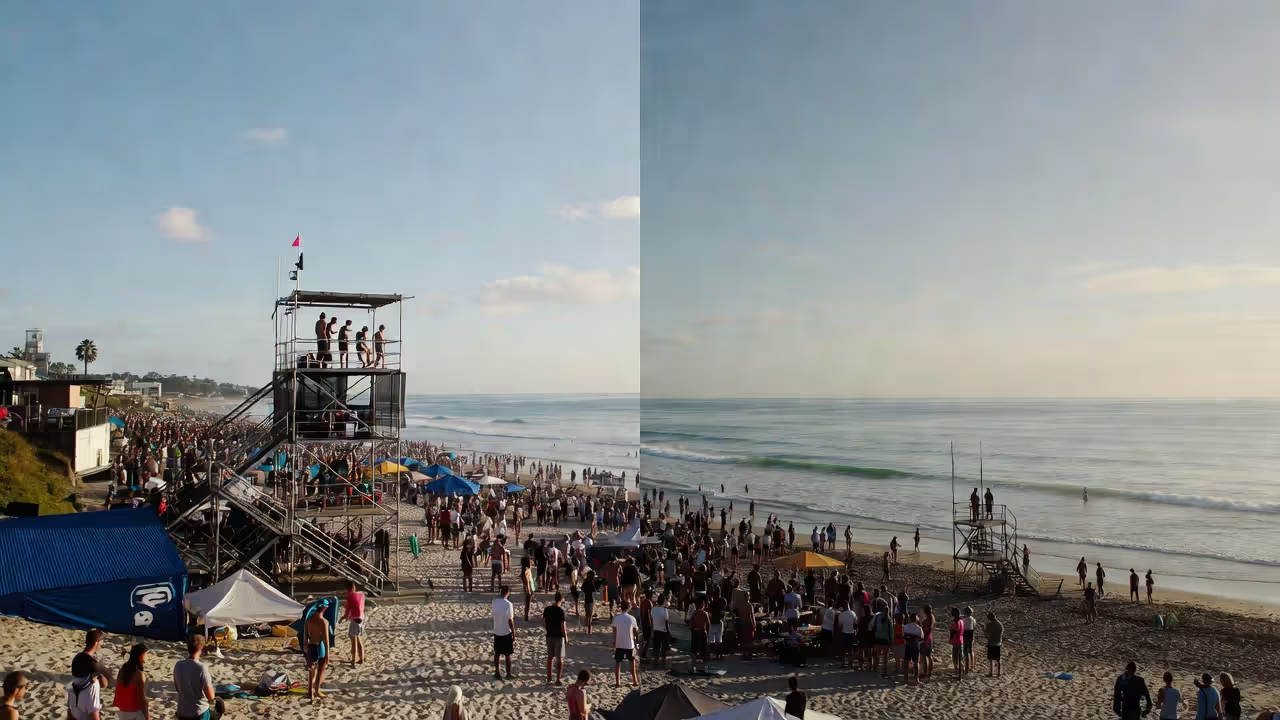
First-time competitors consistently struggle with aspects that veterans handle automatically. Wave selection errors cause the most damage. Beginners frantically paddle for everything, catching eight marginal waves instead of patiently waiting for two quality opportunities. Remember—only your top two waves matter. Catching ten mediocre rides produces worse results than catching four waves and scoring well on half of them.
Priority confusion leads directly to interference penalties and blown opportunities. New competitors lose track of rotation, especially in three-person heats where the priority order gets complicated fast. Before paddling for any wave, physically turn your head and verify your priority status. A single interference penalty can drop you from first place to eliminated.
"Not surfing to the judges" might sound obvious, but it means performing maneuvers that don't align with actual scoring criteria. Completing ten small turns might feel productive, but judges reward fewer, more committed maneuvers in critical sections. Watch Championship Tour heats before competing. Take notes on which specific waves receive excellent scores and why.
Equipment choices affect performance more than recreational surfers expect. Bringing a single board creates problems if conditions shift or you damage your board. Experienced competitors travel with three to five boards in different dimensions. Also verify competition rules regarding leash requirements (mandatory at most events), fin configurations, and board dimension limits before showing up.
Heat strategy failures include catching your first wave too early (leaving tons of time for opponents to overtake you), or waiting too long and running out of time before finding good waves. Most experienced surfers catch their first decent wave within the first ten minutes, establishing a respectable baseline score while preserving time to improve. The final five minutes become critical—priority management and wave selection decisions intensify as everyone scrambles.
Physical positioning mistakes happen constantly. Sitting too far inside means missing larger sets. Too far outside and you can't reach waves before they break past you. Wrong spot along the peak and you're watching everyone else get the good ones. If you're consistently paddling laterally to reach waves, your positioning needs adjustment. Observe where waves break most powerfully during practice sessions and memorize those landmarks.
How Surfing Competition Formats Differ by Event Type
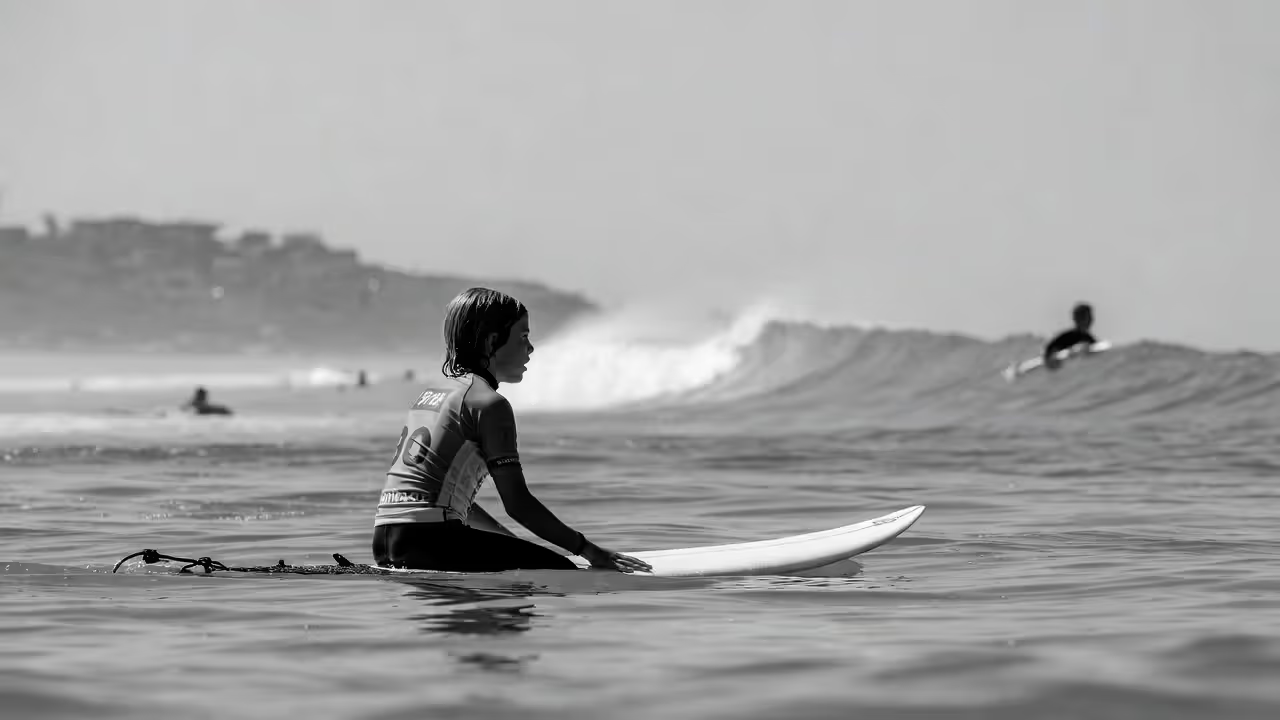
Shortboard competitions emphasize progressive, modern surfing—aerials, explosive power carves, innovative variations. Judges expect high-performance approaches with aggressive commitment. Surfers might catch 6-10 waves per heat, focusing on finding two exceptional scoring opportunities rather than padding stats with quantity.
Author: Brandon Hale;
Source: 2templatedesign.site
Longboard judging prioritizes completely different elements: noseriding, cross-stepping, traditional style, grace, and flow. Hanging ten (all toes over the nose while riding) scores extremely well, as do smooth walk-ups and classical maneuvers. Power surfing and aggressive carves receive less emphasis. Longboard heats often feature more waves caught per competitor since the riding style differs and suitable longboard waves don't necessarily work for shortboard performance.
Big wave competitions adjust judging criteria for extreme conditions. Wave size selection becomes the primary factor—choosing larger, more dangerous waves demonstrates commitment that judges reward heavily. Successfully navigating massive drops, maintaining control on huge faces, and completing rides without catastrophic wipeouts constitute the main scoring elements. Maneuver variety matters less than wave choice and survival. A clean ride on a 40-footer outscores a maneuverable performance on a 25-footer every time.
Team formats (common in ISA events and specialty competitions) add strategic complexity. Individual performances feed into team scores, creating tension between personal advancement and team success. Coaches sometimes encourage defensive surfing—blocking opponents rather than maximizing individual scores—if it benefits overall team standings.
Specialty events include expression sessions (zero judging, pure style), tag team formats (surfers alternate waves with combined scores), and unique variations like night competitions under artificial lights. These events often relax traditional criteria, emphasizing entertainment and creativity over standardized scoring.
Adaptive surfing competitions accommodate athletes with physical disabilities across multiple classifications. Judging adjusts expectations based on each competitor's classification while maintaining core evaluation criteria. These events showcase remarkable athleticism and demonstrate surfing's accessibility across ability levels.
Frequently Asked Questions About Surf Competitions
Competitive surfing combines athletic performance with strategic thinking and deep wave knowledge. Success requires understanding not just how to surf competently, but specifically how to surf for scores—choosing waves judges will reward, executing maneuvers that align with scoring criteria, managing priority intelligently, and adapting strategy based on conditions and opponent behavior. Whether you're considering entering your first local contest or simply want to understand professional events more deeply, recognizing these operational elements completely transforms how you watch and appreciate surf competitions. The scoring system rewards progression and calculated risk-taking, the heat format creates strategic complexity and psychological pressure, and the various competition tiers offer pathways for surfers at every skill level to test themselves against their peers.