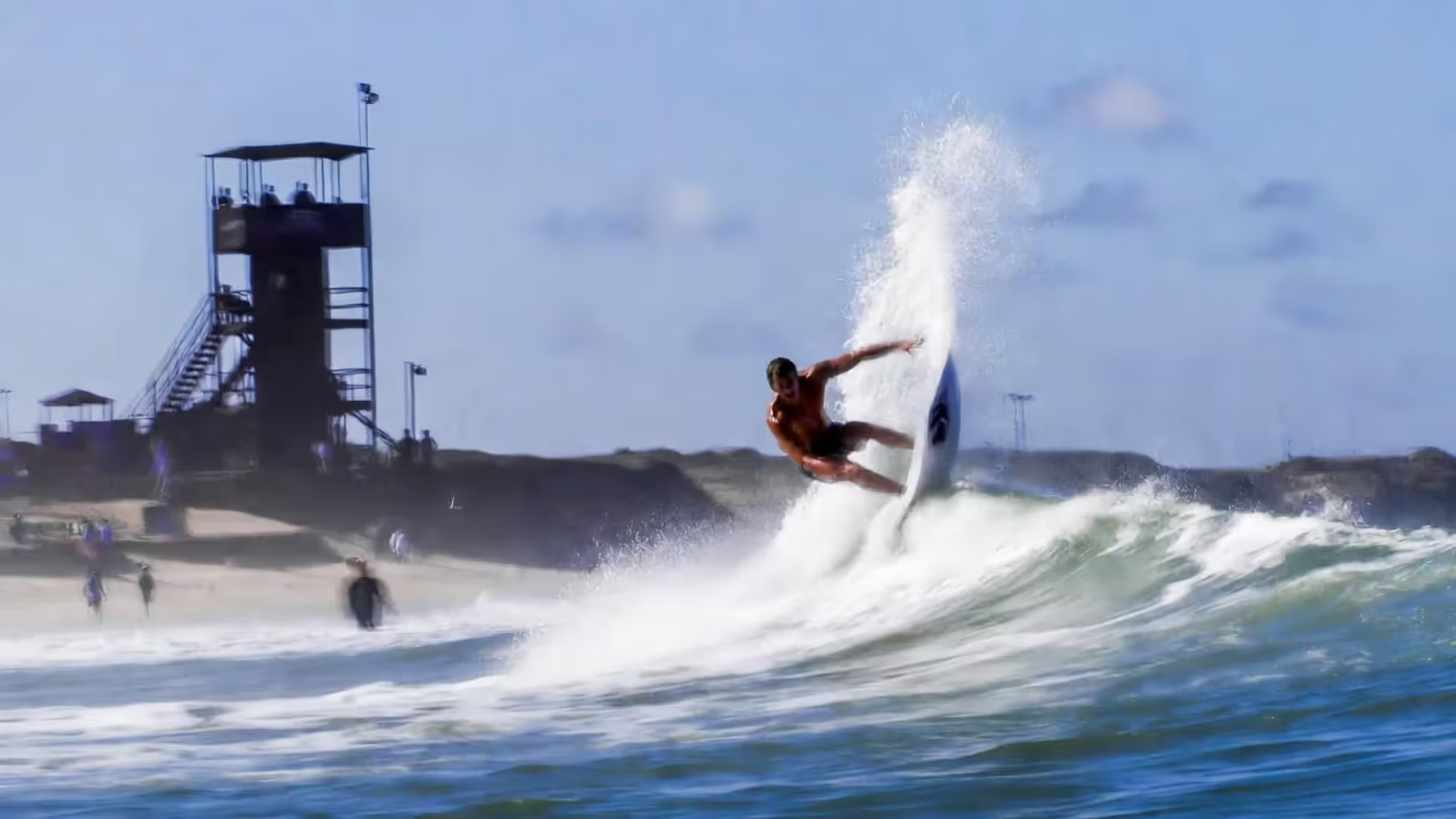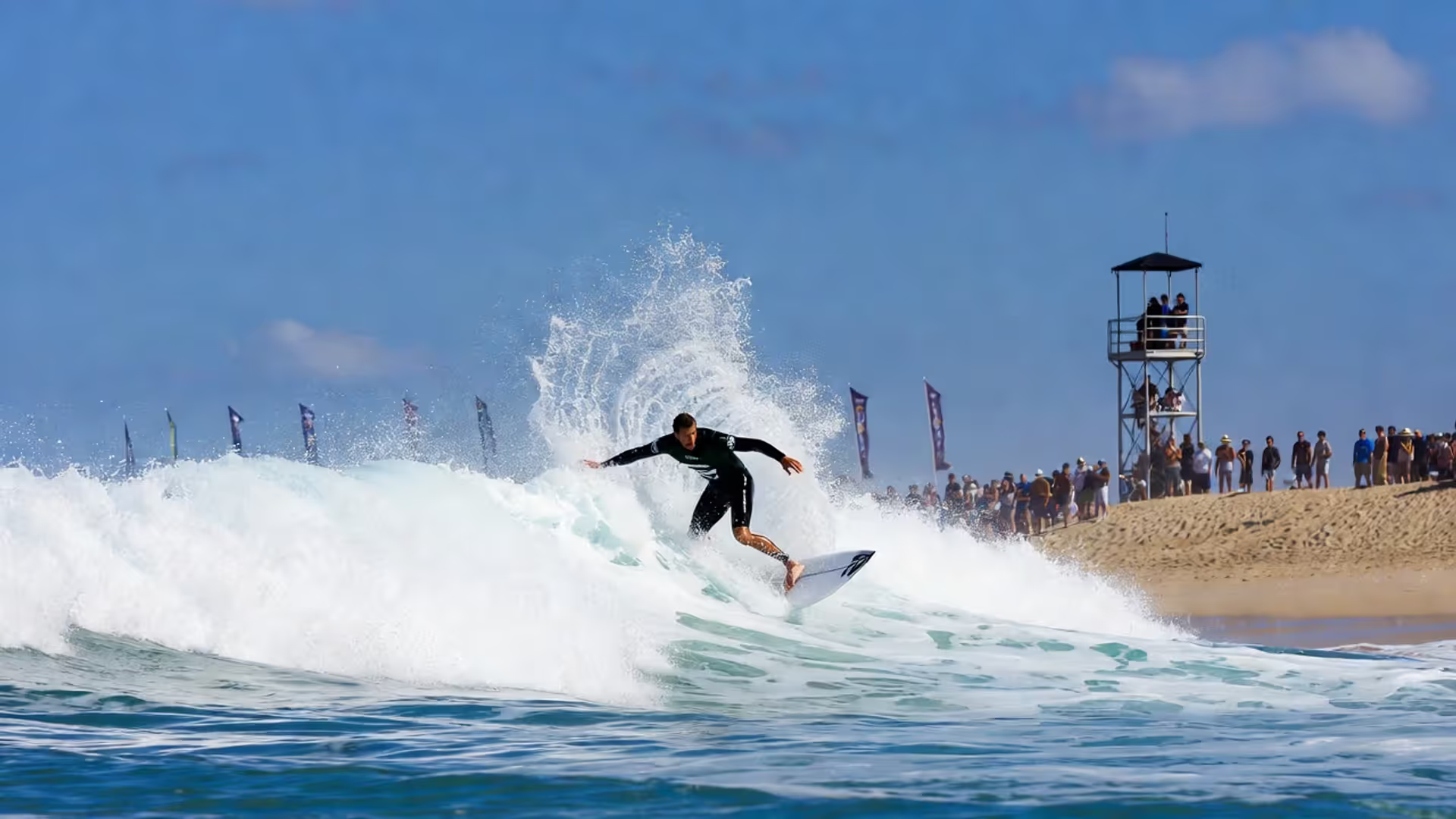
Pro surfing means constant travel, not endless vacation
Professional Surfing: How Athletes Build Careers Riding Waves
Content
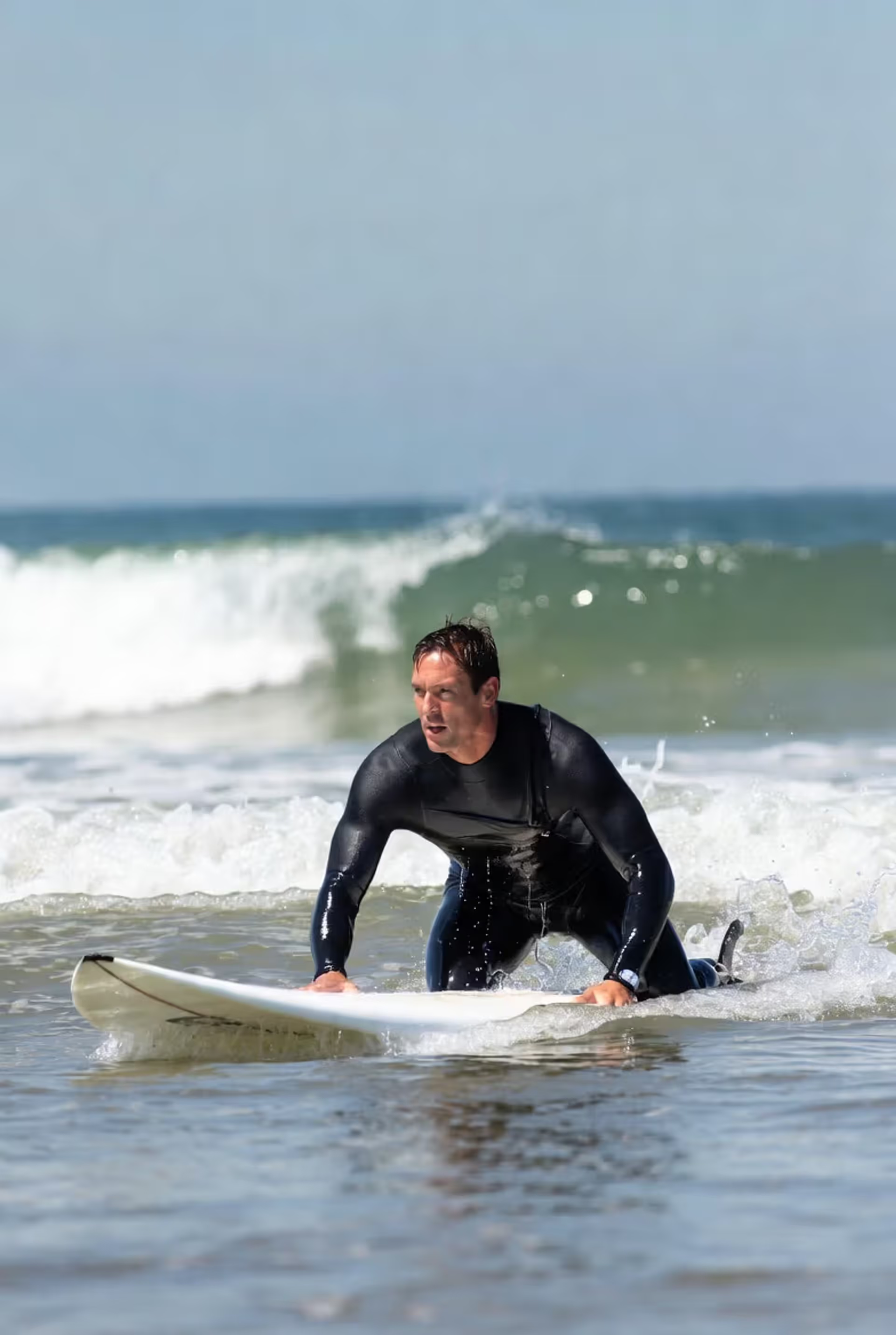
Picture a surfer chasing waves at dawn, salt-crusted hair and sun-bleached board—that's the postcard version. The real story? Professional surfers grind through 200+ travel days yearly, analyze heat footage until 2 AM, and stress over sponsor contract clauses that could cut their income by 60% if they miss a single qualification benchmark.
What looks like endless summer from the outside operates more like investment banking with bigger waves and worse job security.
What Defines Professional Surfing as a Career
There's no official ceremony where someone hands you a "professional surfer" certificate. The shift happens gradually, messily, and differently for everyone.
You're essentially pro once surfing pays your bills—whether through contest checks, brand deals, coaching fees, or that weird mix of Instagram partnerships and appearance money that funds most careers outside the top tier. A 19-year-old grinding regional contests in Brazil with a $500 monthly board sponsorship? Professional. A 35-year-old former Championship Tour athlete now running surf camps? Still professional, just differently.
This matters because surfing doesn't work like the NBA draft or minor league baseball. No clear entry point exists. Some teenagers sign six-figure sponsorships before they've competed internationally. Others spend a decade collecting small checks from local events and teaching lessons between contests.
Money flows from everywhere except where beginners expect. Contest winnings sound impressive—$100,000 for first place!—until you realize a mid-pack Championship Tour surfer might collect $180,000 in prize money but pull $350,000 from sponsors. The real paycheck comes from wearing the right logo on your wetsuit, not from your heat results.
Social media changed everything around 2015. Suddenly a surfer with mediocre contest results but 400,000 engaged followers could out-earn athletes ranked 30 spots higher. Brands started buying attention instead of just competition performance. Now every pro needs content creation skills—shooting, editing, caption writing, engagement strategy—on top of, you know, actually surfing well.
The job extends into corners most people never consider. You're testing prototype fin designs on Tuesday. Thursday you're on a video call with your board shaper discussing rocker curves. Saturday brings a sponsor photoshoot that requires 47 takes of the same cutback. Then there's the endless travel logistics, visa applications, equipment shipping nightmares, and trying to find a physio in rural Indonesia when your shoulder starts clicking wrong.
The Path from Amateur to Pro Surfer: Steps and Milestones
Most future pros catch their first waves before they turn eight. They're the kids at the local break every day after school, surfing until they literally can't paddle anymore. Parents drive them to weekend contests two states away. By age 12, they're winning everything regionally.
Then comes the decision point—usually around 16 or 17—where you either commit fully or accept surfing as a hobby. Full commitment means homeschooling or online classes so you can travel to contests. It means your parents spending $15,000 annually on travel before any sponsors appear. It means training on flat days when your friends are at the mall.
The formal pathway runs through what's now called the Challenger Series (previously the Qualifying Series—they rebrand constantly). You accumulate points across multiple events, competing against hundreds of surfers chasing the same dream. Finish top-five men or top-three women on the annual rankings, and you've qualified for the Championship Tour. Miss by one spot? You're doing it again next year, burning through savings and sponsor patience.
This process typically consumes 4-6 years of intense focus. You might surf your first Challenger Series event at 17 and qualify for the big tour at 22, if everything breaks right. Many talented surfers never make it—they plateau at the Challenger level, run out of money, or get injured at exactly the wrong moment.

Author: Logan Merrick;
Source: 2templatedesign.site
Age Requirements and Competitive Benchmarks
The WSL lets 14-year-olds compete in qualifying events, though most don't crack the Championship Tour before 19. There's a reason: paddling into 12-foot Sunset Beach barrels or surviving four-wave hold-downs at Teahupo'o requires physical maturity that most teenagers lack.
Gabriel Medina qualified at 17—crazy young. Carissa Moore made it at 18. But they're outliers. Most rookies arrive at 20-23 after years of near-misses and learning expensive lessons about contest strategy.
Regional differences matter enormously. Australian kids grow up surfing heavy reef breaks and competing in serious water. They often develop faster than surfers from gentler coastlines. A Californian teenager dominating Lowers might get demolished by Brazilian competitors who learned in closeout beach break that pounds you into the sand daily.
The Pro Junior circuit (under-21 events) functions as the unofficial proving ground. Win a Pro Junior event, and suddenly sponsors who ignored your emails are texting your parents. Place poorly, and you're questioning whether you're good enough. The psychological pressure crushes some genuinely talented surfers before they reach their potential.
Common Mistakes That Delay the Transition
Jumping into full-time competition without financial backing is the fastest way to fail. One season of serious Challenger Series competition—entry fees, flights, accommodation, boards, food—easily costs $45,000. Try funding that through restaurant shifts, and you'll arrive at contests exhausted, broke, and unable to compete with athletes who spent the morning getting sports massage.
Another trap: competing everywhere instead of strategically. Some surfers enter 20+ events annually, thinking volume equals success. Wrong. You need to target contests where conditions suit your surfing style and where the competition level gives you realistic podium chances. Burning out in mediocre events wastes time and money.
Physical training gets ignored by surfers who think "I surf every day, I'm fit enough." Not remotely true. Professional heats demand explosive paddling power—you might need to catch eight waves in 25 minutes against competitors trying to block you. That requires VO2 max conditioning, sprint intervals, and strength work that recreational surfing never develops.
The biggest mistake? Neglecting the business side until it's too late. You need basic contract literacy before sponsors appear. You should understand personal branding before you're signing deals. Too many talented surfers get locked into terrible contracts because they didn't consult anyone who understands sports marketing.

Author: Logan Merrick;
Source: 2templatedesign.site
World Surfing League Structure and Major Competitive Tours
The WSL runs professional surfing's competitive pyramid, though "runs" might be generous—it's more like they organize the chaos into something resembling a coherent system.
At the top sits the Championship Tour: 34 men and 17 women surfing the world's most famous breaks for the biggest prize money and world titles. One level down, the Challenger Series serves as both minor league and relegation zone—top finishers move up, bottom Championship Tour athletes drop down. Below that, regional tours feed competitors into the Challenger Series.
Championship Tour vs. Challenger Series Breakdown
Championship Tour life means ten events at places like Pipeline (where waves can actually kill you), Teahupo'o (ditto), Jeffreys Bay (sharks, plus the waves), and Bells Beach (just freezing). You're guaranteed prize money even for early losses, sponsors pay you significantly more just for having CT status, and every result gets streamed globally.
But here's the catch: finish outside the top-22 men or top-10 women, and you're off the tour. Gone. Your income drops 50-70% overnight because sponsors pay for Championship Tour exposure, not Challenger Series participation.
The Challenger Series features 15-20 events globally with substantially smaller prize purses. Win an event, collect maybe $30,000 instead of $100,000. Lose in Round 1, earn $1,500. You're staying in budget hotels, flying economy, and calculating whether you can afford the board excess baggage fee or need to travel with one less stick.
The competitive intensity on the Challenger Series arguably exceeds the Championship Tour because the stakes are more existential. On the CT, you're fighting for rankings and prize money. On the Challenger Series, you're fighting for your entire professional future.

Author: Logan Merrick;
Source: 2templatedesign.site
| Tour Level | How You Get There | Total Prize Money Per Event | Event Count Yearly | Travel Reality | What Comes Next |
| Championship Tour | Top-22 from previous CT + top-5 Challenger Series finishers | $607,800 per men's event; varies for women | 10-11 events | Feb-Sept nonstop international travel; maybe 30 nights home | Stay top-22 or you're demoted |
| Challenger Series | Open with WSL membership; fallen CT surfers get priority seeding | $100,000-250,000 depending on event | 15-20 events | 6-9 months, some regional clustering but still brutal | Top-5 men/top-3 women move up to CT |
| Regional Qualifying Series | Regional membership plus $14+ age minimum | $10,000-50,000 per event | 30+ globally | Mostly regional with strategic international trips | Points determine Challenger Series seeding |
| Regional Pro Tours | Open entry, basically anyone | $5,000-25,000 per event | Varies wildly by region | Local and regional only | Build ranking for QS priority |
Specialized tours exist for different disciplines. The Big Wave Tour only runs when waves hit 30+ feet at specific breaks—events get called with 72 hours notice, so athletes need to stay ready to fly to Nazaré or Jaws on two days' warning. The Longboard Tour keeps traditional surfing alive competitively. Junior tours develop teenagers, though honestly they mostly create stress for 14-year-olds who should probably just be surfing for fun.
The Reality of Professional Surfers' Lifestyle
Forget the beach bum fantasy. This is a grinding travel existence that ages you in dog years.
Championship Tour surfers spend 220+ nights annually in hotels, apartments, and occasionally someone's spare room when event housing falls through. You land somewhere new every 2-3 weeks. Adjust to the time zone, figure out the local break, and start competing while still jet-lagged. Event ends Sunday, you fly Monday, arrive Tuesday, compete again Friday.
A typical event week looks nothing like vacation. You arrive 4-5 days early to adjust and surf practice sessions. Mornings start around 6 AM—checking swell forecasts, analyzing competitor footage, maybe dawn patrol surfing before the break gets crowded. By 9 AM you're at the contest site even if you're not competing yet, watching heats and studying how the judges are scoring.
Your actual heat lasts maybe 25-30 minutes. You might surf twice if you win. That's potentially one hour of actual competition across a week of waiting, preparing, and stressing. Then immediately you're packing for the next location.
Training never stops. Non-competition days mean 2-3 hours in the water focusing on specific maneuvers—improving your backhand tube riding, tweaking your aerial rotation, practicing priority situations. Afternoons bring gym work: Olympic lifting, plyometric training, balance exercises on Indo Boards, and endless core conditioning. Most top pros employ full-time trainers.
The off-season (October through January for most) isn't rest—it's when you schedule surgeries, intensify physical training, and film video projects for sponsors who've been emailing increasingly urgent reminders that you owe them content. You're also chasing swells to stay sharp and handling the tedious business maintenance that piles up during competition season.
Mental health issues affect pros at rates nobody officially tracks but everyone privately acknowledges. The pressure to perform for sponsors creates constant anxiety. You're isolated from friends and family for months. Career uncertainty keeps you awake—one injury could end everything. Many surfers develop depression, though few discuss it publicly because sponsors prefer athletes who embody "the dream lifestyle."
Relationships fail constantly. You're gone 70% of the year, self-focused by necessity, and often too exhausted to be emotionally present during your limited time home. Most pros either date people in the surf industry who understand the lifestyle or wait until retirement to get serious about relationships. Family planning usually gets delayed into late thirties.
The lifestyle suits certain personalities—you need comfort with constant change, ability to handle uncertainty, and enough self-motivation to train hard without a coach standing over you. You're essentially a freelance contractor in board shorts, managing your own business while also trying to beat people in heats.
How Sponsorship Deals Work in Professional Surfing
Sponsorships aren't charity—they're employment contracts where brands pay you to be a walking advertisement who occasionally surfs really well.
The relationship functions more like acting than sports. Brands aren't just buying your contest results; they're licensing your image, social media reach, and whatever cool factor you bring to their marketing campaigns. You're expected to embody brand values, meaning if you sponsor with a family-friendly apparel company, getting arrested for drunk driving isn't just personally embarrassing—it's a contract breach that could cost you $200,000 annually.

Author: Logan Merrick;
Source: 2templatedesign.site
Types of Sponsors and What They Expect
Core surf sponsors form your foundation: board shaper, wetsuit company, apparel brand, plus smaller deals for fins, traction pads, sunglasses, watches. Each contract specifies deliverables in detail. You'll wear the wetsuit in every heat—no exceptions, even if it's slightly torn. You'll post Instagram content featuring the apparel brand monthly (minimum 8 posts annually with specific hashtag requirements). You'll attend two retail appearances per year. You'll be available for one photo shoot quarterly.
Miss these obligations, and brands can reduce payments or terminate entirely. The contracts aren't flexible. If your apparel sponsor wants you at a store opening in Nebraska on August 12th, you're going to Nebraska on August 12th, even if you'd rather be somewhere training.
Non-endemic sponsors—energy drinks, car companies, tech brands, banks—increasingly target surfers because we deliver desirable demographics (18-35, disposable income, active lifestyle orientation). These deals often pay better than surf brands but require broader participation. You're speaking at corporate events, appearing in commercials, creating content that somehow connects surfing to banking products.
Contract structures vary wildly. A Championship Tour rookie might get $8,000 monthly from their main apparel sponsor—sounds great until you realize they're paying 15% to their manager and covering all their own expenses. Established stars pull $75,000-150,000 monthly from primary sponsors. The gap is enormous and entirely dependent on ranking plus marketability.
Most deals run 2-3 years with performance clauses that reduce payments if you drop off tour. Standard contracts cut compensation by 50-75% if you lose Championship Tour status. Some include injury protections, most don't. The financial precariousness affects everything—you're surfing heats while calculating what losing means for your mortgage payment.
Performance bonuses add complexity. Win an event, collect maybe $15,000 extra from your main sponsor. Win a world title, some contracts pay $500,000-1,000,000 bonuses. But plenty of contracts include zero performance bonuses—you're paid for exposure, not results.
Building a Personal Brand Beyond Competition Results
Social media followers translate directly to dollars in ways that didn't exist pre-2015. A surfer with 600,000 engaged Instagram followers commands higher sponsor fees than a better competitive surfer with 150,000 followers, because brands are buying marketing reach, not trophy counts.
Smart surfers develop distinct personal brands that attract specific sponsor types. You can be the progressive aerialist (attracts youth brands, energy drinks). The powerful barrel rider (surf hardgoods, outdoor lifestyle brands). The environmental activist (attracts eco-conscious brands, pays less but offers more security). The party surfer (risky but some brands love it). The spiritual wave-riding philosopher (surprisingly marketable to wellness brands).
This differentiation matters because you're competing for sponsor dollars against dozens of similarly skilled surfers. What makes you unique beyond your backhand snap? That's what sells.
Content creation became mandatory somewhere around 2018. Most pros now employ photographers/videographers to document their surfing, then work with editors producing YouTube videos, Instagram reels, and TikTok content. The best treat this as seriously as competition training, understanding their earning potential extends decades beyond their competitive prime if they build sustainable media businesses.
Griffin Colapinto posts training content. Stephanie Gilmore shares travel experiences. Filipe Toledo documents family life. Each approach attracts different audiences and therefore different sponsors.
Financial Breakdown: What Pro Surfers Actually Earn
Let's talk actual numbers, because the public perception doesn't match reality.
Championship Tour prize money for men's events totals around $607,800 per contest. First place takes home $100,000. Thirty-fourth place gets $6,500. Across a full season, the world champion might collect $650,000 in prize money, while a mid-pack surfer (ranked 15th-20th) earns maybe $180,000-240,000.
Women's prize money increased substantially after years of advocacy, though it still trails men's purses at some events. The gap narrowed significantly, but full parity doesn't exist across all competitions yet.
Challenger Series prize money drops dramatically. Event winners collect $25,000-40,000. Early exits earn $1,200-2,500. Surf 15 Challenger Series events with moderate performance, and you might gross $55,000 in prize money—nowhere near enough to cover your expenses for the year.
Author: Logan Merrick;
Source: 2templatedesign.site
Sponsorship income creates the real earning gap. Elite Championship Tour athletes with strong personal brands and social media presence pull $1,000,000-4,000,000 annually from sponsors. Mid-tier CT competitors (ranked 10th-25th) typically earn $350,000-700,000 from sponsorships. Challenger Series surfers might receive $60,000-180,000 total from sponsors—and that's if they've maintained deals after dropping from the CT or are rising prospects with strong results.
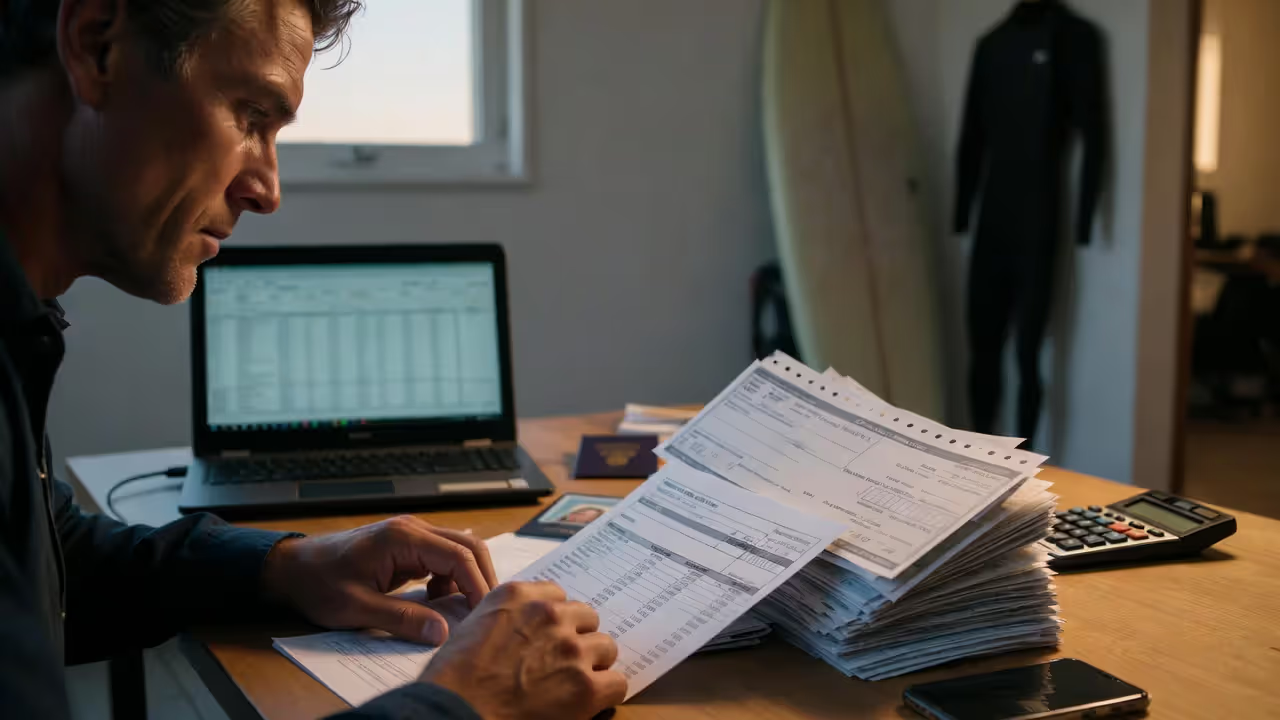
Now subtract expenses. International travel for 20+ annual events costs $35,000-55,000 even when you're strategic about flights and accommodation. Equipment expenses run $18,000-28,000 yearly—you'll break or lose 35-60 boards at $600-1,200 each, plus wetsuits, board bags, fins, leashes, wax (okay, wax is cheap, but everything else adds up). Coaching, training facilities, physiotherapy, sports psychology, and nutritionist services can easily hit $25,000-45,000 if you're serious about optimization.
Many pros employ managers or agents taking 10-20% of sponsorship income. That's $70,000 gone if you're earning $700,000 annually from sponsors—painful but often necessary because good management secures better deals.
As Kolohe Andino told Stab Magazine in 2022: "Everyone sees the highlight reels and thinks we're all getting rich, but the reality is unless you're top ten in the world, you're making a middle-class income while working 60-70 hour weeks in complete uncertainty. I love what I do—I'm not complaining. But anyone considering this career needs to understand that maybe 100 surfers worldwide actually make life-changing money. Everyone else is getting by, hoping for a breakthrough, or supplementing with other income."
Net income after expenses for a mid-tier Championship Tour surfer typically lands around $180,000-320,000. Comfortable, not wealthy—especially considering the career's short lifespan, zero benefits, no employer-matched retirement contributions, and you're paying self-employment taxes on everything.
Challenger Series competitors often net $25,000-65,000 annually. Many live with family or require side income through coaching, social media partnerships, or part-time work.
FAQ: Common Questions About Professional Surfing Careers
Conclusion
Professional surfing offers something genuinely unique—a career built around an activity most people consider pure recreation. The lifestyle delivers incredible experiences, world travel, and the privilege of surfing perfect waves while getting paid. For the 150-200 surfers who reach the Championship Tour's upper tier, the financial rewards justify the sacrifices.
But the romanticized image misses most of the reality. Success requires exceptional surfing ability plus business acumen, personal brand development, content creation skills, physical resilience, mental toughness for handling constant pressure, and honestly some luck with timing and avoiding major injuries. The career is financially viable for maybe 400 surfers worldwide—everyone else is scraping by, supplementing with side work, or burning through family support while chasing an increasingly unlikely dream.
Financial insecurity affects nearly everyone outside the top 20. Your income can drop 60% overnight based on a few poor heat results. Sponsors can terminate contracts whenever they want if you're not delivering results or exposure. You're paying for your own health insurance, retirement contributions, and every business expense while earning no guaranteed salary.
For aspiring professional surfers, approach this with eyes open. Develop backup plans and skills that provide post-competition options. Build financial literacy early—understanding contracts, taxes, and long-term planning matters as much as your cutback technique. Treat your surfing career as a business venture requiring strategic thinking, not just passionate wave-riding.
The athletes who sustain successful careers typically combine natural talent with pragmatic business sense. They diversify income, build strong personal brands, and prepare for career transitions before they're forced into them. They love surfing enough to endure the sacrifices but remain realistic about the financial and lifestyle challenges that come with professional status.
If you're talented enough and strategic enough, professional surfing can provide an extraordinary career. Just make sure you understand what you're actually signing up for beyond the postcard version.