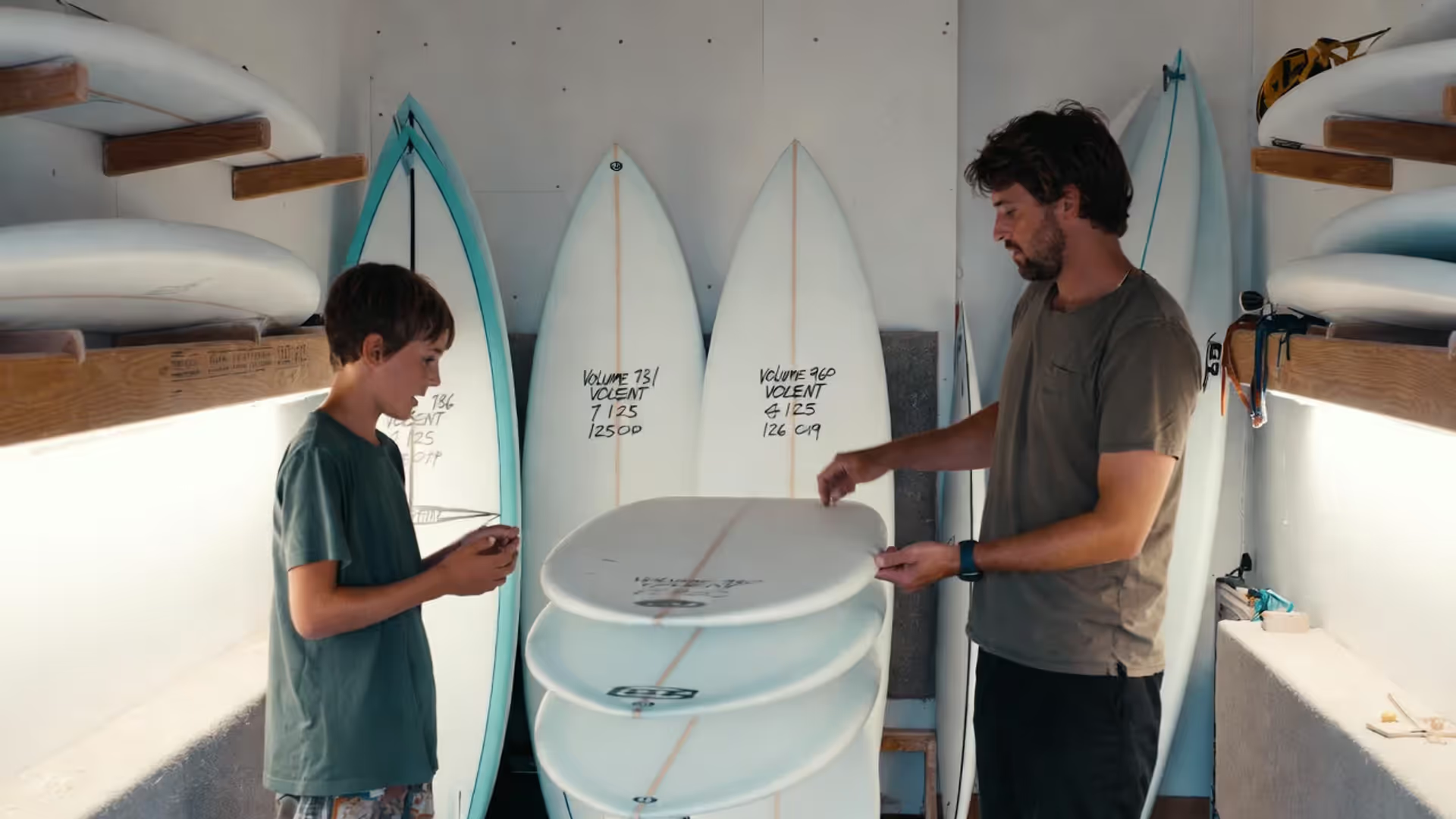
Volume matters more than most beginners think
How to Choose a Surfboard That Matches Your Skill Level and Wave Conditions
Content
Walk into any surf shop and you'll see someone eyeing a sleek, narrow shortboard—the same shape their favorite pro rides. Three sessions later, that board sits in their garage while they nurse bruised ribs and wounded pride.
Wrong surfboard choices derail more surfing careers than any other factor. A board that's too small forces you to paddle twice as hard to catch half as many waves. You'll spend sessions watching others ride while you bob uselessly in the lineup, burning through motivation faster than sunscreen in July.
The right board transforms your experience. Beginners on properly sized boards catch waves on their first day. They build confidence, develop timing, and actually enjoy the learning curve instead of fighting against physics. According to Mike Latronic, head instructor at San Diego Surf School, "We see students progress three times faster when they start on boards matched to their weight and fitness level. The wrong board doesn't just slow learning—it teaches bad habits that take months to unlearn."
Safety enters the equation too. Undersized boards create desperate paddling, poor positioning, and late takeoffs that send you over the falls. A board with adequate volume keeps you stable, lets you catch waves early, and gives you control when things get sketchy.
Understanding Surfboard Dimensions: Length, Width, and Thickness Decoded
Every surfboard dimension affects how it performs, but they work together as a system. Change one measurement and you alter the entire ride.
How Board Length Affects Paddling and Wave Catching
Length determines your wave-catching ability and top-end speed. Longer boards (8'0" and up) create more planing surface, meaning they glide over water with less effort. You'll paddle into waves earlier, before they steepen into critical sections that demand quick reflexes.
A 9'0" longboard catches waves in ankle-high mush that wouldn't move a 6'0" shortboard. This matters enormously when you're learning. More waves caught equals more practice time standing up, reading ocean movement, and building muscle memory.
But length trades maneuverability for paddle power. That 9'0" board resists quick direction changes. It takes wider turns and won't fit in tight pocket sections. As your skills improve, you'll want to shorten your board to access more responsive surfing.
Most beginners thrive on boards between 7'6" and 9'0". Athletic riders with good balance can start around 7'6", while heavier or less fit surfers benefit from staying above 8'6".

Author: Logan Merrick;
Source: 2templatedesign.site
Width's Role in Stability vs. Maneuverability
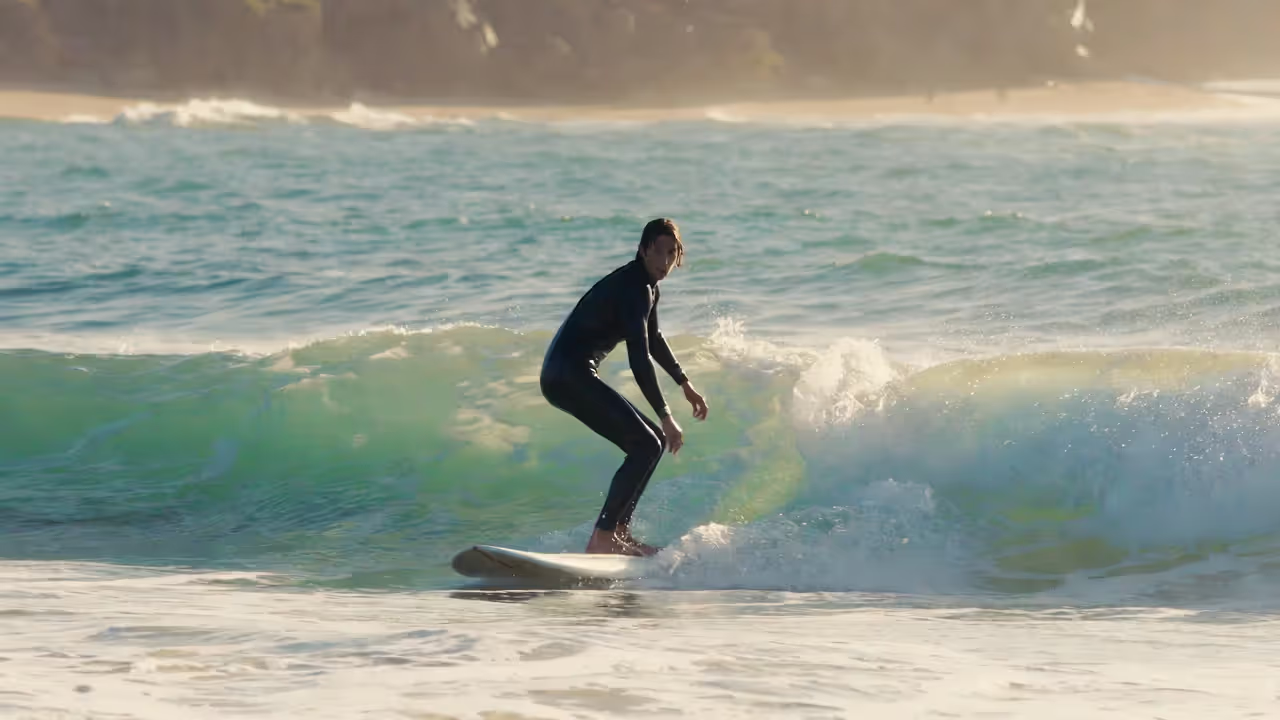
Width creates stability—the difference between feeling planted and wobbling like a drunk flamingo. Wider boards (21"–23" in the center) forgive weight shifts and provide a stable platform for popping up.
Narrow boards (18"–19") cut through water faster and roll rail-to-rail easily, letting experienced surfers carve aggressive turns. But they punish beginners. Every slight movement rocks the board, making standup attempts feel like balancing on a rolling log.
Author: Logan Merrick;
Source: 2templatedesign.site
Beginners should target 21"–22" of width at the board's widest point. This provides enough stability to focus on timing and technique without feeling like you're riding a barge.
Thickness and Its Impact on Buoyancy
Most beginners underestimate how much volume they need. If you're struggling to catch waves, the problem is almost always that the board is too small.
— Rusty Preisendorfer, surfboard shaper
Thickness runs from deck to bottom, typically ranging from 2.25" to 3.25". Thicker boards float you higher in the water, making paddling easier and wave catching more forgiving.
Think of thickness as your buoyancy insurance. A 3" thick board keeps your chest clear of the water while paddling, reducing drag and fatigue. Thin boards (2.5" or less) sit lower, requiring stronger paddling to maintain speed.
Heavier riders need more thickness to stay buoyant. A 200-pound surfer on a 2.5" thick board will sink partially through the surface, creating drag that makes paddling exhausting. That same rider on a 3.25" board floats properly and paddles efficiently.
| Rider Weight | Beginner Length | Width | Thickness | Volume Range |
| Under 150 lbs | 7'6"–8'6" | 21"–22" | 2.75"–3.0" | 50–60 liters |
| 150–180 lbs | 8'0"–9'0" | 21.5"–22.5" | 2.875"–3.125" | 60–70 liters |
| 180–210 lbs | 8'6"–9'6" | 22"–23" | 3.0"–3.25" | 70–80 liters |
| 210+ lbs | 9'0"–10'0" | 22.5"–23.5" | 3.125"–3.5" | 80–95 liters |
Surfboard Volume Guide: Matching Liters to Your Weight and Experience
Volume measures total buoyancy in liters, combining length, width, and thickness into a single number. It's the most important specification for matching a board to your body.
Shapers calculate volume using complex formulas, but you'll see it listed on most modern boards. A typical beginner board ranges from 50 to 90 liters depending on rider size.
The basic rule: beginners need roughly 0.5 to 0.6 liters per pound of body weight. A 160-pound beginner should ride 80–96 liters. As skills improve, you can drop volume—intermediates use 0.4–0.5 liters per pound, while advanced surfers ride as low as 0.3 liters per pound.
These ratios assume average fitness. If you swim regularly or have strong paddling endurance, you can drop 10% from the beginner range. Conversely, if you're over 45 or haven't exercised in years, add 10% to account for reduced paddling power.
Volume affects everything. Too little volume and you'll sink while paddling, making wave catching nearly impossible. You'll tire quickly and catch maybe three waves per session. Proper volume keeps you floating high, paddling efficiently, and catching 15–20 waves in the same time frame.
Too much volume creates different problems. Overly buoyant boards feel corky and unresponsive. They bounce over chop instead of cutting through it, and they resist turning. But this is rarely a beginner problem—most new surfers err on the side of too little volume.
Calculate your target volume, then test boards within 5 liters of that number. A 70-liter board and a 75-liter board will feel noticeably different, but both might work depending on wave conditions and your fitness level.
The 5 Best Surfboard Types for Beginners (and When to Graduate)
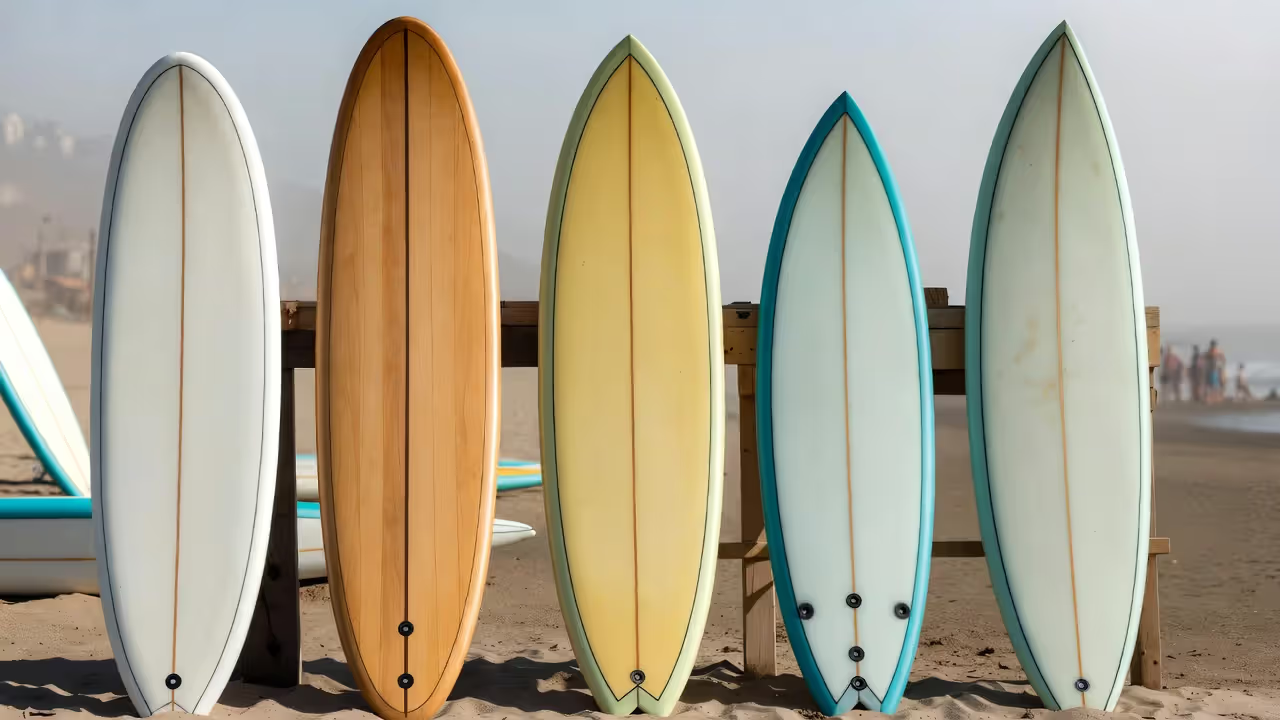
Soft-Top/Foam Boards: These feature foam construction with soft rubber rails. They're nearly indestructible, safe when they hit you, and priced affordably ($200–$400). Foam boards work brilliantly for your first 10–20 sessions. They build confidence without risk of injury. Graduate when you're consistently standing up and want more responsive performance.
Longboards (9'0"+): Classic longboards offer maximum wave-catching ability and stability. Their length and volume make paddling effortless, and their glide lets you ride small waves that shortboards can't catch. Stay on a longboard for 6–12 months as you develop timing and balance. Many surfers ride longboards permanently—it's a legitimate style, not just a learning tool.
Funboards/Mini-Mals (7'6"–8'6"): These blend longboard stability with shortboard maneuverability. They're thick enough to paddle easily but short enough to turn more responsively than traditional longboards. Funboards work well for athletic beginners or as your second board after mastering a longboard. Expect to ride this size for 1–2 years while developing proper technique.
Fish Designs (5'6"–6'6"): Short, wide, and thick, fish boards offer high volume in a compact package. They're not ideal starter boards despite their volume because their short length makes them twitchy and hard to control. Consider a fish after you've mastered a funboard and want to surf smaller, mushier waves with more maneuverability.
Hybrid/Groveler Shapes (6'0"–7'0"): These boards pack volume into shorter lengths using extra width and thickness. They're designed for weak waves but require intermediate skills to ride properly. Think of these as your third or fourth board, after you've developed solid pop-up technique and wave-reading ability.
Progression timeline varies wildly. Athletic 25-year-olds might move from foam board to funboard in three months. A 50-year-old learning to surf might happily ride a longboard for years. Don't rush downsizing—every time you drop volume or length, you sacrifice wave count and practice time.
Author: Logan Merrick;
Source: 2templatedesign.site
7 Mistakes People Make When Buying Their First Surfboard
Buying too small: The classic error. You want to look like a surfer, so you grab a 6'2" thruster. It sinks when you paddle, catches no waves, and gathers dust within a month. Always size up beyond what looks cool.
Ignoring local wave conditions: A board perfect for powerful beach breaks won't work in mushy point breaks. Research your local break. If you're surfing weak, rolling waves, you need more volume and length than someone learning in punchy shorebreak.
Choosing based on aesthetics: That retro twin-fin looks amazing, but it requires skills you won't have for two years. Pick boring and functional over stylish and frustrating. You can buy pretty boards once you can actually surf them.
Skipping volume calculations: Guessing your volume needs guarantees problems. Spend five minutes calculating your target range. It's the difference between catching waves and floating uselessly.
Wrong fin setup: Some beginners buy boards with advanced fin configurations (quads, twin-fins) that feel unstable at slow speeds. Stick with single fins or thruster (three-fin) setups until you're riding waves with speed and control.
Buying used without inspection: That Craigslist deal might have hidden damage—delamination, waterlogged foam, cracked stringers. Used boards can save money, but bring an experienced surfer to inspect before buying. Repairs often cost more than the savings.
Prioritizing brand over shape: Famous brand names don't automatically mean better performance. A properly sized no-name board outperforms a too-small premium board every time. Focus on dimensions and volume, not logos.
Surfboard Selection Checklist: Questions to Ask Before You Buy
What's your honest fitness level? Can you swim 200 meters without stopping? Do you exercise regularly? Lower fitness demands higher volume and more forgiving boards. Don't let ego override reality—your actual fitness matters more than your imagined fitness.
What are your local wave conditions? Small, mushy waves need different boards than powerful beach breaks. Visit your local break on three different days. Watch what experienced surfers ride. Note the wave size, power, and consistency.
How often will you surf? Once a month? Stay on a beginner board longer. Three times per week? You'll progress faster and can plan your next board purchase within 6–12 months. Frequency dramatically affects your learning curve.
What's your realistic budget? Quality beginner boards run $300–$600 new, $150–$350 used. Don't spend $1,000 on your first board—you'll outgrow it or discover surfing isn't for you. Save premium purchases for when you know your preferences.
Where will you store it? Longboards need 10+ feet of space. If you live in an apartment, consider a shorter funboard that fits inside. Storage limitations are real constraints that affect your board choice.
How will you transport it? Roof racks, truck beds, and interior car space all limit board length differently. A 9'6" longboard won't fit in most sedans. Measure your vehicle before buying.
Are you committed to proper progression? Will you resist the urge to downsize too quickly? Honest self-assessment prevents expensive mistakes. If you know you'll want a shorter board in three months regardless of skill level, factor that impatience into your purchase decision.
Frequently Asked Questions About Choosing a Surfboard
Your Next Steps to Finding the Perfect Board
Choosing your surfboard comes down to honest self-assessment and proper volume calculation. Ignore what looks cool or what pros ride. Focus on boards that match your current weight, fitness level, and local wave conditions.
Start with the volume calculation—0.5 to 0.6 liters per pound of body weight. Use that number to narrow your search to boards in the right range. Then consider length based on your fitness and wave conditions, targeting at least 8'0" for most beginners.
Visit local surf shops and explain your situation truthfully. Experienced shop staff can recommend specific boards from their inventory that match your needs. Many shops offer demo programs or rentals—test before buying whenever possible.
Remember that your first board is temporary. You'll outgrow it as skills improve, and that's perfectly normal. Buy something affordable and appropriate for today, not aspirational for next year. The best surfboard is the one that gets you catching waves and building skills right now.
Calculate your volume, size up rather than down, and get in the water. Every session on the right board accelerates your progression and builds the foundation for a lifetime of surfing.