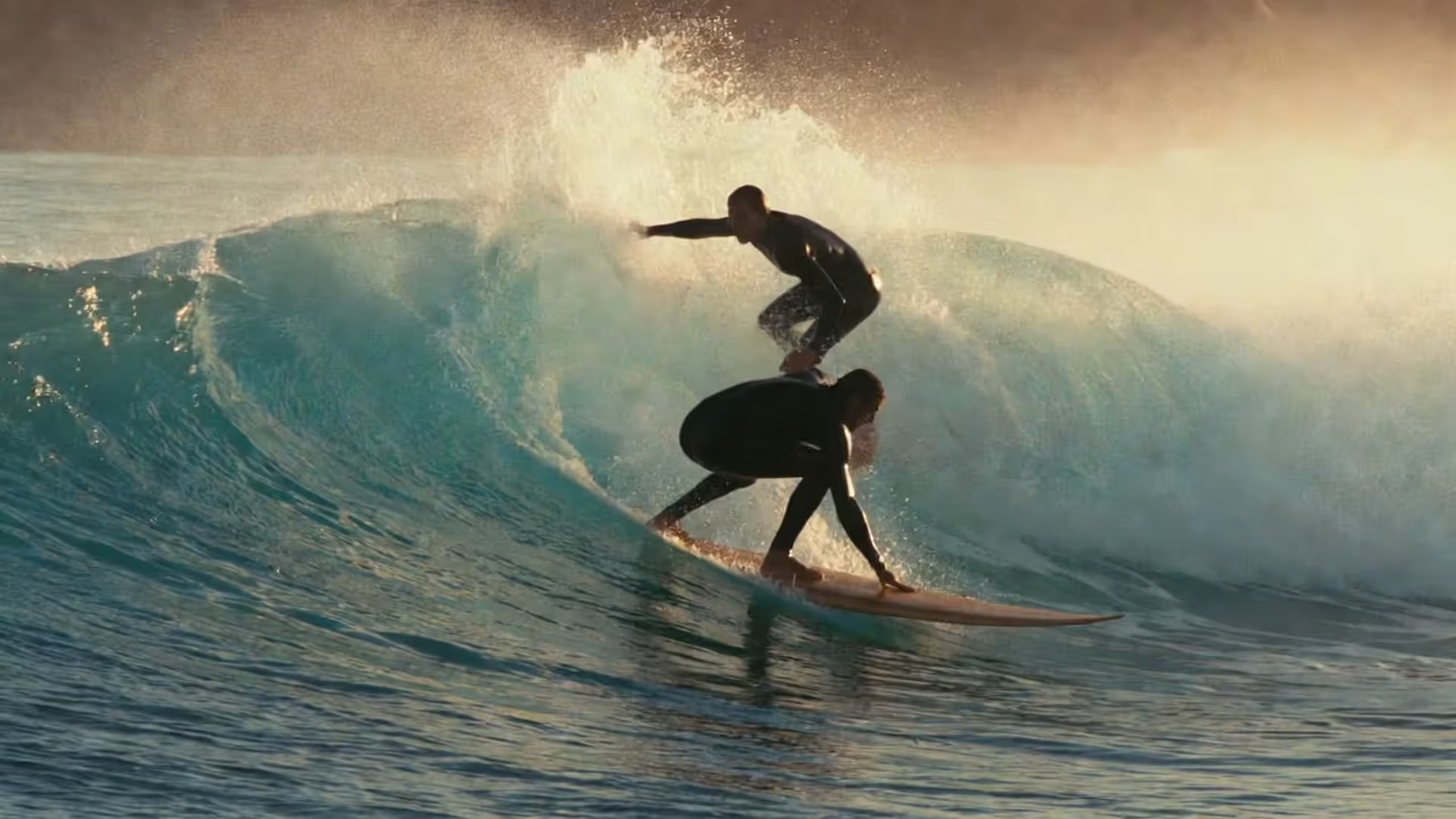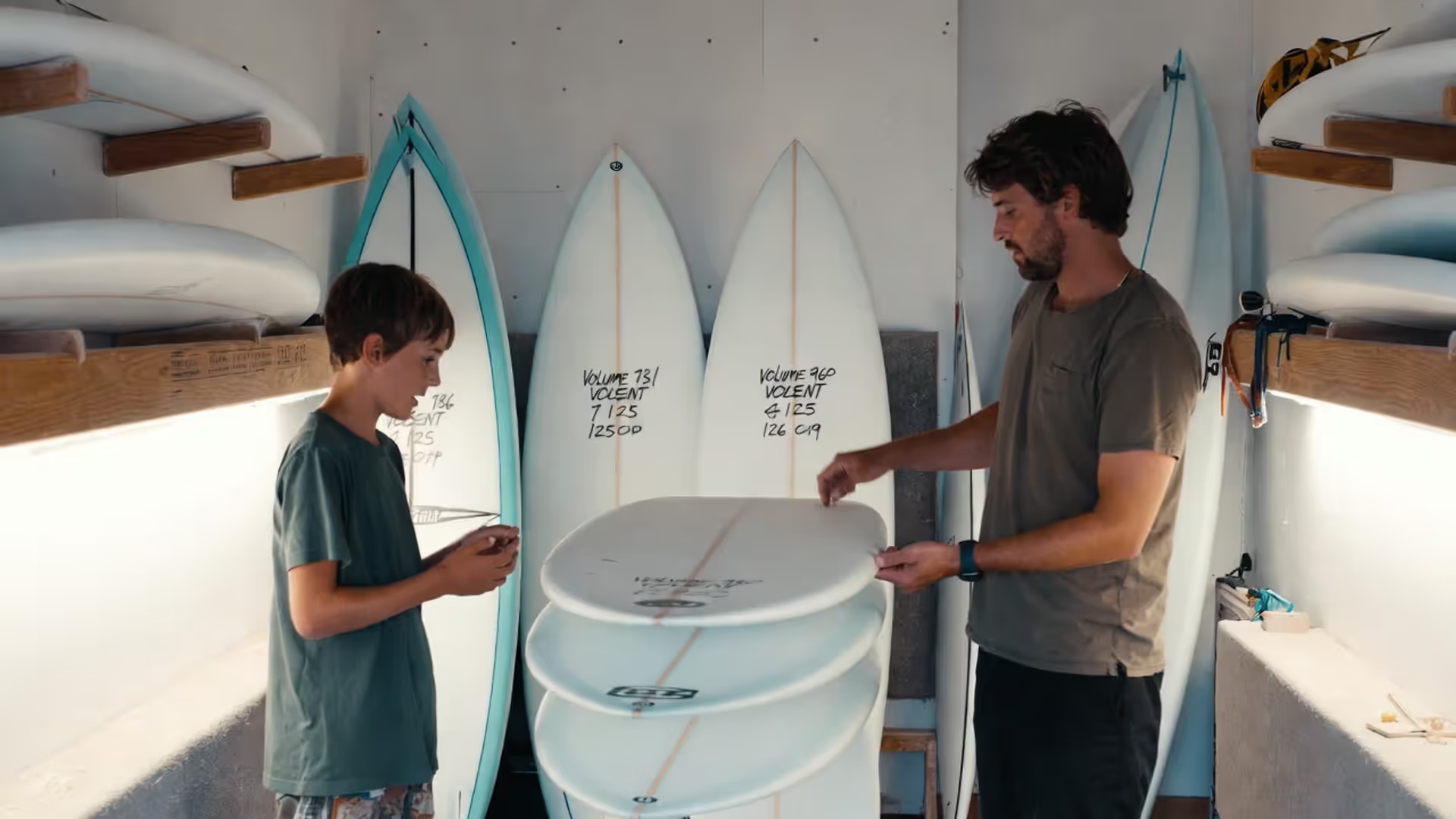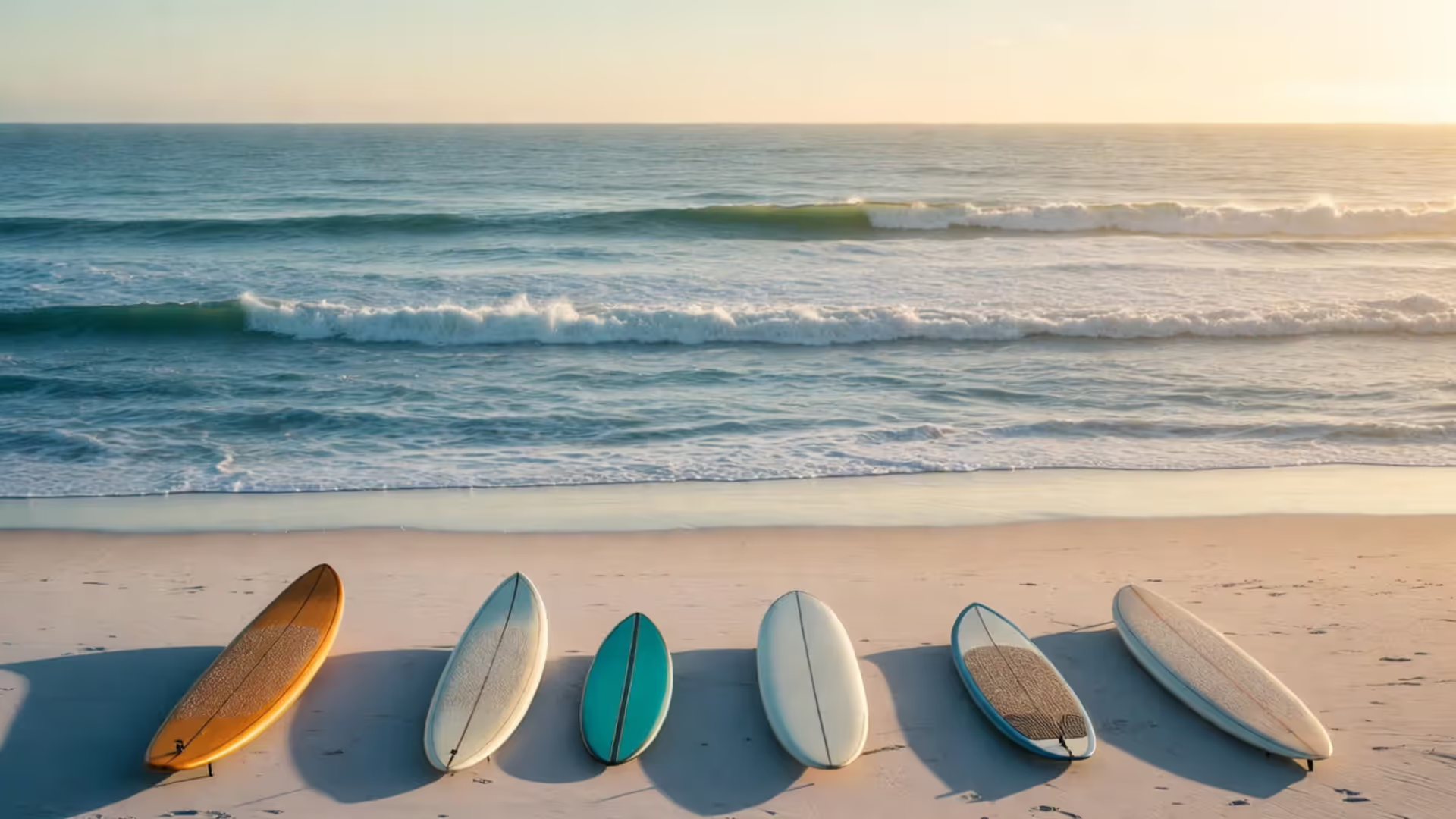
Different surfboards are built for completely different waves and styles
Surfboard Guide: How to Choose the Right Board for Your Skill Level and Wave Conditions
Content
Walk into any surf shop and you'll see fifty different boards. Most first-time buyers grab whatever matches their budget and looks cool. Three months later, that same board's collecting dust because catching waves feels impossible.
Here's what nobody tells beginners: your board determines 80% of your early success. Grab something too short, too narrow, or too "performance-oriented" and you'll paddle yourself exhausted while everyone around you glides into waves effortlessly.
I've watched countless people quit surfing because they started on a 6'0" thruster when they needed an 8'0" funboard. The board wasn't bad—it just wasn't right for someone still learning pop-ups. Get the fundamentals of board design, construction, and sizing down before you spend a dime.
What Makes a Surfboard Work: Core Design Elements That Affect Performance
Five features control everything about how your board rides. Tweak any one of them and the entire personality changes.
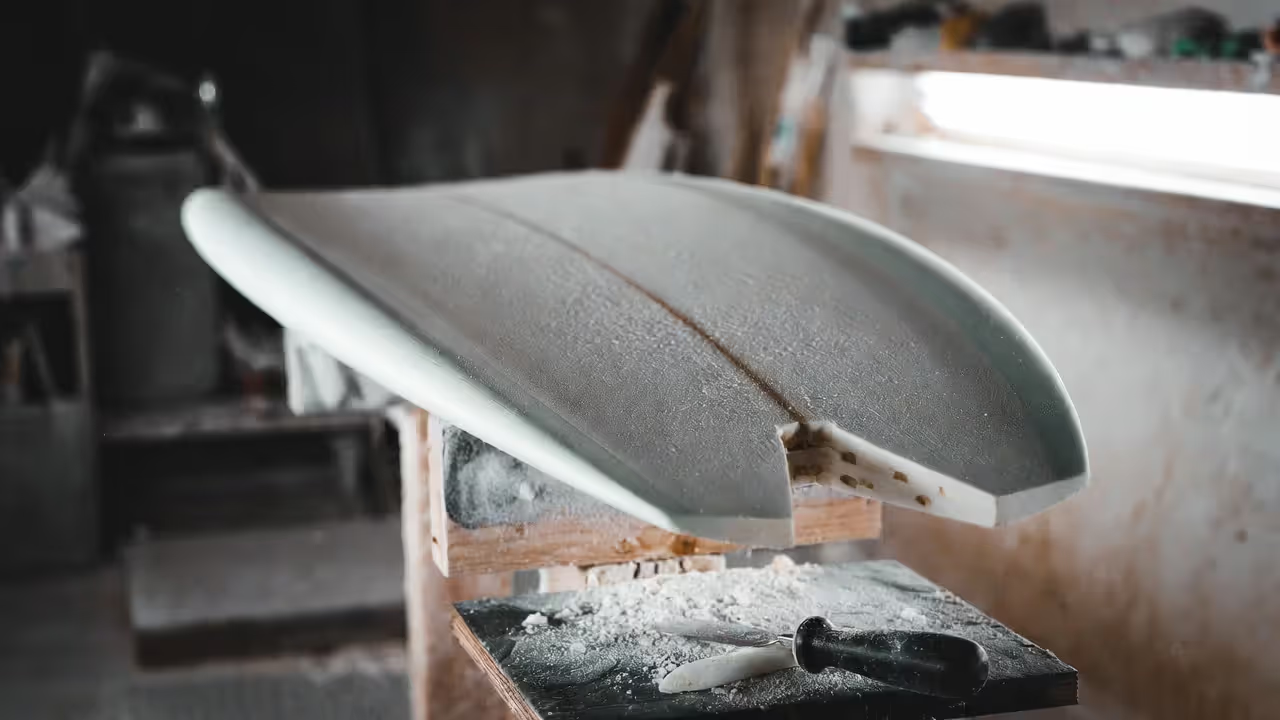
Rocker—that's the banana-like curve from nose to tail—dictates speed versus maneuverability. Heavy rocker (lots of curve) lets you jam tight turns in powerful surf, but paddling feels slow and you need more wave push to get going. Minimal rocker makes paddling effortless and maintains glide in mushburgers, though you can't snap the board around as quickly when it counts.
Rails mean the edges. Razor-thin rails slice into wave faces for aggressive surfing—they hold when you're cranking a bottom turn at speed. But they're unforgiving. Catch a rail unexpectedly and you're eating it. Fat, rounded rails don't grab. They release smoothly, which is exactly what you want when you're still figuring out weight distribution.
Tail shape controls how water exits the back. Wide tails—think squash or square—give you surface area for generating speed in gutless conditions. Pin tails and round tails narrow the release point, offering control when waves jack up and throw. You'll see guns with extreme pintails for a reason: they track straight down giant faces without sliding sideways.
Author: Tyson Caldwell;
Source: 2templatedesign.site
Nose shape affects how much board pokes above water and how easily you catch waves. Longboards have wide, rounded noses because that's paddle power. Shortboards narrow down to a point because less nose means less swing weight during direction changes.
Bottom contours are what you can't see when looking at a board on the rack. Flat bottoms feel fast and loose. Concaves (channels carved into the bottom) redirect water for lift and acceleration. Vee through the tail smooths rail-to-rail transitions. Most beginners won't notice these details, but they matter once you're linking turns.
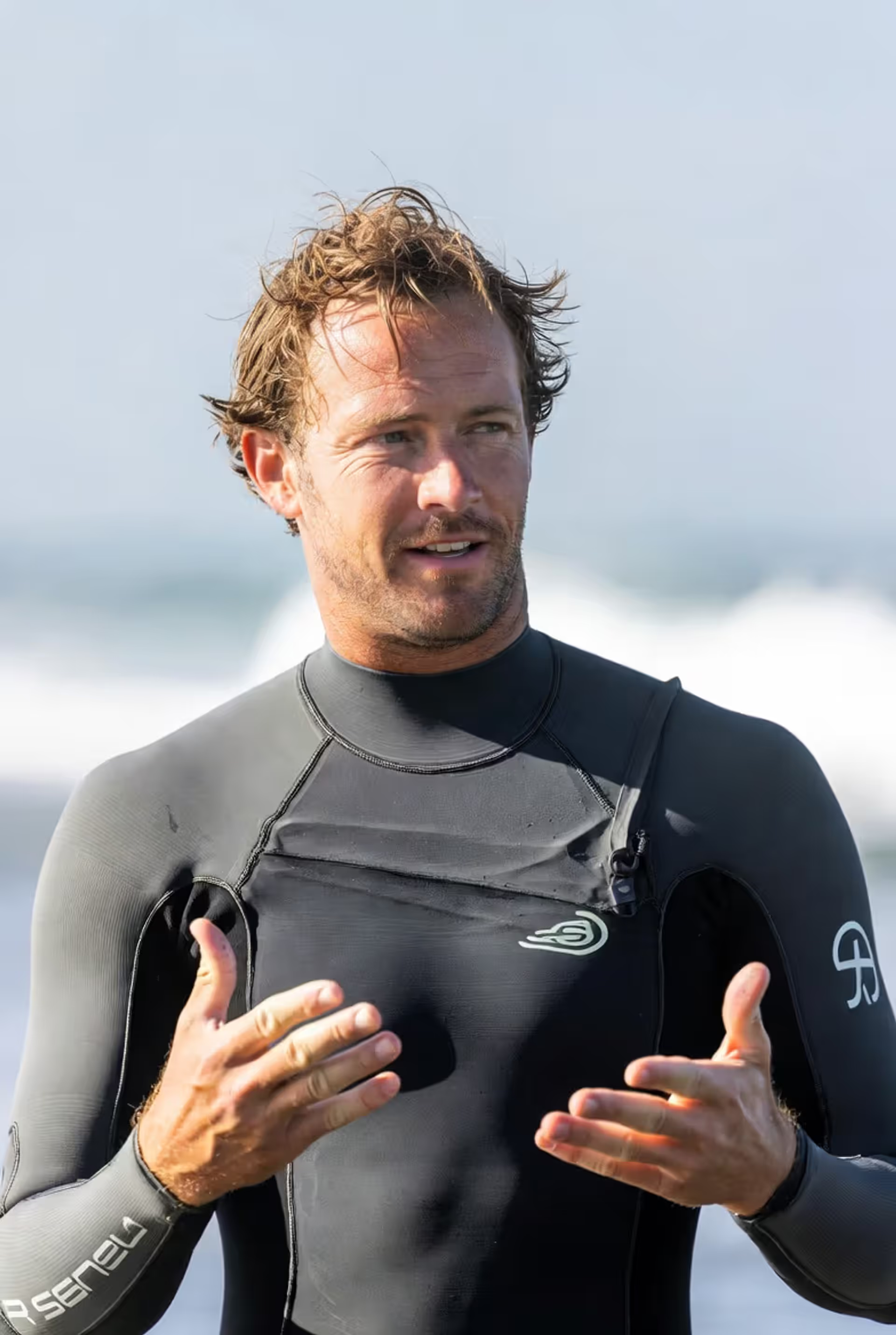
According to renowned shaper of Lost Surfboards,
Volume is what gets you into waves, but rocker is what lets you do something once you're up. A beginner needs volume to catch anything; an expert needs rocker to handle what they catch.
— Tyson Caldwell
The 7 Main Surfboard Types and When to Use Each One
| Board Type | Best For (Skill Level) | Ideal Wave Size | Typical Length Range | Key Characteristics |
| Shortboard | Advanced riders | 3–8 ft | 5'6"–6'4" | Minimal volume, heavy rocker, designed for vertical surfing |
| Longboard | Beginners through experts | 1–6 ft | 8'0"–10'0"+ | Maximum float, subtle rocker, classic style potential |
| Fish | Intermediate+ | 2–5 ft | 5'2"–6'2" | Wide outline, swallow tail, twin or quad setups |
| Funboard/Mini-Mal | Learning phase | 2–5 ft | 6'6"–8'0" | Enough volume for progression, manageable length |
| Gun | Big wave specialists | 10 ft+ | 7'0"–10'0"+ | Narrow profile, pintail, built for speed and hold |
| Hybrid | Intermediate to advanced | 2–6 ft | 5'8"–6'6" | Performance outline with strategic volume placement |
| Soft-Top | First-timers | 1–4 ft | 6'0"–9'0" | Foam exterior, forgiving, practically indestructible |
Shortboards: For Advanced Riders in Hollow Waves
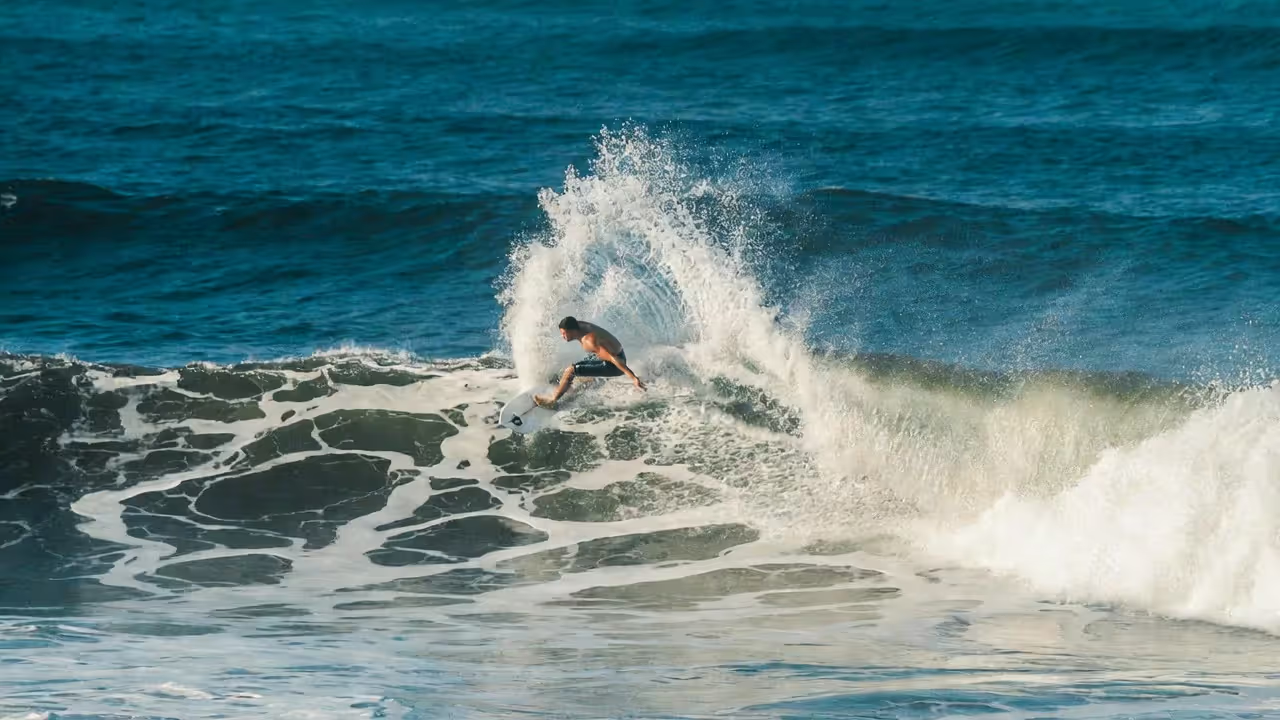
These are the 5'6" to 6'4" sticks you see in surf magazines—sleek, narrow, built for radical maneuvers. Aggressive rocker curves, knife-thin rails, minimal volume compared to length.
Shortboards come alive in overhead surf with punch behind it. They pivot on a dime, allowing late drops, snaps off the lip, and aerial attempts. In small waves? They sink. For beginners? Absolutely brutal.
The low volume makes paddling an arm workout. You'll miss waves that longboarders catch 30 feet outside you. Standing up requires split-second timing because there's no stability buffer. I've seen athletic beginners spend six frustrating months on shortboards before finally accepting they needed more board.
Real talk: if you can't consistently catch unbroken waves on a bigger board, generate your own speed, and execute flowing turns, shortboards will destroy your motivation.
Author: Tyson Caldwell;
Source: 2templatedesign.site
Longboards: Best for Small Surf and Beginners
Anything 8 feet or longer falls here. Traditional logs hit 10+ feet. The massive volume, wide templates, and flatter rocker make them paddle machines.
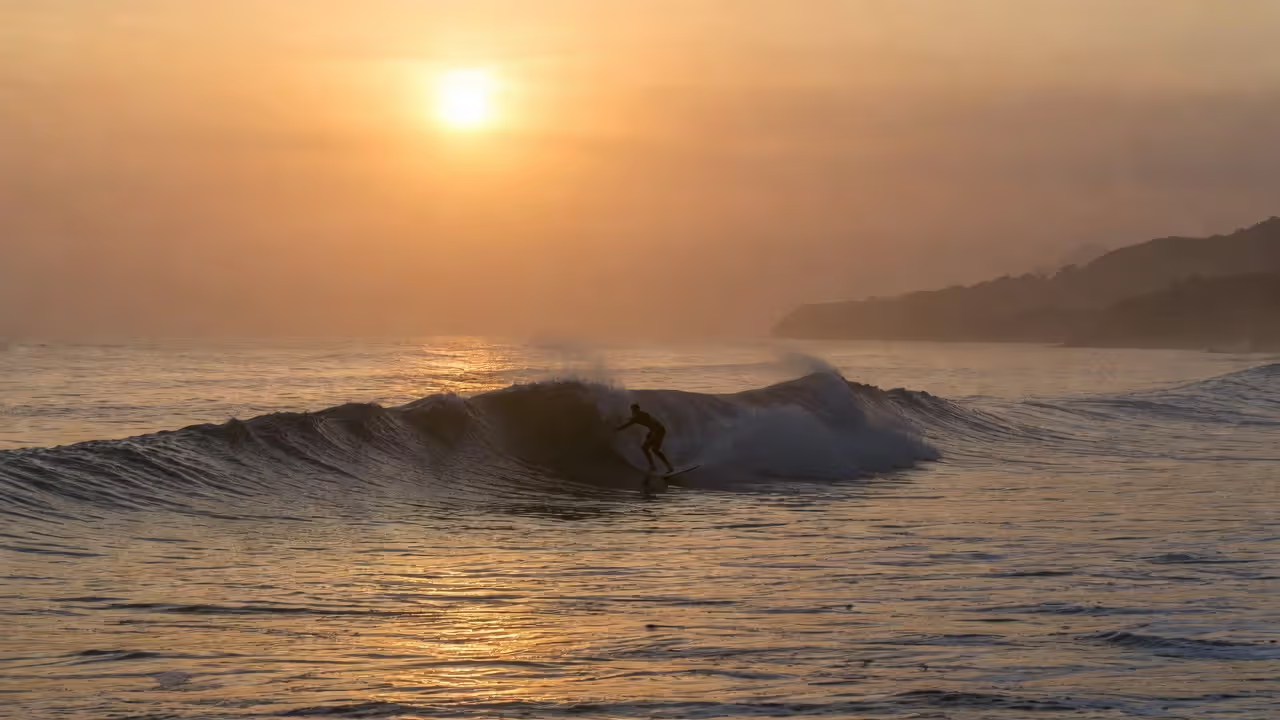
Stability? You can stand on one in ankle-slappers without wobbling. Wave-catching? You'll be up and riding while shortboarders are still scratching to get in. That early positioning opens up maneuvers shortboards can't touch—nose rides, cross-steps, hang tens, stylish drawn-out carves.
The tradeoff hits when waves get serious. All that length and minimal rocker make quick turns impossible. Duck diving? Forget it. In overhead surf, longboards become hazards—yours or someone else's 9-footer getting loose in the impact zone can hospitalize people.
Author: Tyson Caldwell;
Source: 2templatedesign.site
Fish Surfboards: Speed in Weak or Mushy Conditions
Fish boards originated in San Diego during the '70s when shortboards dominated but didn't work in typical Southern California slop. They run 5'2" to 6'2", but they're wide and thick with distinctive swallow tails. Most run twin fins or quads.
The width creates planing surface for generating speed where shortboards bog. That swallow tail adds even more surface area. You can skateboard across flat sections that would stop a traditional shortboard cold. The feel is loose—super fun for drawn-out carves, but sketchy in hollow, critical waves.
Intermediates keep fish in their quiver for small summer days. They're not beginner-friendly despite the extra volume—the loose feel and quick release require wave-reading skills and solid fundamentals.
Funboards and Mini-Malibus: The Learning Progression Board
This 6'6" to 8'0" category bridges the gap. You've graduated from that waterlogged 9-footer but you're not ready for a true shortboard. Funboards deliver enough volume for easy wave-catching while cutting down length for better maneuverability.
Progressing surfers live on funboards. You're practicing proper bottom turns, working on cutbacks, learning to generate speed—stuff that's impossible on a longboard but doesn't require shortboard performance. The rounded rails forgive weight mistakes. Moderate rocker allows turning without killing your paddle power.
Surf coaches use funboards for intermediate lessons because students can focus on technique rather than survival.
Gun Surfboards: Built for Big Wave Surfing
Guns are specialized tools for 10-foot-plus waves. They stretch 7 to 10+ feet with narrow outlines, extreme pintails, and pronounced rocker.
The length provides paddle horsepower for catching fast-moving mountains of water. That narrow outline and pintail cut through chop and turbulence. Extra rocker prevents nosediving when you're dropping into a vertical face. Guns feel awkward and unresponsive in normal surf.
Unless you're regularly paddling into genuine big waves—Mavericks, Sunset Beach, Puerto Escondido—you don't need one. They're purpose-built equipment that's useless 95% of the time for 95% of surfers.
Hybrid Boards: Versatile All-Around Performance
Hybrids take shortboard outlines and add strategic volume—usually in the chest area—for paddle assist. You might get a 6'0" board with the volume of a 6'6" traditional shortboard.
These appeal to intermediates wanting shortboard-style surfing without the paddle struggle. The extra thickness helps you catch waves while maintaining enough responsiveness for progressing maneuvers. They're compromise boards: not exceptional at anything specific but competent across 2-to-6-foot conditions.
Soft-Top Surfboards: Safety and Durability for Learners
Soft-tops wrap foam around the exterior instead of exposing hard fiberglass. Getting smacked by one stings less than a traditional board. They handle beginner abuse—dragging across sand, dropping on concrete, head-on collisions—without major damage.
Modern soft-tops from Catch Surf or Wavestorm perform better than you'd expect. They're not pool toys anymore. Plenty of experienced surfers keep one around for crowded lineups, surfing with kids, or low-stakes fun sessions.
The performance ceiling is real though. Once you're linking multiple turns and reading waves confidently, you'll crave the response of traditional construction.
How to Size Your Surfboard: Volume, Length, and Width Calculations
Volume in liters determines flotation. Higher volume means easier paddling and catching waves. Lower volume allows tighter, more responsive surfing.
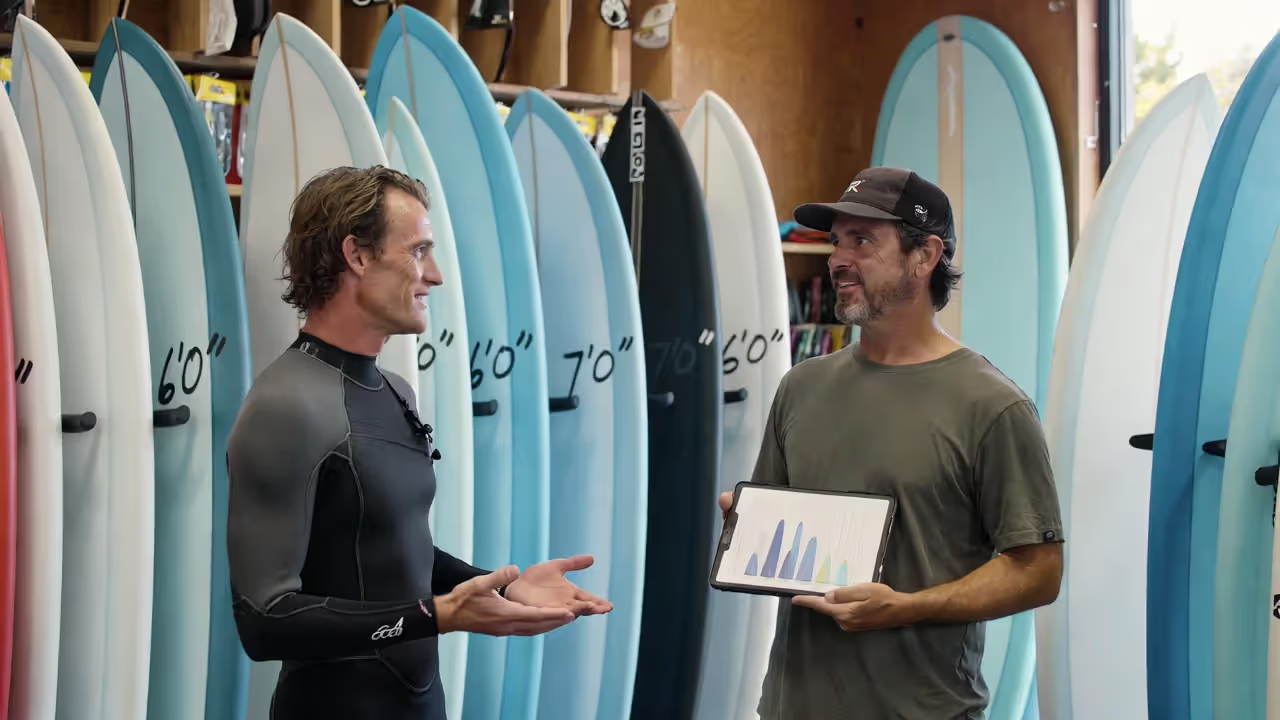
Beginners (first year or so): Divide your weight in pounds by 2, then add 10-15 liters. A 180-pound beginner should target 100-105 liters, usually in a 7'6" to 8'6" funboard or longboard.
Intermediates (1-3 years in): Weight divided by 2, plus 5-8 liters. That same 180-pound surfer now rides 95-98 liters—maybe a 6'8" to 7'2" board.
Advanced surfers: Weight divided by 2, plus 0-5 liters depending on conditions and preference. Our 180-pounder might drop to 90-93 liters in a 6'0" to 6'4" shortboard.
Author: Tyson Caldwell;
Source: 2templatedesign.site
These formulas provide starting points, not gospel. Fitness changes everything—someone who swims regularly paddles more efficiently and can ride less volume. Wave quality matters too. Weak summer slop? Add volume. Punchy winter barrels? You can get away with less. Age factors in as well—many surfers over 40 prefer extra volume to reduce shoulder strain.
Length affects wave-catching beyond just volume calculations. Longer waterlines and more paddle surface mean earlier positioning. Shorter boards pivot faster because less rail contacts the water and there's less mass swinging around.
Width provides stability and paddle assist at the cost of rail-to-rail speed. A 6'0" x 20.5" board feels completely different from a 6'0" x 18.5" board even at identical volumes.
Don't obsess over hitting exact numbers. Being 2-3 liters off won't ruin your session. Rocker curves, rail shapes, and outline templates matter just as much as raw volume figures.
Surfboard Construction Methods: From Traditional to High-Tech
Polyurethane (PU) Foam with Polyester Resin
This is old-school construction dating back to the '50s. Shapers carve polyurethane foam blanks, then laminate them with fiberglass cloth soaked in polyester resin.
PU boards flex in a specific way many surfers prefer—they have "memory," springing back to original shape after loading through turns. Repairs are available everywhere since this method dominated for decades. Cost typically runs lower than epoxy alternatives.
The downsides? Weight—PU boards carry more mass than EPS/epoxy equivalents. Durability—polyester resin yellows over time and dings more readily. Environmental impact—production involves harsh chemicals. PU foam also soaks up water if you crack the exterior, adding weight and eventually causing delamination.
Expanded Polystyrene (EPS) Foam with Epoxy Resin
EPS foam weighs less and floats better than PU. Epoxy resin offers superior strength and flex compared to polyester. The combination delivers lighter, tougher, more buoyant boards.
That extra float lets you ride slightly smaller dimensions at equivalent volumes, or pack more liters into the same size board. Epoxy doesn't yellow like polyester. The tougher resin shrugs off impacts—helpful for beginners and traveling surfers.
The flex pattern differs though—snappier, with less memory. Some surfers love that response; traditionalists call it too stiff or "corky." Epoxy boards cost 15-30% more than PU equivalents. Ding repairs need epoxy resin, which some shops don't stock.
Carbon Fiber, Kevlar, and Advanced Composite Boards
High-end construction incorporates carbon fiber, Kevlar, or exotic materials to fine-tune flex, drop weight, or strengthen specific zones.
Carbon strips along the deck might increase lengthwise stiffness while allowing torsional twist. Kevlar rails add impact resistance for rocky breaks. Some manufacturers vacuum-bag boards or use parabolic carbon frames for precise flex tuning.
These technologies deliver measurable gains for advanced surfers who can exploit subtle differences. For beginners and intermediates? The benefits don't justify price tags—often $800-1,500+ versus $400-700 for standard builds.
Environmental considerations vary wildly. Some brands use bio-resins, recycled foam, or plant-based materials. Others prioritize performance over planet. If eco-friendliness matters to you, research specific manufacturers—construction approaches span the entire spectrum.
5 Common Surfboard Selection Mistakes (And How to Avoid Them)
Going too short before you're ready. You spot someone your size on a 5'10" and figure that's what you need. But they've logged five years of water time. You've been out twice. That 5'10" becomes a source of frustration for months until pride finally breaks and you admit you need something bigger. Start with more board than your ego wants. Sizing down later is easy; adding volume to an inadequate board is impossible.
Buying for dream conditions instead of reality. Your local break serves up waist-high mush 90% of summer, but you purchase a board designed for overhead barrels because that's what lights you up in videos. Now you own equipment that works perfectly twice a year. Match your quiver to waves you actually paddle out in, not the sessions you fantasize about.
Focusing on length while ignoring volume. Two 6'2" boards can differ by 10+ liters. Length is obvious when you look at a rack; volume isn't. You try your buddy's 6'2" and it clicks perfectly. You buy a 6'2" from a different shaper and it feels awful because it carries 8 fewer liters. Check volume specs every single time, not just dimensions.
Letting graphics drive your decision. Resin tints, airbrush artwork, and gloss finishes look incredible on the rack. They add zero performance benefit. A board with gorgeous artwork but wrong specs for your ability level is still the wrong board. Prioritize dimensions and design, then worry about appearance.
Skipping test sessions. Many shops, shapers, and demo programs let you try boards before committing. Some charge $20-30 that applies toward purchase. Testing reveals actual performance versus imagined performance. That $30 demo fee can prevent a $700 regret purchase.
Frequently Asked Questions About Surfboards
Finding Your Perfect Surfboard Match
The difference between the right board and wrong board is night and day. Right board? Waves come consistently, skills develop naturally, sessions end with that addictive post-surf glow. Wrong board? Doesn't matter how expensive or beautiful it is—you're fighting your equipment every paddle stroke.
Begin with more volume and length than pride suggests. Lock in fundamentals on equipment that helps rather than hinders. As ability develops, transition toward smaller, higher-performance options. Most dedicated surfers eventually build a quiver—multiple boards for varying conditions—rather than chasing one magical all-rounder.
Pay attention to volume numbers, grasp how construction affects durability and performance, and honestly match board type to your current skill level and local wave quality. Demo boards whenever possible. Ask questions at your local shop. Observe what experienced surfers at your break ride in conditions you regularly encounter.
Your board represents the single most important equipment investment you'll make. Choose thoughtfully and it becomes the tool unlocking progression. Choose poorly and it becomes the barrier preventing improvement.