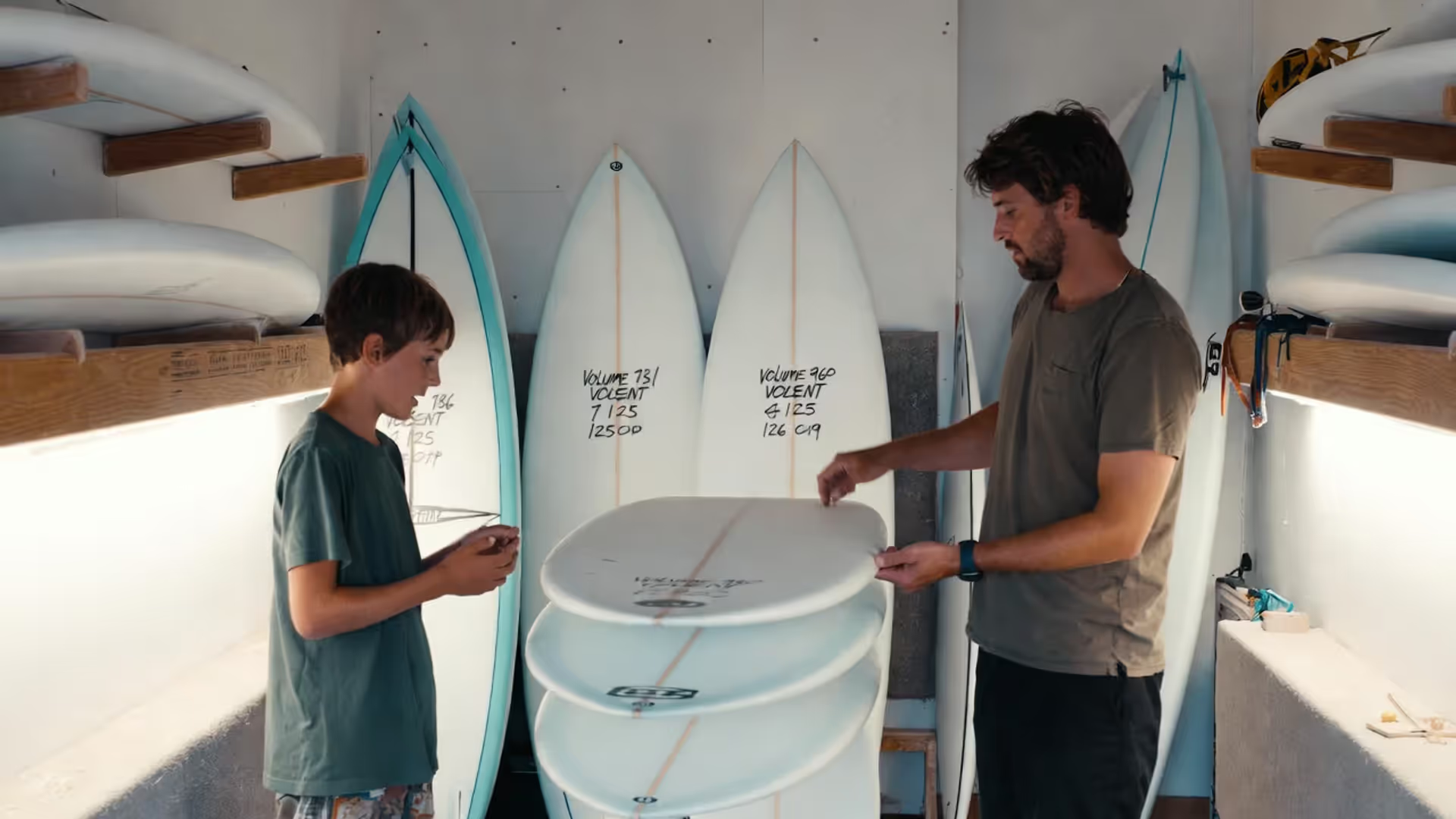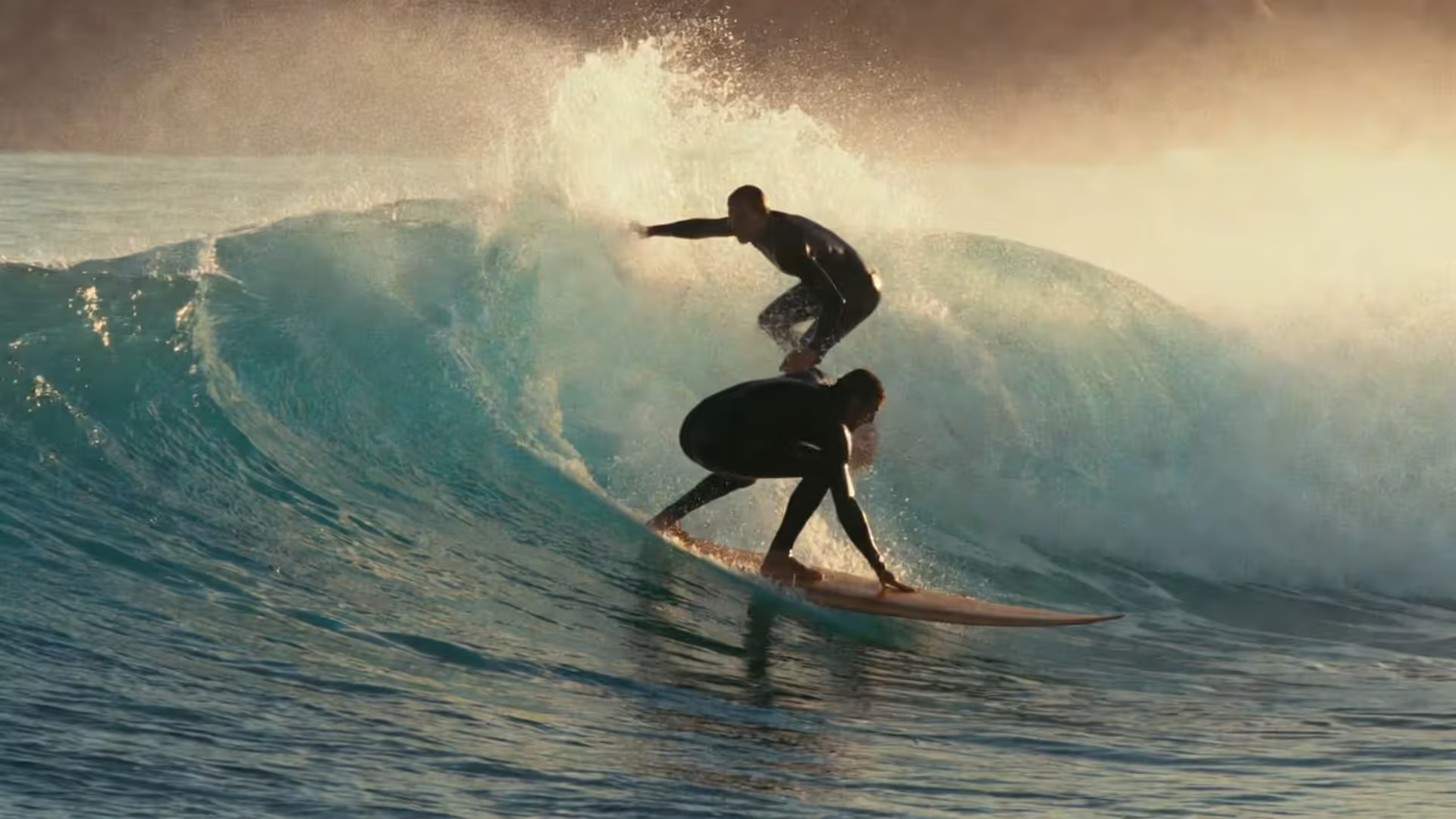
Two boards, two completely different ways to ride a wave
Longboard vs Shortboard: Which Surfboard Type Matches Your Surfing Style?
Content
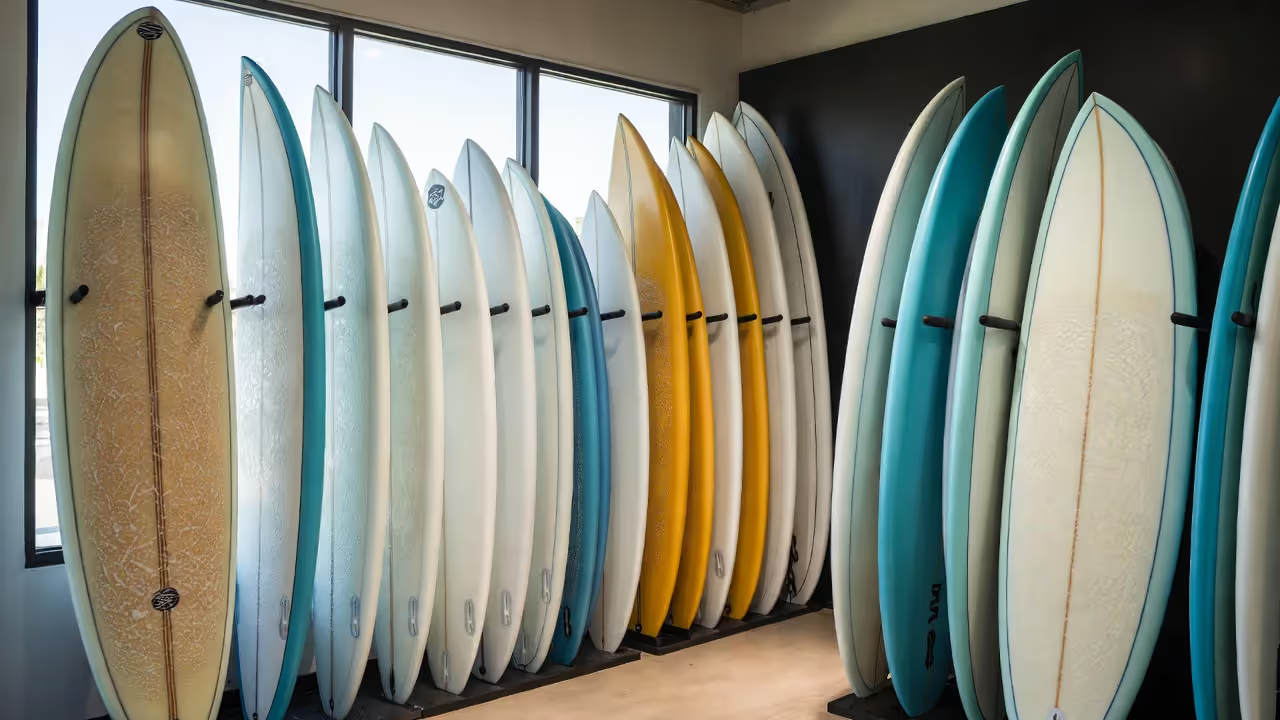
Walk into any surf shop and you'll face a wall of boards ranging from sleek 5'8" thrusters to elegant 9'6" single-fins. The choice between a longboard and shortboard isn't just about length—it's about committing to entirely different approaches to riding waves. Each board type opens specific doors while closing others, and understanding these trade-offs before you buy can save you thousands of dollars and months of frustration.
What Actually Separates Longboards from Shortboards
Size and Shape Specifications
Longboards typically measure 8 to 12 feet in length, with most recreational riders gravitating toward the 9 to 9'6" range. They feature rounded noses, wide profiles (usually 22 to 24 inches across), and gentle rocker curves that keep more of the board in contact with the wave face. The rails are softer and more forgiving, with thickness measurements ranging from 2.75 to 3.5 inches through the center.
Shortboards run from 5'6" to 7'0", though the sweet spot for most intermediate surfers sits between 5'10" and 6'4". These boards have pointed noses, narrow profiles (18 to 19.5 inches wide), and pronounced rocker that creates tight turning arcs. Rail profiles are harder and more angular, designed to bite into the wave face during aggressive maneuvers. Thickness typically ranges from 2.25 to 2.75 inches.
The surfboard length comparison reveals more than just numbers. A longboard's extra footage translates to earlier wave entry, more stable positioning, and momentum that carries through flat sections. A shortboard's compact dimensions mean quicker directional changes, easier duck-diving under oncoming waves, and the ability to fit into critical pockets where longer boards can't operate.
Volume and Buoyancy Differences
Volume—measured in liters—determines how much flotation a board provides relative to your body weight. A typical 9'0" longboard carries 65 to 80 liters of volume, while a 6'0" shortboard might hold only 25 to 32 liters. This massive difference affects every aspect of your surfing, from paddling speed to the margin of error when popping up.
Author: Logan Merrick;
Source: 2templatedesign.site
Higher volume means you sit higher in the water, paddle faster with less effort, and catch waves earlier in their formation. You can miss a step during your pop-up and still make the wave. Lower volume boards sit deeper, requiring stronger paddling and precise timing. You need to be in exactly the right spot when the wave steepens, and your pop-up must be clean.
| Feature | Longboard | Shortboard |
| Length Range | 8'0" to 12'0" | 5'6" to 7'0" |
| Width Range | 22" to 24" | 18" to 19.5" |
| Thickness Range | 2.75" to 3.5" | 2.25" to 2.75" |
| Volume Range | 60 to 85+ liters | 22 to 35 liters |
| Ideal Rider Weight | 120 to 220+ lbs | 110 to 190 lbs |
| Typical Fin Setup | Single fin or 2+1 | Thruster (3-fin) or quad |
| Common Materials | PU foam, epoxy, wood | PU foam, epoxy, carbon |
| Average Weight | 18 to 25 lbs | 5 to 7 lbs |
How Riding Style Changes Between Board Types
Longboard Surfing: Cross-Stepping and Nose Riding
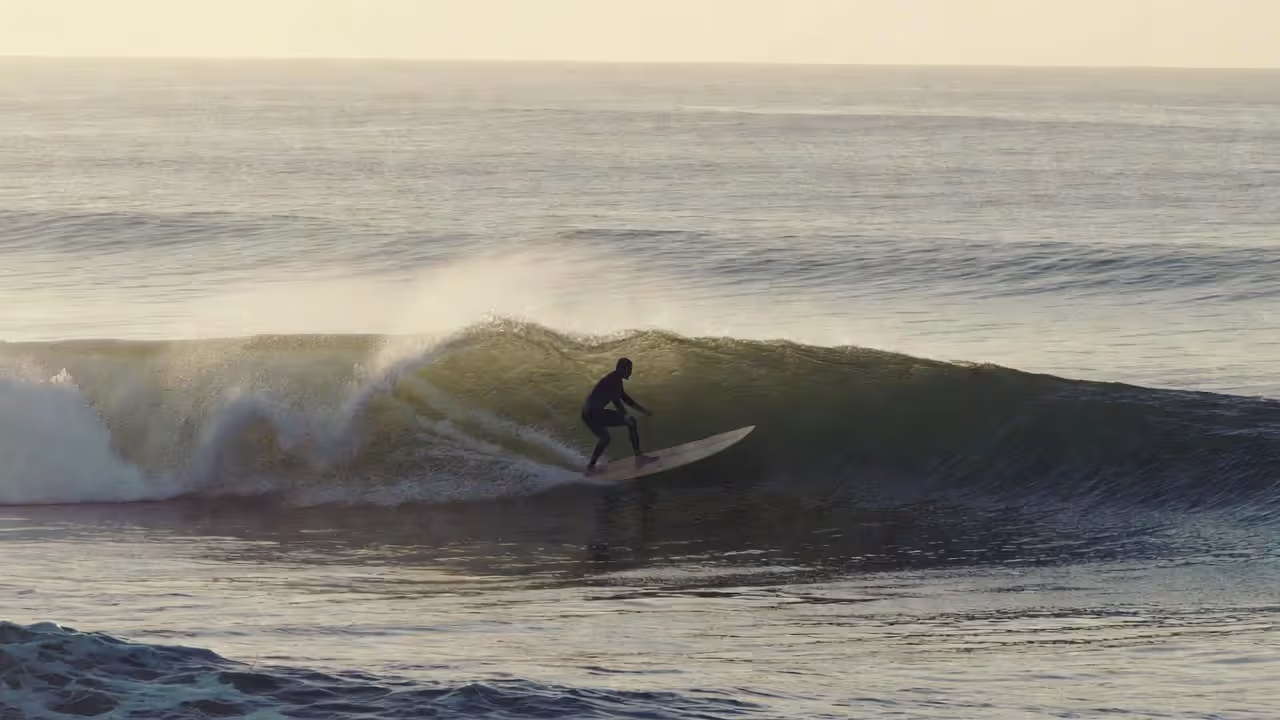
Longboard surfing style centers on flow, positioning, and economy of movement. You're not trying to force the board through radical changes—you're trimming across the wave face, making subtle weight shifts to maintain speed, and walking toward the nose when the wave section allows.
Cross-stepping is the defining longboard technique: you move forward by stepping one foot over the other in a fluid sequence, keeping your weight centered and your knees bent. Rush this movement or look down at your feet, and you'll stall the board or lose balance. Proper cross-stepping takes months to develop because it requires reading the wave's energy, knowing when the face will support your forward position, and maintaining board speed through the transition.
Nose riding—standing with your toes curled over the front edge while the board planes across the wave—represents the pinnacle of traditional longboarding. This only works when the wave's curl pushes against the board's tail, creating a pivot point that keeps the nose elevated despite your forward weight. You need a specific wave shape (clean, peeling, not too steep), proper positioning in the curl, and a board designed with enough tail width to hold in the pocket.
Author: Logan Merrick;
Source: 2templatedesign.site
Shortboard Surfing: Carving and Aerial Maneuvers
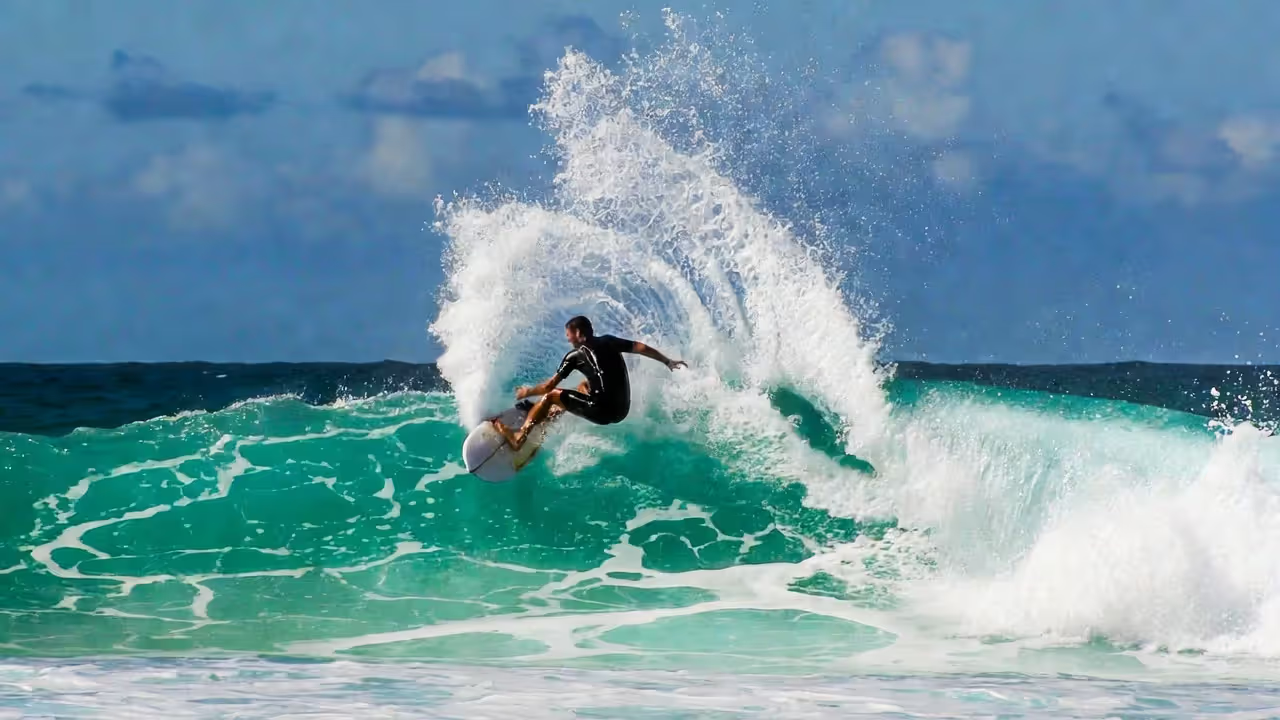
Shortboard surfing performance revolves around explosive movements, vertical positioning, and manipulating the board through sharp angles. You're constantly shifting between rail-to-rail carves, generating speed through pumping motions, and hunting for sections where you can launch above the lip.
The bottom turn—your first move after dropping in—sets up everything that follows. On a shortboard, you drive down the face, compress your body, then redirect all that speed up into a vertical trajectory. The board's rocker and narrow profile let you carve a tight arc that would bog a longboard. You're working in a much smaller space, often just a few feet of critical wave face.
Author: Logan Merrick;
Source: 2templatedesign.site
Modern shortboarding includes maneuvers that seem to defy physics: full rotations in the air, tail slides along the lip, and floaters where you ride across the whitewater. These tricks demand precise timing, strong core stability, and boards responsive enough to follow micro-adjustments in foot pressure. A longboard's length and weight make these moves impossible—the equipment literally can't respond fast enough.
A longboard teaches you to read the wave's energy and work with it, while a shortboard lets you attack the wave and redirect its power. Neither approach is superior—they're different languages for communicating with the ocean.
— Logan Merrick
Performance Breakdown: Wave Conditions and Paddle Power
The differences between longboard and shortboard become stark when you examine specific wave conditions. Small waves (knee to waist high) favor longboards dramatically. The extra volume and length let you glide into waves that shortboarders can't even catch. You'll paddle into position earlier, take off in shallower water, and maintain speed through soft sections that would stop a shortboard cold.
Once waves reach chest to head high with clean faces, shortboards start showing their advantages. You can duck-dive under approaching sets instead of abandoning your board and swimming. You can position yourself deeper in the lineup where the waves have more power. You can make late drops that would pearl (nose-dive) a longboard, because the rocker and narrow profile handle steep entries better.
Paddle power differs significantly between board types. A longboard catches more water with each stroke and maintains glide between strokes, meaning you cover more distance with less effort. This matters enormously during long paddle-outs or when fighting currents. A fit surfer on a longboard can paddle circles around an equally fit surfer on a shortboard in flat water.
Turning radius represents perhaps the clearest performance divide. A longboard requires a wide, sweeping arc to change direction—you're steering an ocean liner. A shortboard pivots almost on a dime, letting you navigate crowded lineups, avoid other surfers, and fit multiple turns into a short wave section. The trade-off? Longboards maintain speed through turns because they don't scrub as much momentum, while shortboards bleed speed during hard carves.
Should Beginners Start on a Longboard or Shortboard?
Common Mistakes New Surfers Make When Choosing
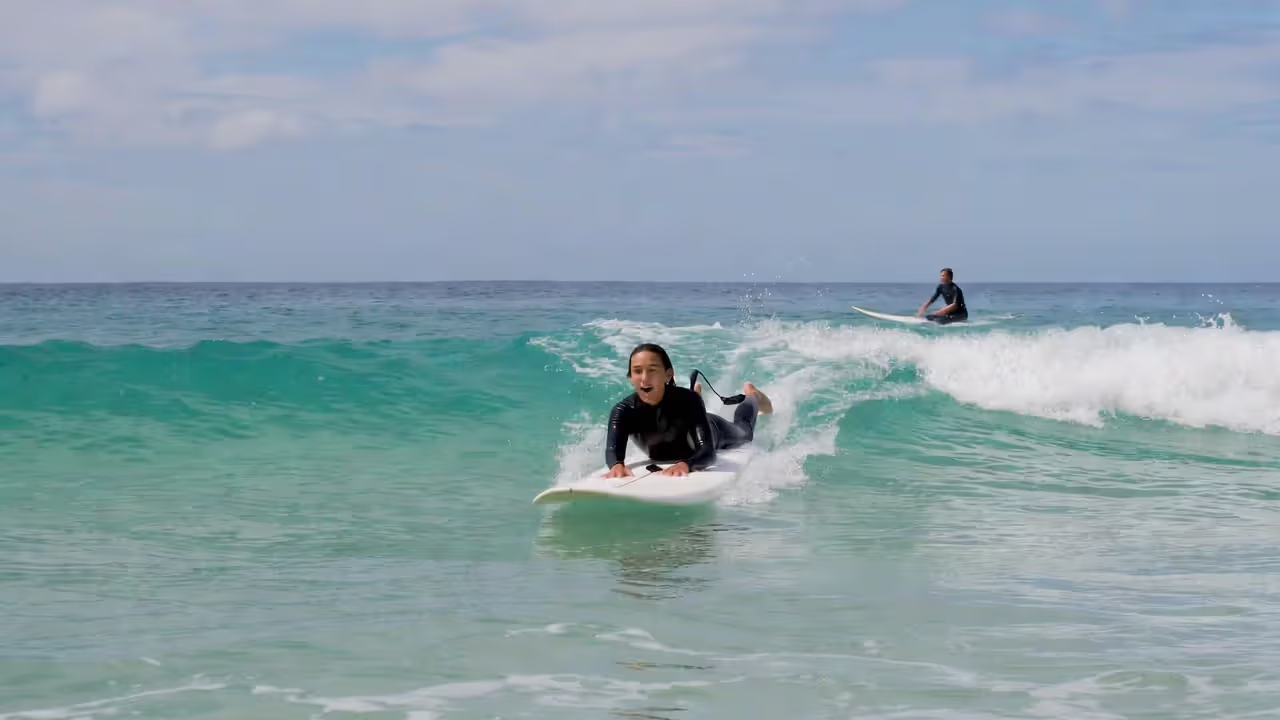
The beginner longboard vs shortboard debate generates endless arguments, but the physics are straightforward: beginners learn faster on longboards. The extra stability gives you more time to process what's happening, more forgiveness when your technique isn't perfect, and more waves caught per session. Catching waves is the prerequisite for everything else—you can't practice pop-ups if you never get into waves.
New surfers make predictable mistakes when choosing their first board. Athletic individuals often assume their fitness level compensates for a shortboard's difficulty. It doesn't. Surfing requires ocean-specific skills that gym strength and coordination don't provide. You need to understand wave timing, paddle positioning, and energy management—all easier to develop when you're not fighting for basic stability.
Another common error: buying a board based on what you want to do eventually rather than what you need now. You see professionals riding 5'11" thrusters and want to emulate that style immediately. But professionals spent years developing the paddle strength, wave knowledge, and timing that make short boards functional. Skipping the learning process doesn't accelerate your progression—it stalls it.
The realistic timeline for most beginners looks like this: six months to a year on a longboard or funboard (7'6" to 8'6") to develop basic wave-catching ability, pop-up consistency, and ocean awareness. Then a transition period on a mid-length (7'0" to 7'6") where you start attempting more aggressive turns. Only after you're catching waves confidently and reading the lineup competently should you consider dropping below 7 feet.
Some beginners do successfully start on shorter boards, but they typically surf frequently (three-plus times per week), have patient instruction, and accept a longer learning curve. If you're surfing once or twice a month, that shortboard will frustrate you for years.
Author: Logan Merrick;
Source: 2templatedesign.site
5 Factors That Should Drive Your Board Choice
Fitness Level and Paddle Endurance
Be honest about your current conditioning. Can you paddle continuously for 20 minutes? Do you have shoulder strength for repeated sprint efforts? Longboards reduce the fitness barrier significantly, letting less-conditioned surfers catch waves and have fun. Shortboards demand cardiovascular capacity and upper-body power that many recreational surfers don't maintain. A shortboard won't make you fitter—it'll just exhaust you faster and reduce your wave count.
Local Break Characteristics
Your home break determines which board gets used most. Beach breaks with inconsistent, mushy waves? Longboards thrive there. Point breaks with long, workable walls? Either board type works, depending on wave size and your skill level. Reef breaks with hollow, powerful waves? Shortboards handle the critical sections better, but only if you have the ability to exploit them.
Check what experienced locals ride most often. If the lineup is 70% longboards, that's telling you something about the typical wave quality. Fighting against your break's natural characteristics means frustration and unused equipment.
Storage and Transport Reality
A 9'6" longboard doesn't fit in most sedans. You'll need roof racks, a truck bed, or a larger vehicle. It won't fit in standard apartment closets. You can't walk it through narrow beach access paths without annoying everyone. These aren't dealbreakers, but they're daily realities that affect whether you actually surf.
Shortboards fit in back seats, stand in corners, and travel easily. If you're flying to surf destinations, airlines handle boards under 7 feet much more readily. If you're taking public transit or biking to the beach, only shortboards make sense.
Budget Considerations
Quality longboards cost $800 to $1,400 new due to materials and construction time. Shortboards range from $500 to $900 for equivalent quality. Used markets offer better longboard deals because beginners frequently upgrade. Factor in additional costs: longboard bags run $150 to $250, while shortboard bags cost $80 to $150. Roof racks suitable for longboards start around $300 installed.
Repair costs favor shortboards slightly—less material means cheaper ding fixes. But longboards are more durable in some ways; their thickness and volume make them less prone to catastrophic damage from impacts.
Long-Term Surfing Goals
If you want to compete, progress to advanced maneuvers, or surf powerful waves, you'll eventually need shortboard skills. Starting on a longboard delays but doesn't prevent this progression. If you're drawn to the aesthetic and flow of traditional surfing, nose riding, or mellow wave enjoyment, longboards might remain your primary choice indefinitely.
Many surfers discover they enjoy both styles for different reasons and end up owning multiple boards. But your first board should match your current reality, not your aspirational future.
Can You Own Just One? When Quiver Diversity Matters
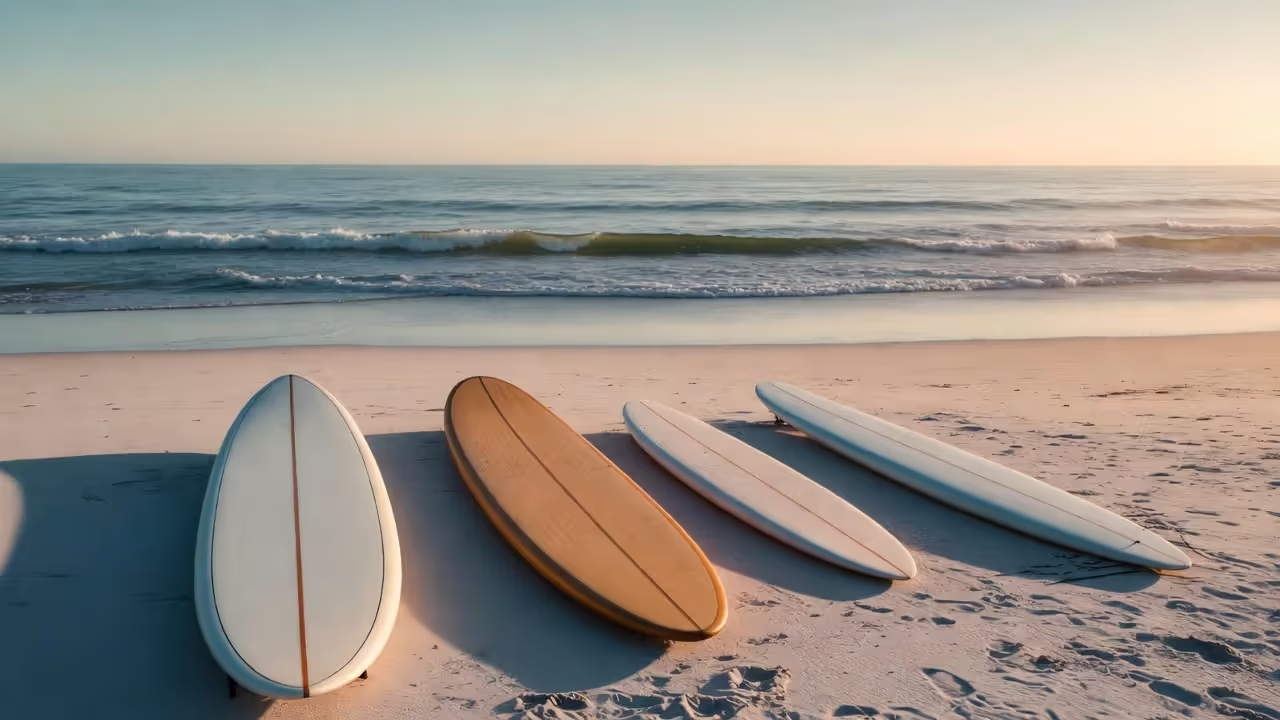
Serious surfers rarely limit themselves to a single board. Wave conditions change daily, and having options means you surf more often at higher performance levels. A typical three-board quiver might include a 9'0" longboard for small summer days, a 7'2" funboard for inconsistent shoulder-high waves, and a 6'2" shortboard for clean overhead conditions.
This diversity becomes essential as you improve. You'll notice that your longboard feels sluggish in good waves, while your shortboard sits unused during the frequent small-wave days that dominate most coastlines. The board that matches the conditions gets used; the others collect dust.
Seasonal switching patterns emerge naturally. Summer often brings smaller, weaker swells that favor longboards. Winter delivers larger, more powerful waves where shortboards excel. Surfers in consistent year-round conditions might switch boards multiple times per week based on swell forecasts.
Author: Logan Merrick;
Source: 2templatedesign.site
The "one board" question really asks: what percentage of available surf days will this board handle well? A longboard might work for 70% of conditions at a typical beach break, while a shortboard might only suit 30%. If you can only own one board, choose the one that matches your most frequent conditions and current skill level. You can always rent or borrow for the occasions when your board isn't ideal.
Beginners should absolutely own just one board initially. Splitting your time between different board types slows skill development because you never build consistent muscle memory. Once you're catching waves reliably and understanding lineup dynamics, then diversifying makes sense.
Frequently Asked Questions About Choosing Between Longboards and Shortboards
Making Your Choice Work
Choosing between a longboard and shortboard isn't about finding the "right" answer—it's about matching equipment to your current situation. Your skill level, local waves, physical fitness, and practical constraints all matter more than abstract preferences.
Start with the board that gets you catching waves now. Everything else in surfing—turning, positioning, reading sets, ocean safety—builds from that foundation. A longboard accelerates that learning process for most people, while a shortboard delays it. But if your local break pumps consistent chest-high barrels and you're committed to the learning curve, a shorter board might make sense despite the challenges.
The surfers having the most fun aren't necessarily riding the most advanced equipment. They're riding boards that match the waves in front of them, their current abilities, and their personal style. Some 20-year veterans prefer longboards for the flow and tradition. Some newer surfers progress quickly to shortboards and never look back. Neither path is wrong.
Buy the board that makes you want to paddle out tomorrow morning. That enthusiasm matters more than specifications or other people's opinions. You'll progress faster on equipment you're excited to use, even if it's not the theoretically optimal choice. The best surfboard is the one that's with you in the water, not the one sitting at home because it doesn't match the conditions or feels like a chore to transport.