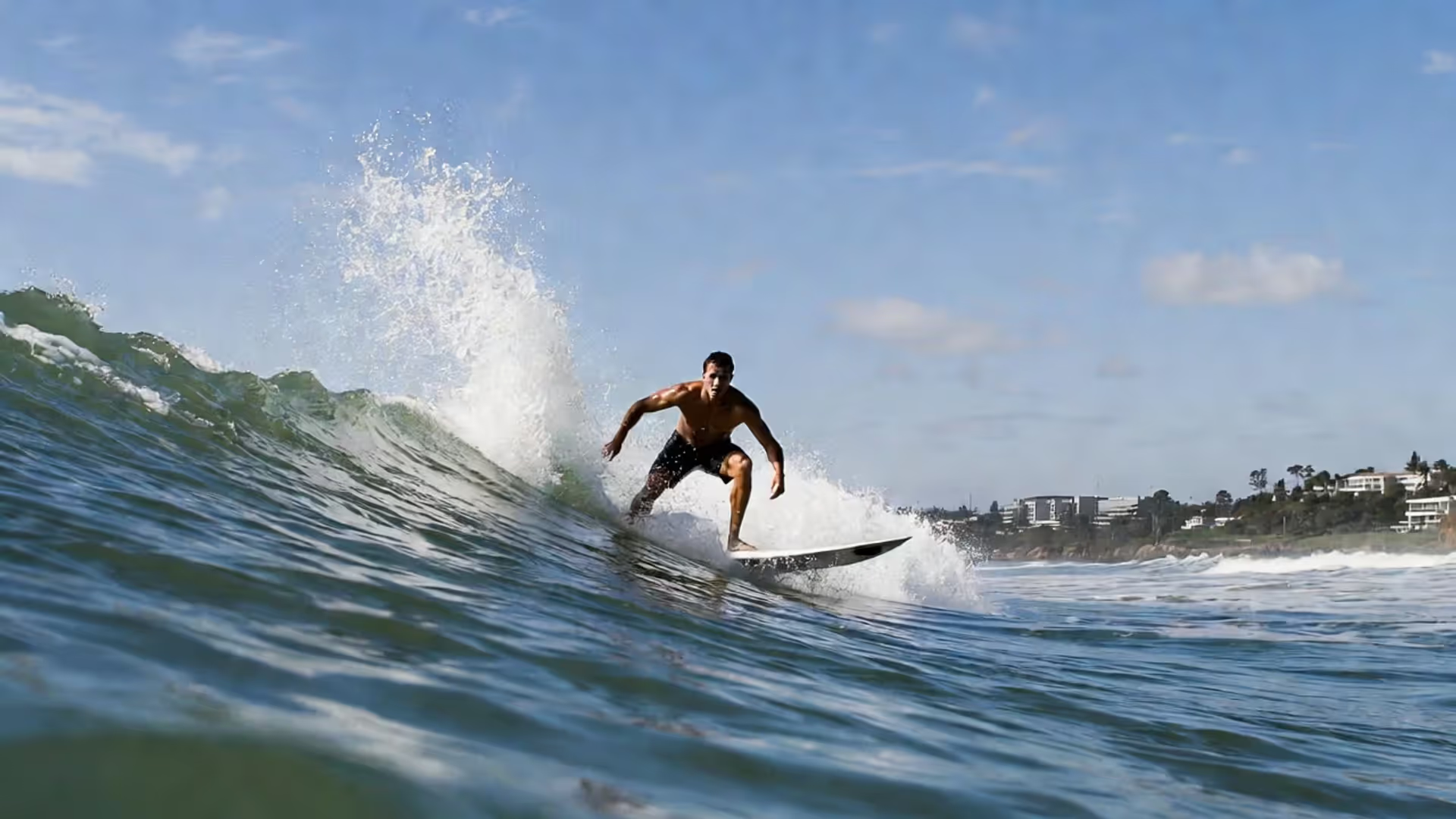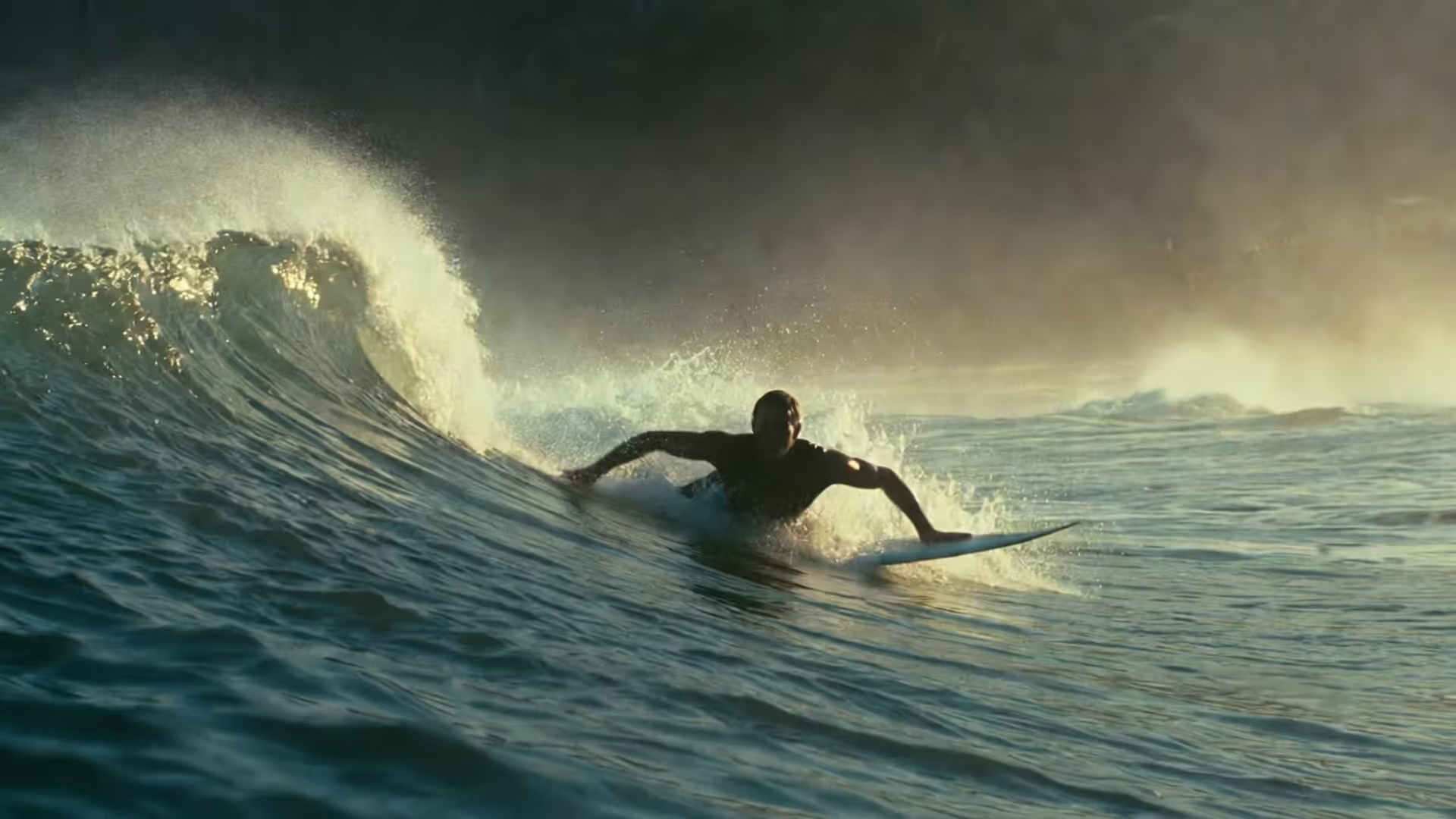
A well-timed duck dive lets surfers slip beneath incoming waves
How to Duck Dive a Surfboard: Master the Essential Wave-Paddling Technique
Content
Watching experienced surfers disappear beneath oncoming waves and pop out behind them looks like magic. That seamless move—the duck dive—separates surfers who can paddle out efficiently from those who get pummeled in the impact zone, burning energy and missing waves. If you've struggled to push through breaking surf or wondered why your board keeps popping back to the surface, mastering this fundamental skill will transform your sessions.
What Is Duck Diving and Why It Matters for Surfers
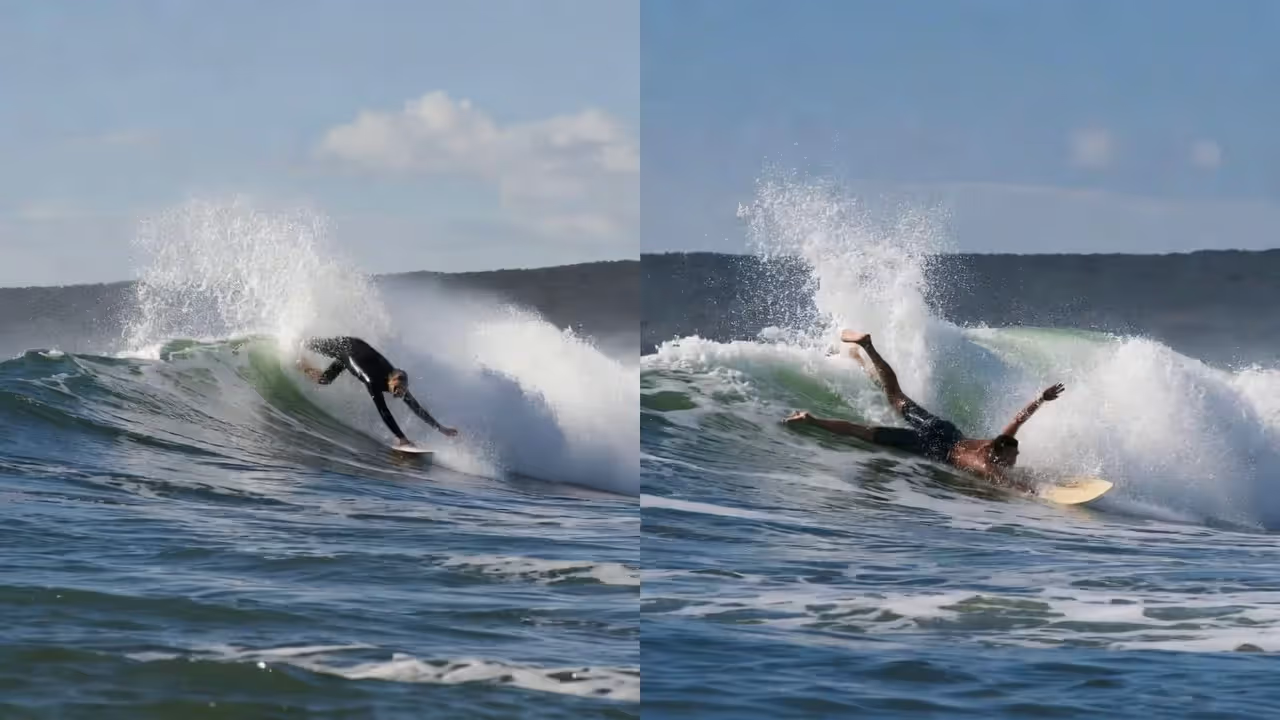
Duck diving is the technique of submerging yourself and your surfboard beneath an oncoming wave to pass through it rather than over or against it. The name comes from the motion: you push the nose down, follow the board underwater like a diving duck, then angle back up to resurface behind the wave.
This skill matters because it conserves energy. Paddling against whitewater or trying to punch through waves drains your arms and pushes you backward. A clean duck dive lets you maintain position or even gain ground toward the lineup. The difference becomes obvious on bigger days—surfers who can't duck dive effectively spend ten minutes battling to get outside, while those with solid technique make it in three.
Beyond efficiency, duck diving keeps you safe. When a set approaches and you're caught inside, a proper duck dive helps you avoid getting swept toward shore or taking a board to the face. It's not just about convenience; it's about controlling your position in dynamic conditions.
Paddling under waves surfing requires timing, body mechanics, and board control. Unlike simply bracing for impact or letting whitewater wash over you, duck diving actively uses water pressure to pull you and your board beneath the turbulence. The physics work in your favor when executed correctly—the wave's energy passes overhead while you slip underneath with minimal resistance.
Author: Logan Merrick;
Source: 2templatedesign.site
Duck Dive vs Turtle Roll: Which Technique Should You Use?
Not every surfer can duck dive every board, and that's where the turtle roll (or Eskimo roll) becomes essential. The turtle roll involves flipping upside down with your board, gripping the rails, and letting the wave pass over the bottom of the board while you hang beneath it. Both techniques serve the same purpose—getting through waves—but they suit different equipment and conditions.
| Technique | Best Board Types | Ideal Wave Size | Difficulty Level | Energy Required |
| Duck Dive | Shortboards, fish, low-volume boards (under 40L) | Small to overhead | Moderate to high | High burst effort |
| Turtle Roll | Longboards, funboards, high-volume boards (over 50L) | Small to head-high | Low to moderate | Moderate sustained effort |
The core difference comes down to buoyancy. Duck diving requires you to push your board underwater against its natural float. When a board has too much volume, you physically can't sink it deep enough to clear an approaching wave—it pops back up and the whitewater catches it.
Board Size and Volume Thresholds
Most surfers find duck diving becomes difficult above 38–40 liters of volume. A typical 6'0" shortboard might be 28–32 liters; a 7'6" funboard could be 50–60 liters. Your body weight matters too—a 200-pound surfer can push down a slightly larger board than a 130-pound surfer can.
Thickness affects duck diving more than length. A thin 7'0" performance board might duck dive easier than a thick 6'2" groveler. Check your board's volume specs if available, or use the practical test: if you can't push the nose underwater while standing in waist-deep water, you'll struggle to duck dive it in real conditions.
Author: Logan Merrick;
Source: 2templatedesign.site
Wave Conditions That Favor Each Method
Duck diving works best on waves that haven't broken yet (green faces) or recently broken whitewater. You need enough time to submerge and clear before the turbulence hits. On mushy, rolling waves with wide foam sections, timing matters less—turtle rolling handles these forgiving conditions well.
When waves are steep and powerful, duck diving becomes necessary if your board allows it. Turtle rolling through a heavy lip often means getting ripped off your board. Conversely, on small days with gentle closeouts, turtle rolling a longboard gets you through with minimal effort while duck diving a shortboard might be overkill.
Duck Dive Step by Step: The Complete Breakdown
Breaking down the duck dive technique surfing into phases helps you identify where your execution needs work. Most failures happen because surfers rush one phase or skip it entirely.
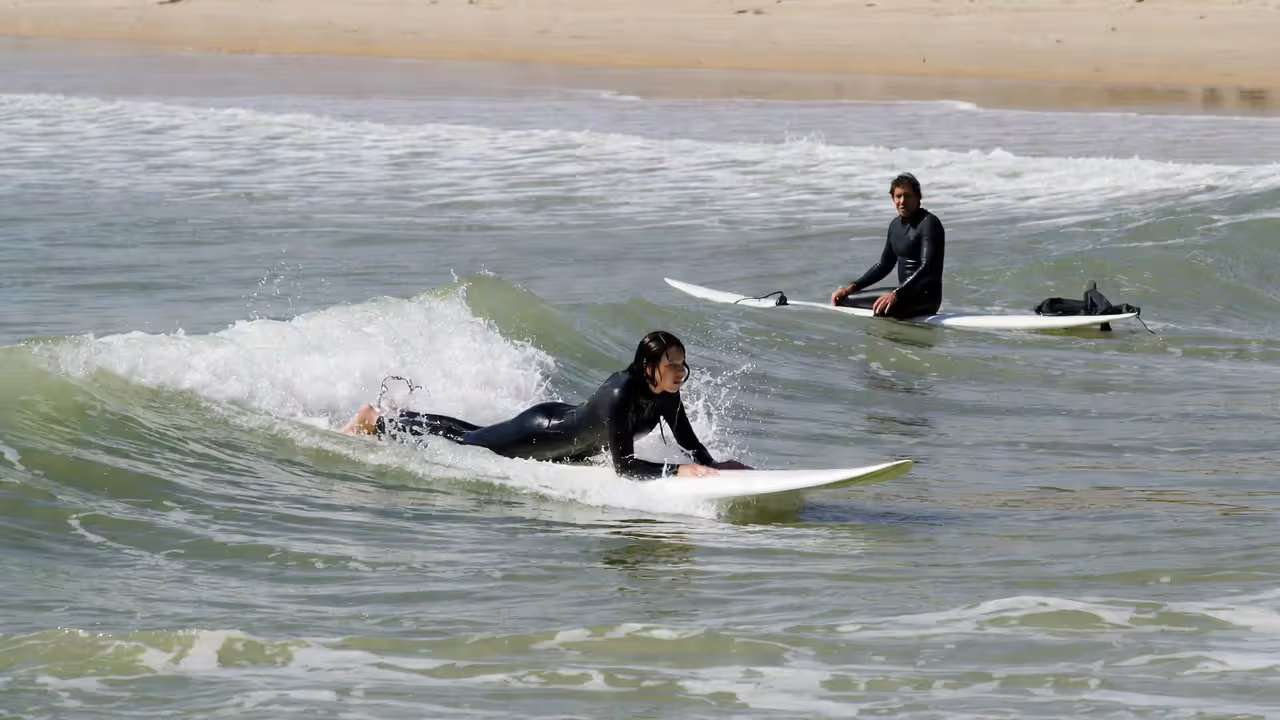
Starting position: Paddle hard toward the wave—speed is critical. You need forward momentum to penetrate through and emerge on the other side. Three to four powerful strokes before initiating the dive make the difference between punching through and getting pushed back.
Timing the initiation: Begin your dive when the wave is roughly one board length away. Too early and you resurface into the impact; too late and you can't get deep enough. This distance changes with wave speed—faster waves require earlier initiation.
The Push-Down Phase
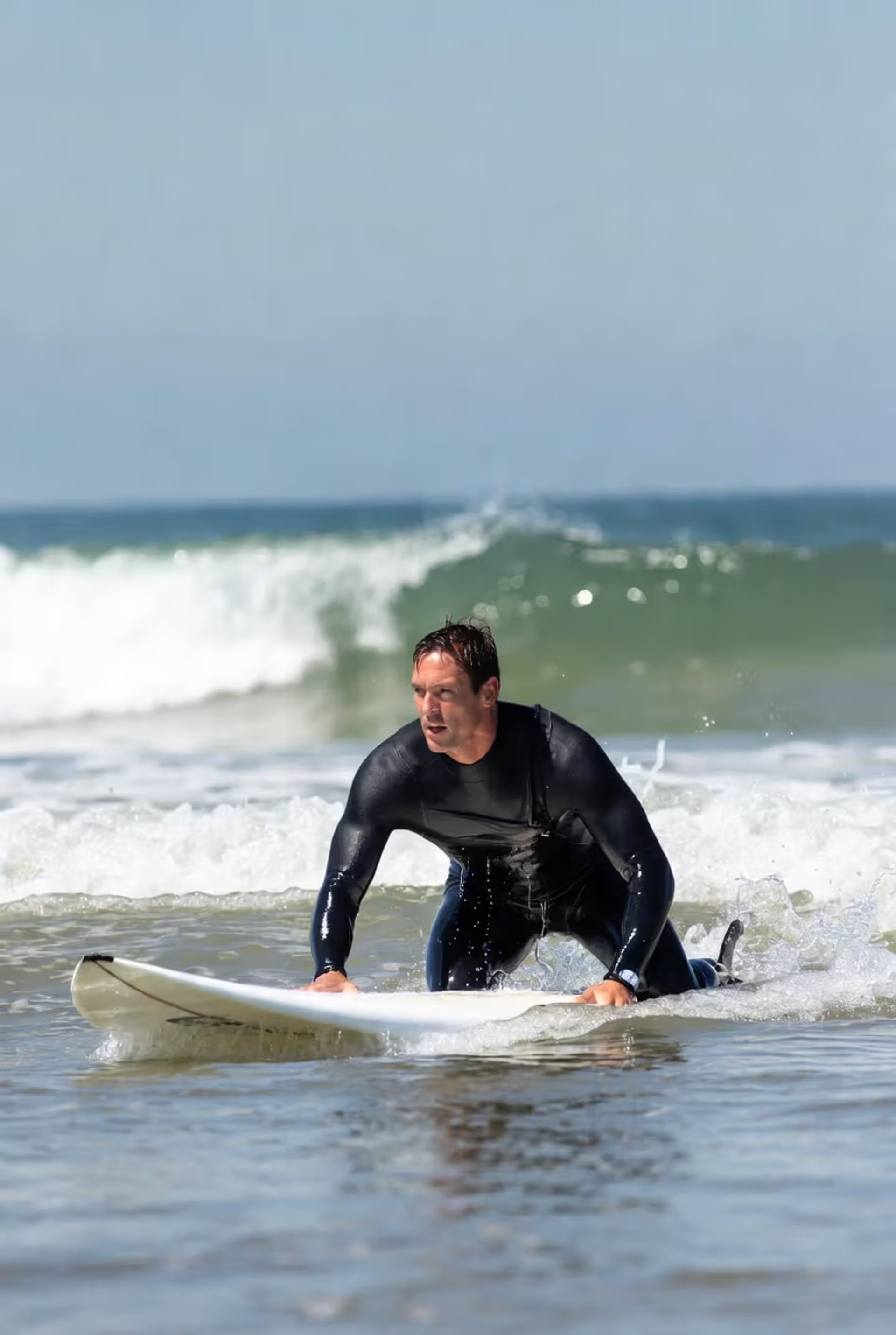
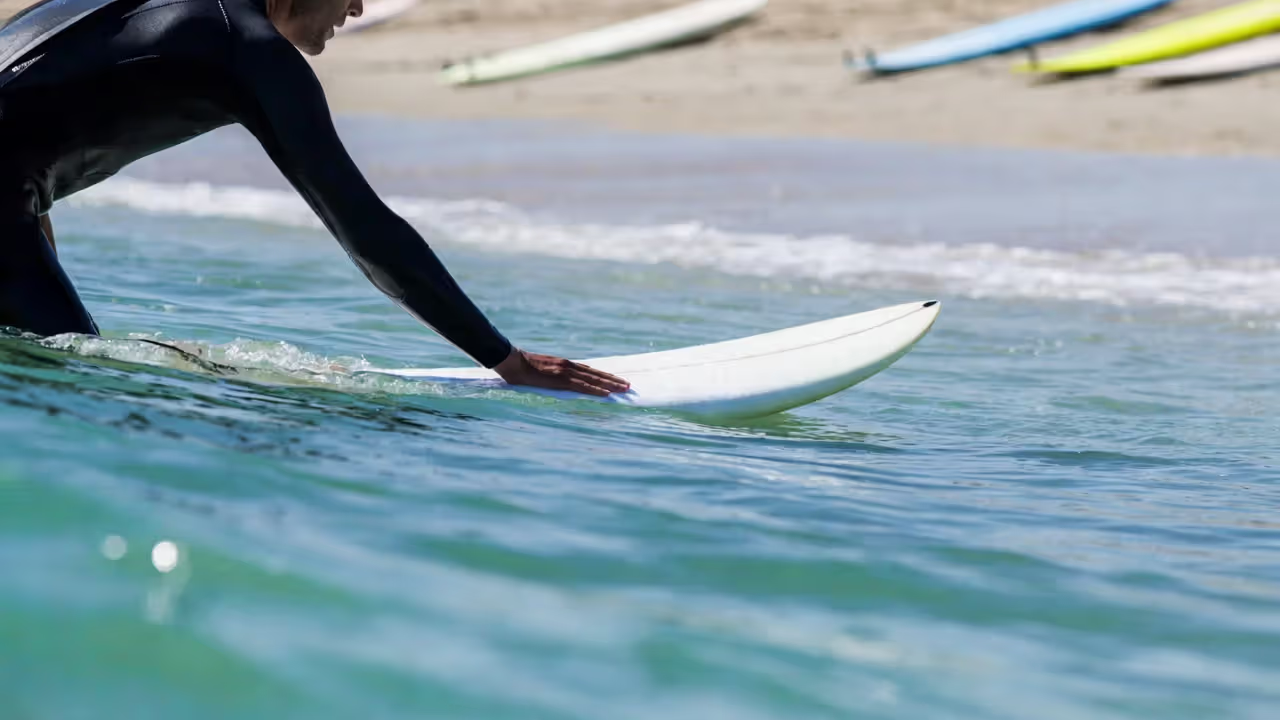
Grip the rails about 12–18 inches back from the nose. Your hands should be slightly wider than shoulder-width. Push down explosively with straight arms, using your upper body weight to drive the nose underwater at a 45-degree angle. Don't ease it down—commit with force.
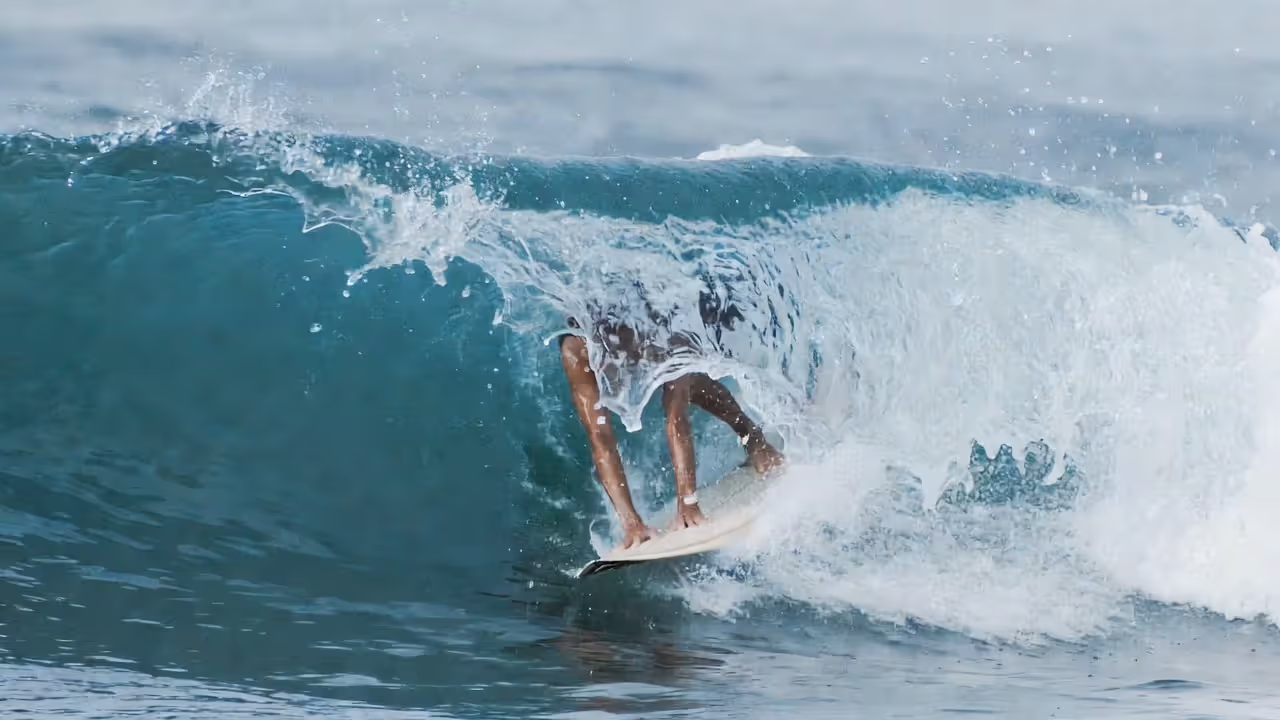
As the nose submerges and the board reaches a 30–40 degree angle, bring your back foot (or knee, depending on your style) onto the tail pad. This is the critical moment. Your foot or knee acts as a lever, pushing the tail down while your arms are still extended forward. The board should now be nearly vertical or angled deeply beneath you.
Your body follows the board down. Tuck your head, arch your back slightly, and keep your arms extended. You're creating a streamlined shape that slips through the water column. The wave's energy passes overhead—you'll feel the turbulence but shouldn't feel yourself being pulled backward if you're deep enough.
Author: Logan Merrick;
Source: 2templatedesign.site
The Scoop and Resurface
Once the wave passes—usually one to two seconds—you need to redirect upward. This is where many beginners stall out underwater or surface too slowly. Pull the nose up by drawing your arms back toward your chest while keeping pressure on the tail with your foot. The motion resembles doing a push-up in reverse.
Your board will naturally want to surface due to buoyancy. Guide it up at a forward angle rather than straight vertical. You want to pop out moving toward the lineup, not in the same spot you started. Kick your legs if needed to add propulsion.
As you break the surface, immediately start paddling. Don't pause to shake water from your face or adjust your position—the next wave might be seconds behind. Efficient surfers chain multiple duck dives without losing momentum.
The best duck dive is the one you don't have to do because you read the set and timed your paddle-out perfectly. But when you do need it, commit fully—hesitation gets you worked every time.
— Shane Dorian, professional big-wave surfer
Common Duck Diving Mistakes (And How to Fix Them)
Insufficient speed before diving: Coasting into your duck dive means you'll stall underwater or pop up in the same spot. Fix this by counting your strokes—aim for at least three hard paddles before you push down. Your arms should feel fatigued from the effort.
Pushing straight down instead of at an angle: Driving the nose perpendicular to the surface makes you go deep but not forward. You'll waste time and energy surfacing in the impact zone. Angle the nose at 45 degrees so your trajectory carries you beneath and beyond the wave.
Not using your foot or knee on the tail: Relying only on arm strength leaves the tail floating on the surface. The wave catches it and flips your board. Practice the foot placement on flat water—pop your back foot onto the tail pad as your arms extend. The timing feels awkward at first but becomes automatic.
Resurfacing too early: Anxiety makes beginners pull up before the wave fully passes. You surface into the curtain of whitewater and get hammered. Count "one-Mississippi, two-Mississippi" underwater before initiating your scoop. The wave moves faster than you think.
Wrong hand placement: Grabbing too close to the nose gives you less leverage; too far back and you can't sink the front. The sweet spot is 12–18 inches from the tip. Mark this mentally by noting where your hands land relative to your deck pad or wax job.
Holding your breath incorrectly: Taking a huge gulp of air puffs out your chest and adds buoyancy, making it harder to stay submerged. Instead, take a normal breath and exhale slightly as you descend. You're only underwater for two to three seconds—you don't need maximum lung capacity.
Surfboard Duck Diving Tips to Improve Your Technique
Practice in small surf first: Trying to learn duck diving on overhead waves guarantees frustration. Waist-high waves give you room for error and let you focus on mechanics without consequence. Once you can duck dive ten small waves in a row cleanly, progress to larger conditions.
Strengthen your pushing muscles: Duck diving demands explosive upper body power. Push-ups, dips, and shoulder presses build the necessary strength. Aim for three sets of 20 push-ups, three times per week. The carryover to your duck dive will be obvious within a month.
Read the set patterns: Experienced surfers paddle out during lulls, minimizing the number of duck dives needed. Watch the horizon for five minutes before entering. Most breaks have rhythm—sets of three to five waves followed by a quiet period. Time your paddle-out to start right after a set passes.
Adjust depth based on wave power: Small crumbling waves require less depth than hollow, pitching lips. On weak days, a shallow duck dive—barely submerging—works fine and saves energy. When the swell picks up, commit to going deeper. You'll feel the difference in water pressure as you descend.
Use your legs for propulsion: As you resurface, a few dolphin kicks or flutter kicks add forward momentum. Your arms are tired from paddling; let your legs contribute. This is especially helpful when duck diving multiple waves in quick succession.
Visualize the trajectory: Before each duck dive, picture your path: down at an angle, glide beneath, scoop up and forward. Mental rehearsal improves physical execution. Surfers who visualize perform better under pressure than those who react instinctively.
Film yourself: Have a friend record your duck dives from the beach with a zoom lens or from the water with a GoPro. Watching your technique reveals mistakes you can't feel in the moment. You might discover you're not angling enough, or your foot timing is off.
Author: Logan Merrick;
Source: 2templatedesign.site
Frequently Asked Questions About Duck Dive Surfing
Conclusion
Duck diving transforms your surfing by turning paddle-outs from exhausting battles into efficient transits. The technique demands practice, timing, and body awareness, but once ingrained, it becomes as natural as paddling itself. Start with smaller waves to build the muscle memory, focus on the angle of your descent rather than just depth, and remember that speed before the dive matters as much as the dive itself.
Your board choice directly impacts your success—know your volume limits and choose the right technique for your equipment. If you're between boards and want to improve your wave penetration, opting for a lower-volume board opens up duck diving as a tool. But if you love your longboard or high-volume fish, master the turtle roll instead of fighting physics.
The surfers who make it look effortless have duck dived thousands of waves, refining tiny details each session. You'll get there by treating every paddle-out as practice, not just an obstacle between you and the lineup. Commit to the motion, trust the process of submerging, and you'll soon wonder how you ever surfed without this essential skill.