Balance training on land builds control for real surfing
Surf Balance Training: Land-Based Exercises to Improve Your Wave Riding

Content
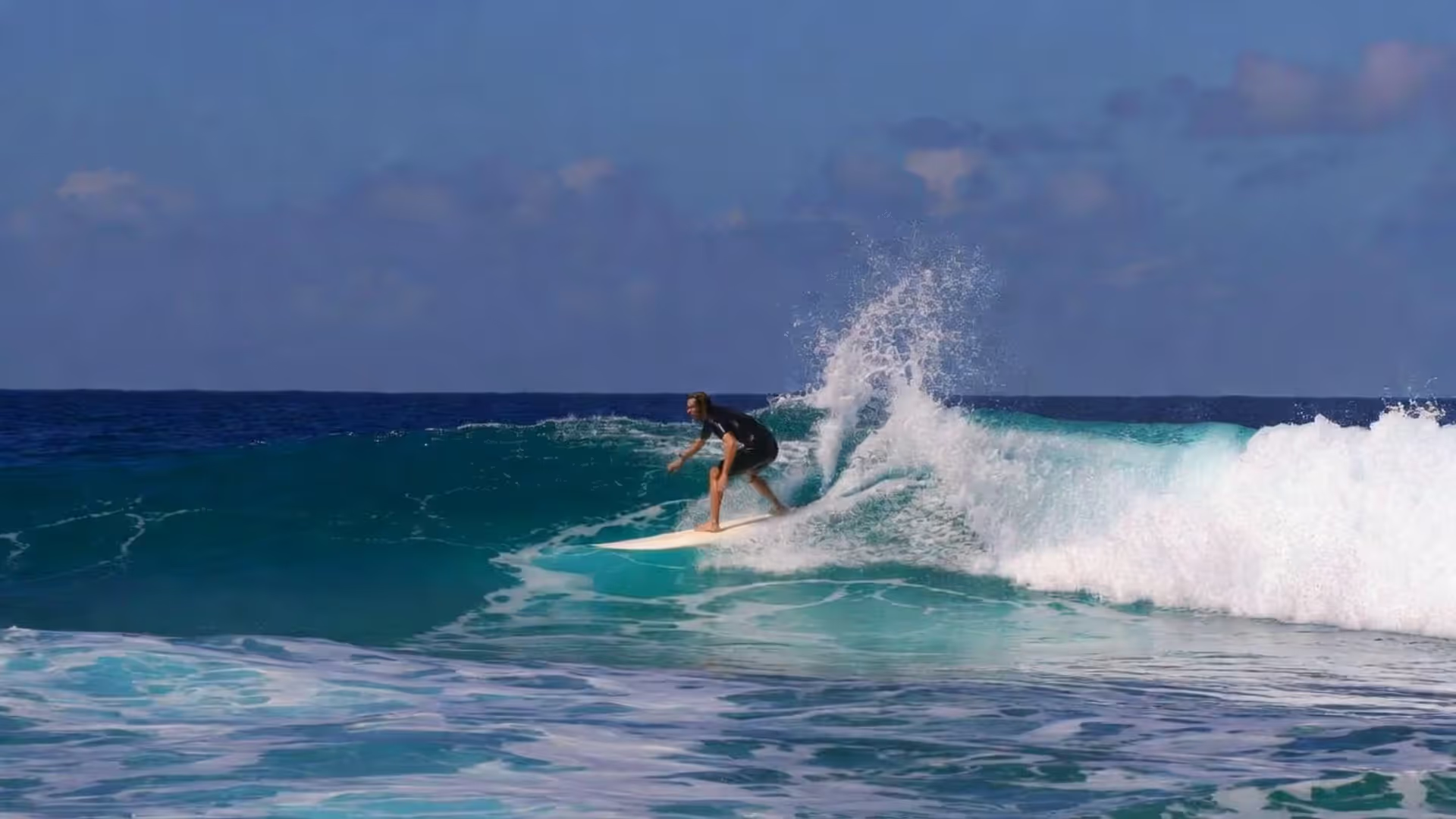
Balance separates surfers who can barely stand up from those who carve down the line with confidence. While ocean time builds wave intuition, most surfers spend more days on land than in the water. That gap creates opportunity—or stagnation.
Your body adapts to whatever you practice most. If you surf once or twice weekly but never train balance on land, you're leaving performance gains on the table. The good news? Targeted land training rewires your proprioceptive system faster than sporadic wave sessions alone.
Why Balance Determines Your Surfing Performance
Every movement on a surfboard demands dynamic balance. Unlike standing on solid ground, you're managing a platform that moves in three dimensions simultaneously: forward, side-to-side, and rotational. Your pop-up requires explosive power while your feet find precise placement on an unstable surface. Your bottom turn depends on weight distribution shifting smoothly from heels to toes while the wave face constantly changes angle beneath you.
The biomechanics get complex quickly. Your vestibular system (inner ear), visual input, and proprioceptors (sensors in joints and muscles) all feed information to your brain about body position. Your central nervous system processes this data and fires muscle groups in coordinated patterns to maintain stability. Surfers with superior balance don't necessarily have stronger legs—they have more efficient neural pathways.
Land training offers advantages the ocean can't: controlled progression, immediate repetition, and targeted muscle recruitment. When you wipe out on a wave, you might wait five minutes for another set. On a balance board, you can attempt the same movement pattern twenty times in five minutes. This repetition density creates faster neural adaptations.
Core stability forms the foundation. Your rectus abdominis, obliques, transverse abdominis, and erector spinae act as force transfer stations between upper and lower body. Weak core muscles force your limbs to compensate, creating inefficient movement patterns that limit your surfing ceiling. Strong surfers generate power from their center and express it through their extremities.
Author: Brandon Hale;
Source: 2templatedesign.site
Essential Equipment for Off-Water Balance Training
Walk into any surf training facility and you'll see an overwhelming array of balance tools. Some deliver results; others collect dust. Understanding what each tool actually trains helps you spend money wisely.
Indo Boards vs. Balance Discs vs. Bosu Balls
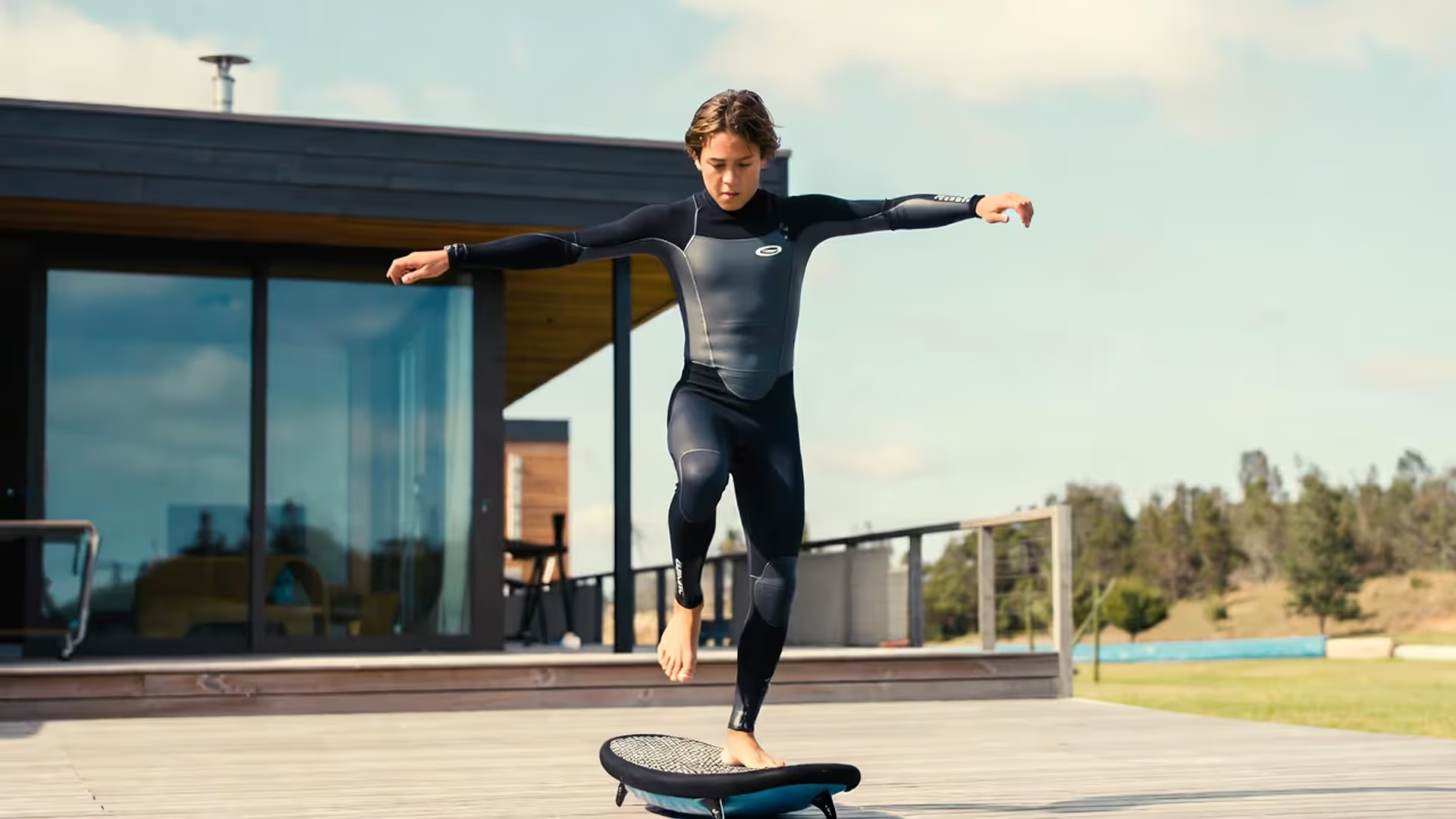
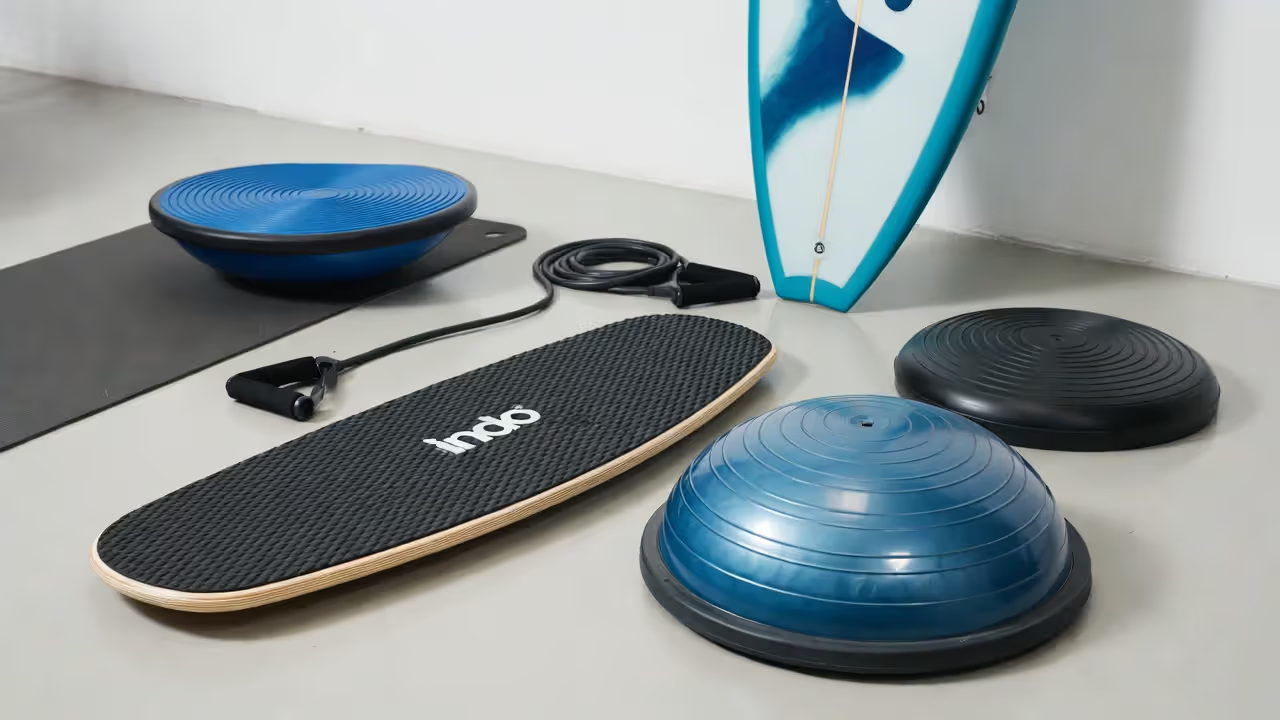
Indo Boards simulate surfboard instability through a deck balanced on a cylindrical roller. The side-to-side motion mimics rail-to-rail transitions, making them highly surf-specific. The learning curve is steep—expect to fall multiple times initially—but that difficulty builds real skill. Advanced users can perform squats, push-ups, and rotational exercises while maintaining balance.
Author: Brandon Hale;
Source: 2templatedesign.site
Balance discs are inflatable cushions that create subtle instability. They're gentler on beginners and work well for single-leg exercises. The instability is less dramatic than an Indo Board, which makes them better for building foundational strength before progressing to more challenging tools. They're also cheap ($15-30) and packable for travel.
Bosu balls feature a dome on one side and flat platform on the other, offering two difficulty levels. Dome-side-up creates moderate instability good for squats and lunges. Flip it over and the flat platform on the roller becomes significantly harder. They're versatile but less surf-specific than Indo Boards because the instability pattern doesn't match wave riding as closely.
Do You Actually Need a Surf-Specific Balance Board?
Maybe not. A balance board accelerates surf-specific movement patterns, but basic balance can improve through various tools. If you're a beginner surfer still working on pop-ups and riding whitewater straight to shore, a balance disc might serve you better initially. It's less intimidating and builds confidence.
Intermediate and advanced surfers benefit more from surf-specific tools. Once you're attempting turns and generating speed down the line, the Indo Board's movement pattern directly translates to the water. The investment ($150-200 for quality setups) pays off if you're serious about progression.
Budget matters too. A yoga mat and single-leg exercises cost nothing and still improve balance. You can build an effective routine without equipment, then add tools as your budget allows.
| Equipment Type | Price Range | Difficulty Level | Surf-Specific Benefits | Portability | Best For |
| Indo Board | $150-$250 | High | Excellent rail-to-rail simulation, rotational training, surf stance work | Low (bulky) | Intermediate to advanced surfers |
| Bosu Ball | $80-$130 | Medium | Good for squats and core work, two-sided versatility | Medium | All levels, cross-training athletes |
| Balance Disc | $15-$35 | Low to Medium | Single-leg stability, ankle strength, foundational work | High (deflates) | Beginners, travel training |
| Wobble Board | $25-$60 | Medium | 360-degree instability, ankle mobility, rehab applications | High | Beginners, injury prevention focus |
| Slackline | $40-$100 | Very High | Dynamic balance, focus training, full-body coordination | Medium | Advanced surfers, outdoor training |
8 Balance Exercises Every Surfer Should Master
These movements target the specific stability patterns surfing demands. Perform them with control—speed comes after you've mastered the form.
1. Single-Leg Romanian Deadlifts
Stand on one leg, slight bend in the knee. Hinge at the hips, extending your free leg behind you as your torso lowers toward parallel with the ground. Your body should form a straight line from head to extended heel. This exercise hammers posterior chain strength and single-leg stability crucial for bottom turns. Start with bodyweight for 3 sets of 8 reps per leg. Add dumbbells once you can complete reps without wobbling.
2. Balance Board Squats
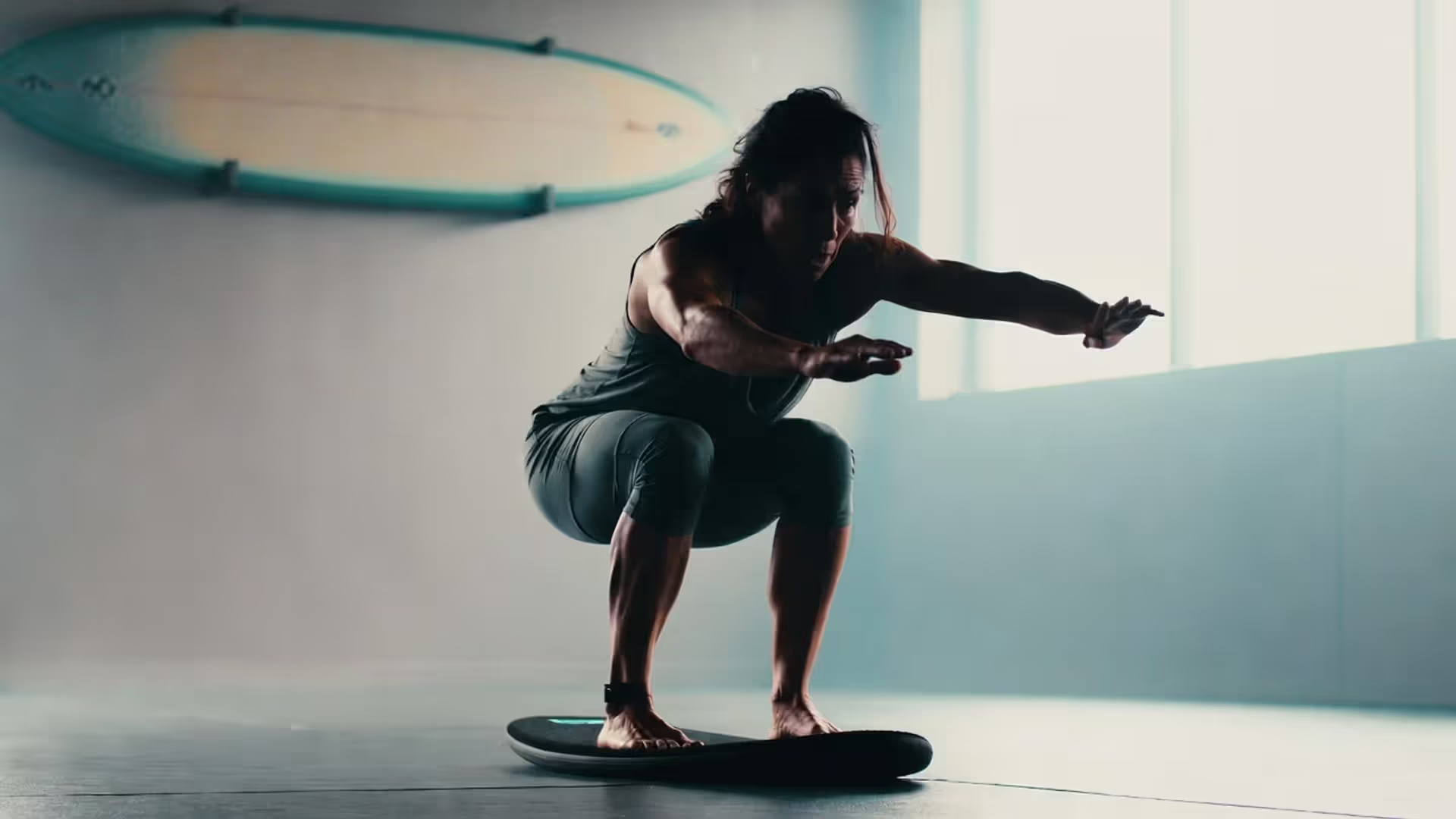
Position yourself on an Indo Board or Bosu ball in your surf stance (slightly wider than shoulder-width, knees tracking over toes). Perform controlled squats, maintaining board stability throughout the movement. Your weight should stay centered over the board—if you're shifting too far forward or back, the board will tip. This builds the leg strength and stability needed for compressed positions in the pocket. Work up to 3 sets of 12-15 reps.
3. Rotational Lunge with Reach
Step forward into a lunge position. As you descend, rotate your torso toward your front leg and reach both arms toward that foot. Return to center as you stand. This mimics the rotational component of cutbacks and off-the-tops. The reach challenges your balance at the bottom of the movement when you're most vulnerable. Complete 3 sets of 10 reps per side.
4. Plank to Side Plank Transitions
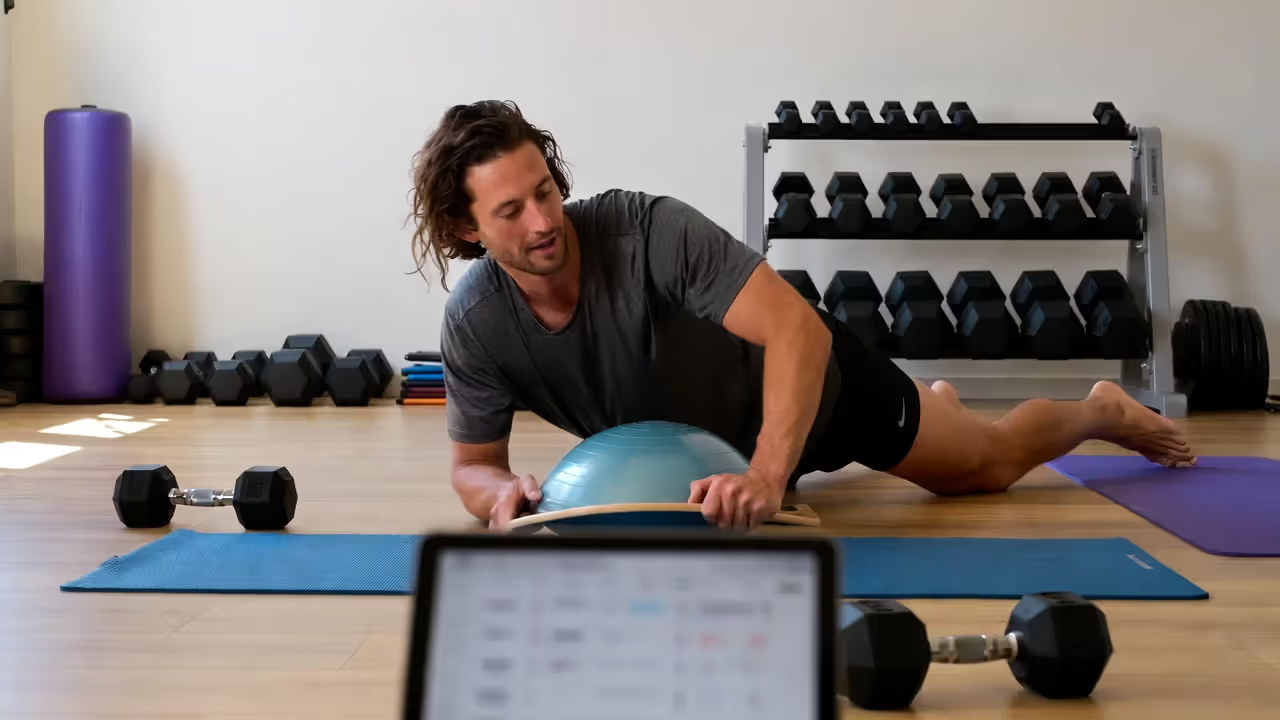
Start in a forearm plank. Rotate into a side plank, stacking your feet and extending your top arm toward the ceiling. Hold two seconds, return to center plank, then rotate to the other side. This dynamic core exercise trains the rotational stability you need when transitioning from frontside to backside movements. Aim for 3 sets of 8 transitions per side.
5. Balance Disc Pop-Ups
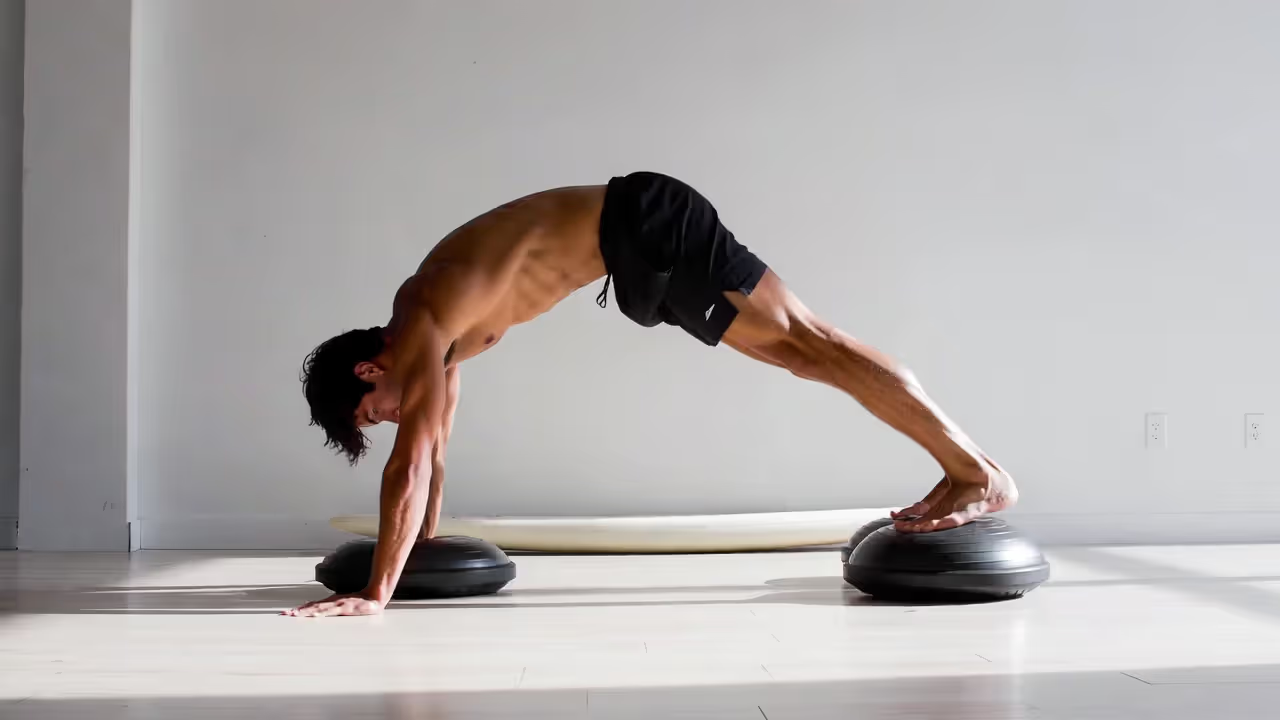
Place two balance discs on the ground approximately shoulder-width apart. Lie in a prone position with hands near your chest. Explosively push up and bring your feet to the discs in your surf stance. The unstable landing surface forces your stabilizer muscles to fire immediately. This directly improves your wave pop-up. Start with 3 sets of 5 reps, focusing on foot placement precision.
Author: Brandon Hale;
Source: 2templatedesign.site
6. Single-Leg Box Touch-Downs
Stand on one leg on a low box or step (6-12 inches high). Slowly lower your free leg to tap the ground beside the box, then return to standing without putting weight on the descending foot. This eccentrically loads your standing leg while challenging balance at the movement's deepest point. Builds the control needed for compressed turns. Complete 3 sets of 10 reps per leg.
7. Indo Board Rail-to-Rail Shifts
Stand on your Indo Board in surf stance. Shift your weight to engage one rail (tipping the board to one side) without touching the roller to the ground. Hold for two seconds, then smoothly transition to the opposite rail. This directly mimics the weight transfer in surfing turns. Start with 3 sets of 12 transitions (6 per side). Advanced variation: add upper body rotation as you shift.
8. Slackline Walking
If you have access to a slackline, walking its length builds full-body coordination and intense focus. Your core constantly fires to maintain stability, and the mental concentration required translates directly to reading waves under pressure. Start by simply standing on the line, then progress to taking steps. Even five minutes of slackline work thoroughly fatigues your stabilizers.
Building a Weekly Surf Stability Workout Routine
Consistency beats intensity for balance training. Your nervous system needs frequent stimulus to build efficient movement patterns, but it also needs recovery time to consolidate gains.
Beginner Routine (First 4-6 Weeks)
Train three days per week with at least one rest day between sessions. Each workout takes 20-25 minutes.
Monday: Single-leg Romanian deadlifts (3x8), balance disc pop-ups (3x5), plank to side plank transitions (3x6)
Wednesday: Rotational lunges with reach (3x8), single-leg box touch-downs (3x8), basic balance disc standing (3x30 seconds per leg)
Friday: All exercises from Monday and Wednesday, 2 sets each, performed as a circuit with 60 seconds rest between rounds
Intermediate Routine (After 6 Weeks of Consistent Training)
Author: Brandon Hale;
Source: 2templatedesign.site
Increase to four days per week, adding equipment-based exercises.
Monday: Balance board squats (3x12), Indo Board rail-to-rail shifts (3x10), single-leg Romanian deadlifts with dumbbells (3x10)
Tuesday: Rotational lunges with reach (3x12), plank to side plank transitions (3x10), balance disc pop-ups (4x6)
Thursday: Single-leg box touch-downs (3x12), Indo Board rail-to-rail with rotation (3x10), slackline work (10 minutes)
Saturday: Full circuit—one set of each exercise above, performed twice through with minimal rest
Advanced Routine (3+ Months of Training)
Five days per week with increased complexity and load.
Add resistance to bodyweight movements (weighted vest, dumbbells, resistance bands). Perform exercises with eyes closed to remove visual input and force proprioceptive reliance. Combine movements: balance board squats with medicine ball rotations, single-leg deadlifts on balance discs, Indo Board pop-ups into rail transitions.
The key is progressive overload. Once an exercise feels comfortable, make it harder by adding weight, closing your eyes, or combining it with another movement. Your body adapts to challenges, so you must continuously provide new ones.
Common Balance Training Mistakes That Won't Help Your Surfing
Author: Brandon Hale;
Source: 2templatedesign.site
Surfers often approach balance training with enthusiasm but poor strategy. These mistakes waste time without improving wave performance.
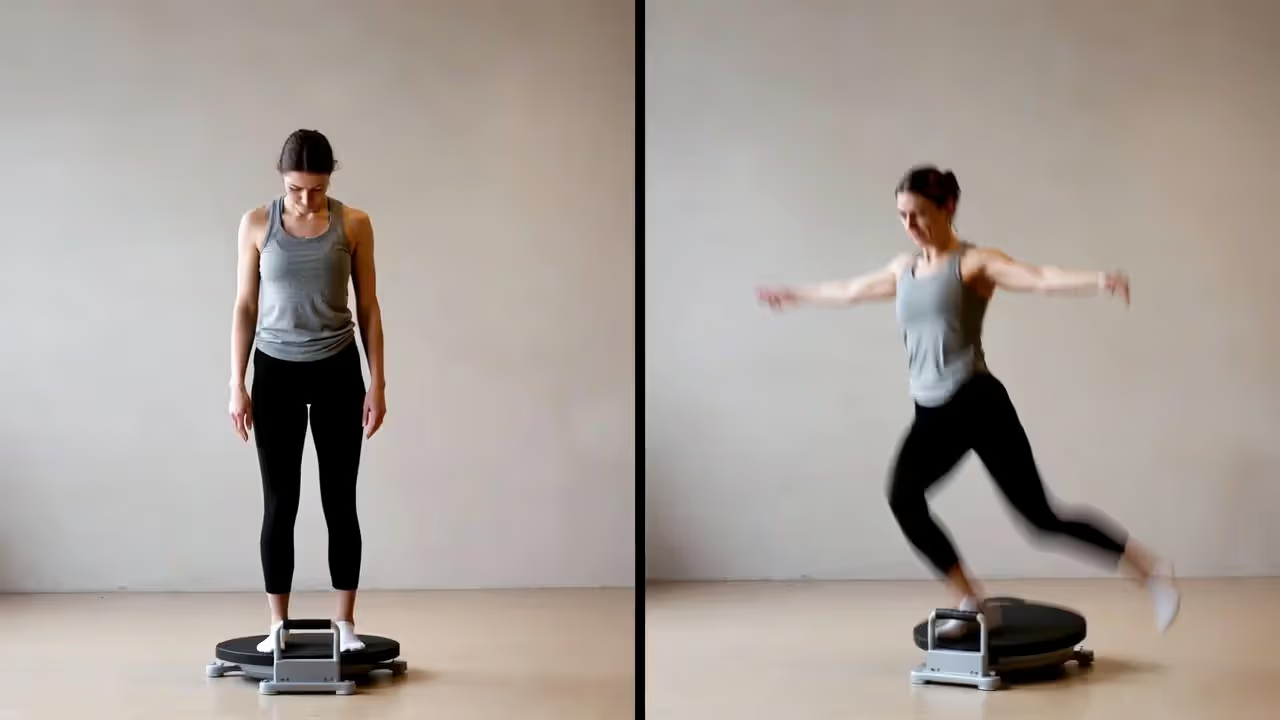
Training only static balance: Standing still on one leg builds foundational stability, but surfing requires dynamic balance—maintaining control while moving through space. If your routine consists only of holding positions, you're missing the movement component. Include transitions, rotations, and explosive movements that better match surfing's demands.
Neglecting ankle mobility: Stiff ankles limit your ability to absorb chop and adjust to changing wave faces. Many surfers focus on knee and hip strength while ignoring ankle range of motion. Add ankle circles, calf stretches, and wobble board work to maintain mobility in this crucial joint.
Overtraining without recovery: Balance training taxes your central nervous system more than traditional strength work. Training seven days per week doesn't allow neural adaptations to consolidate. You'll feel fatigued, your coordination will suffer, and you won't progress. Three to five focused sessions weekly with rest days between produces better results than daily unfocused work.
Using equipment incorrectly: An Indo Board isn't meant for static standing. If you're just balancing in place for minutes at a time, you're not maximizing the tool's potential. Perform dynamic movements—squats, rotations, pop-ups—that challenge your stability while building strength.
Ignoring core integration: Balance isn't just about legs and ankles. Your core transfers force between upper and lower body. Surfers who train balance exercises without core work develop isolated leg strength that doesn't integrate into full-body surfing movements. Every balance session should include rotational core work.
Rushing progression: Jumping to advanced exercises before mastering basics builds compensatory movement patterns. If you can't perform 10 solid single-leg Romanian deadlifts with good form, you're not ready for Indo Board variations. Master each progression level before advancing.
Most surfers think balance is something you either have or don't. That's completely wrong. Balance is a trainable skill, and land-based proprioceptive work can accelerate your progress faster than adding two extra surf sessions per week. I've seen intermediate surfers make bigger gains from three months of structured balance training than from a year of inconsistent wave time.
— Jake Cordero, Surf Performance Coach and former WSL competitor
How Long Until Balance Training Improves Your Surfing?
Neural adaptations happen faster than you might expect. Most surfers notice improved stability within 2-3 weeks of consistent training. Your first few waves after starting a balance program will feel different—you'll catch yourself before wiping out in situations that previously would have ended in the water.
Significant performance gains appear around the 6-8 week mark. This is when your improved proprioception translates to better wave positioning, smoother turns, and increased confidence in critical sections. You're not just more stable; you're using that stability to attempt maneuvers you previously avoided.
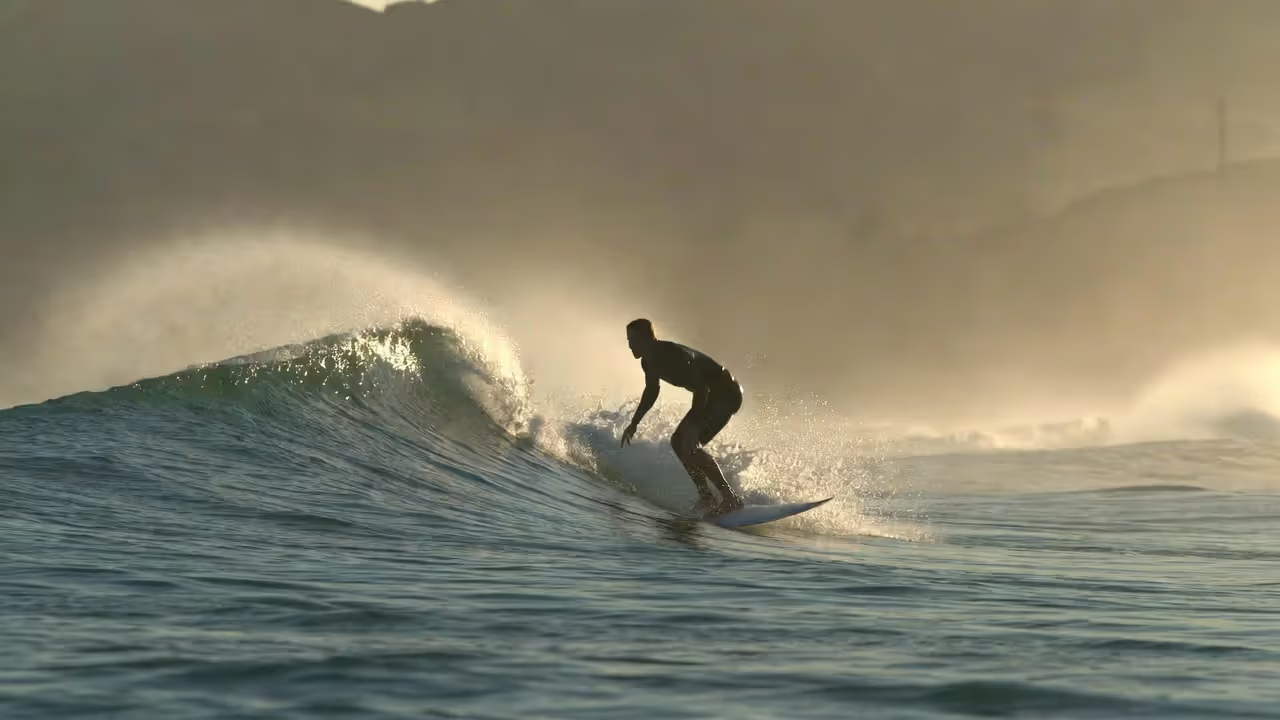
Long-term transformation takes 3-6 months. By this point, balance training has rewired your movement patterns. Your pop-up becomes automatic, your weight transfers feel natural, and you can focus on wave reading rather than just staying upright. The compounding effect is substantial—surfers who commit to six months of structured balance work typically jump up a full skill level.
Several factors affect your timeline:
Training frequency: Three focused sessions weekly produces steady gains. Two sessions maintains current ability. One session won't create meaningful adaptation. Five or more sessions risks overtraining.
Current surf level: Beginners see faster initial improvements because they're building foundational patterns. Advanced surfers progress more slowly because they're refining already-efficient movements.
Ocean time: Balance training enhances but doesn't replace wave time. Surfers who train balance AND surf regularly progress fastest. If you only train on land without applying skills in the water, transfer is limited.
Age and training history: Younger athletes and those with movement backgrounds (dance, gymnastics, martial arts) typically adapt faster. Older surfers or those new to physical training need more time but absolutely can improve—the timeline just extends.
Consistency trumps everything: Six weeks of three-times-weekly training beats six months of sporadic effort. Your nervous system responds to regular stimulus. Missing weeks breaks the adaptation cycle.
FAQ: Surf Balance and Coordination Training
Balance training won't make you a better surfer overnight, but it will accelerate your progression significantly over months of consistent work. The surfers who improve fastest treat land training as seriously as their ocean sessions. They understand that wave time is precious and limited—maximizing your physical readiness means every surf session becomes more productive.
Start simple. Pick three exercises from this article, perform them three times weekly for a month, and pay attention to how your next dozen surf sessions feel. You'll notice the difference in your stability, confidence, and ability to attempt maneuvers that previously felt out of reach. From there, build complexity gradually, add equipment as your budget allows, and trust the process. Your improved balance will show up in the water, wave after wave.