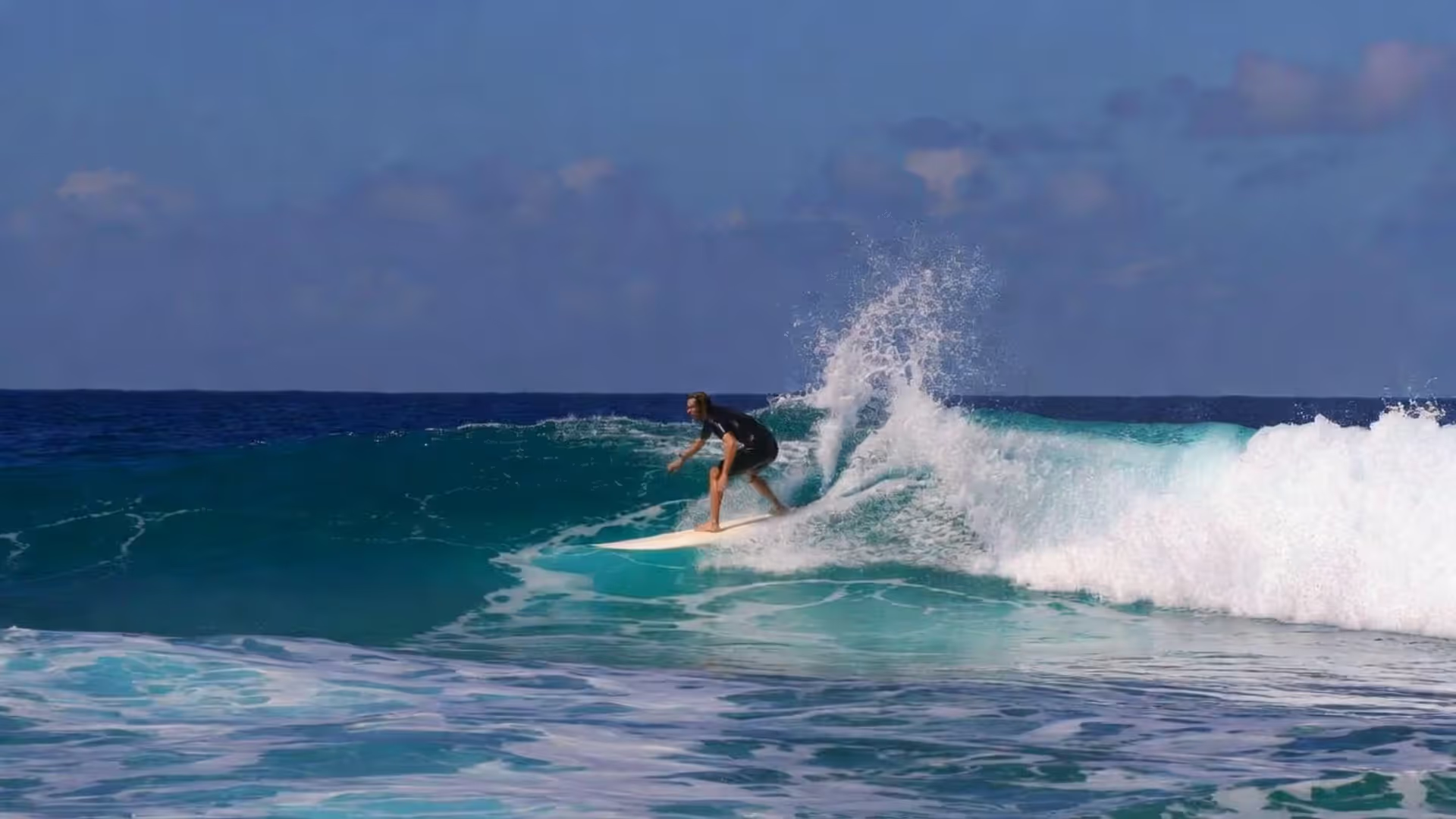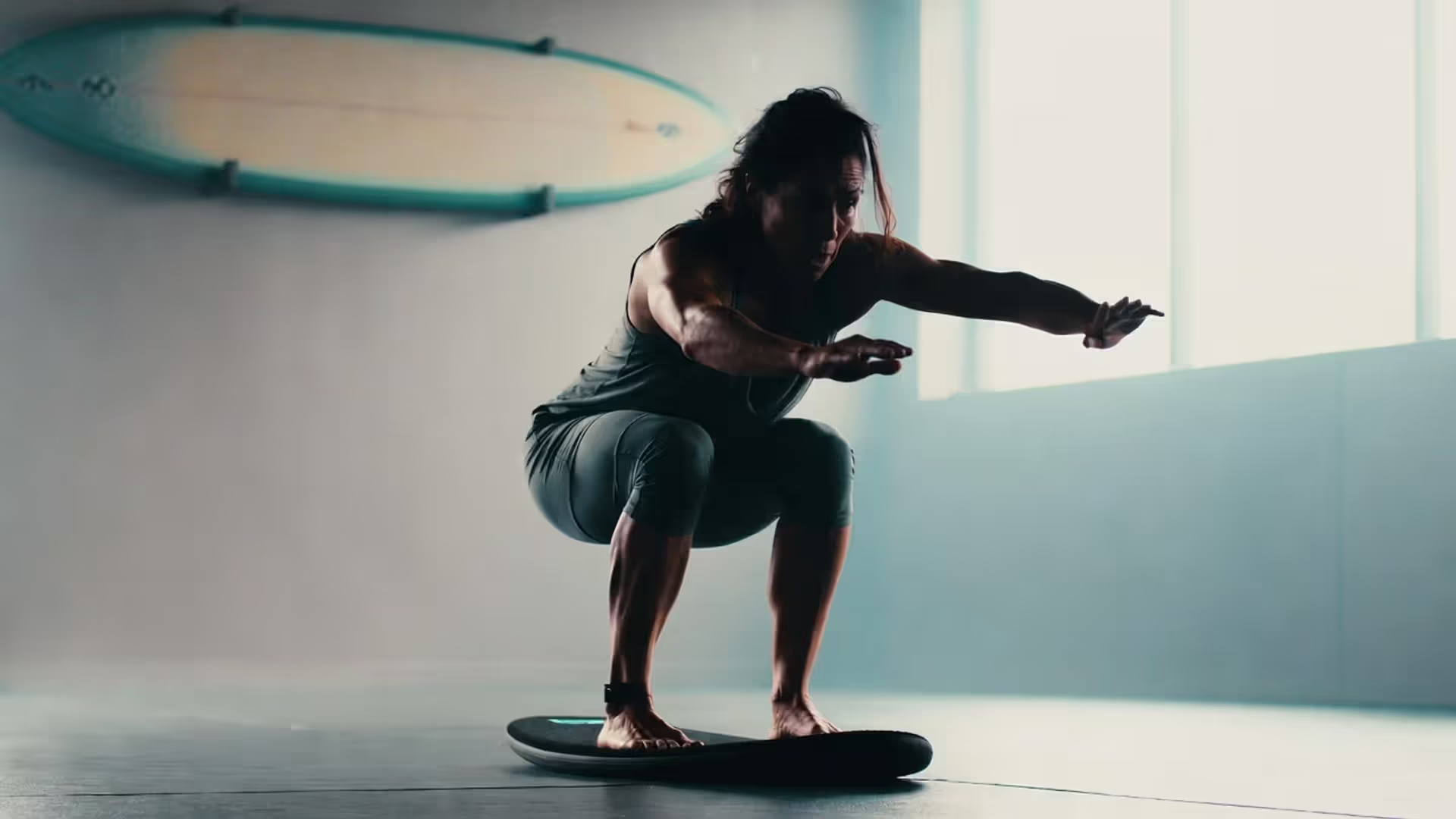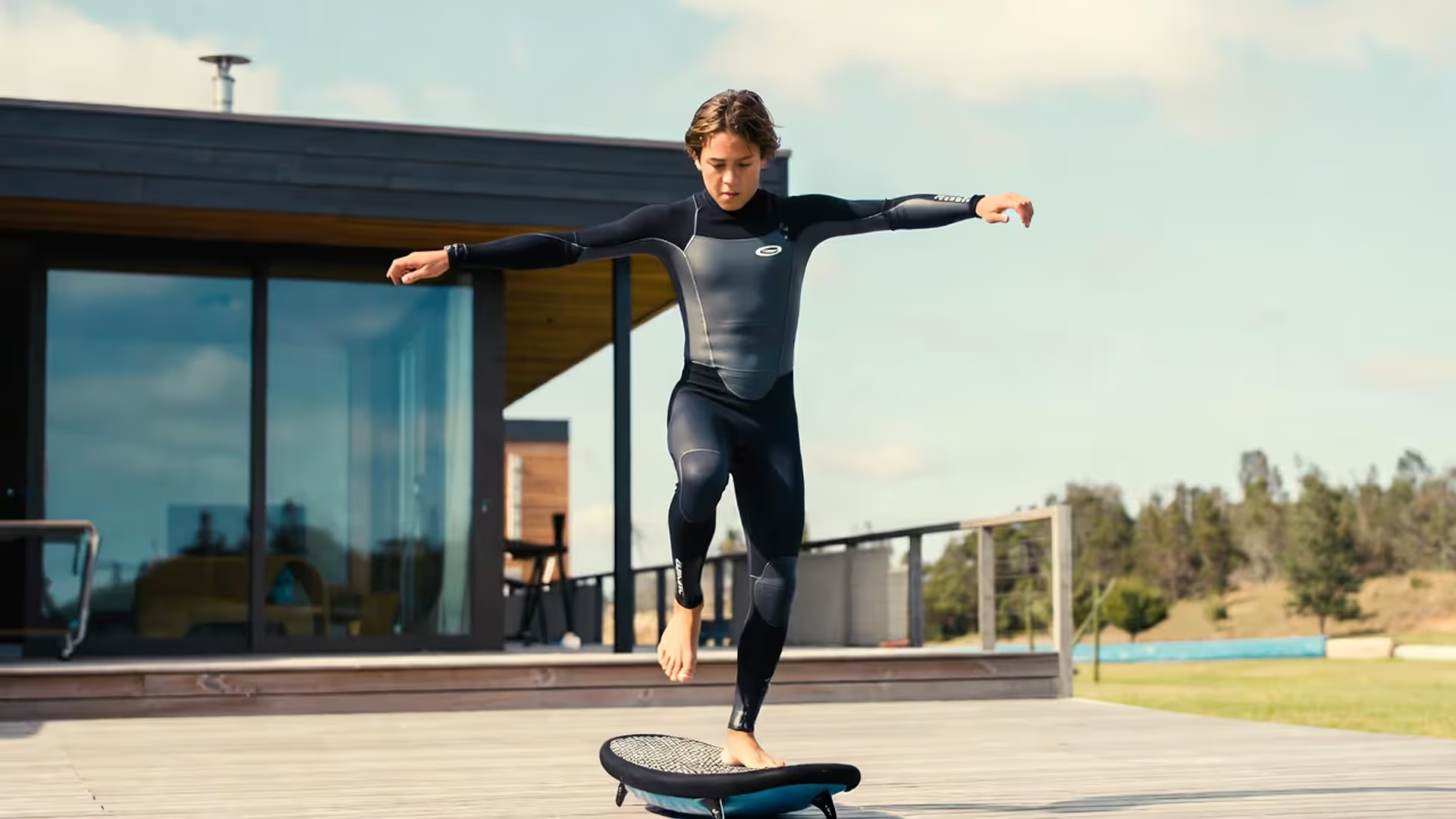
Land-based balance training sharpens real surf control
Surf Training Exercises: Build Strength and Balance for Better Wave Performance

Content
Most surfers spend hours analyzing wave conditions, waxing boards, and planning sessions—but neglect the physical preparation that separates average rides from breakthrough performances. Your body is the engine driving every paddle, pop-up, and carve. Without targeted conditioning, you're leaving performance on the table.
Building surf-specific fitness doesn't require expensive gym memberships or complicated equipment. What matters is consistency with movements that mirror the demands of actual surfing: explosive power, rotational strength, and rock-solid balance under unstable conditions.
Why Land-Based Training Matters for Surfers
Paddling out through a solid set demands cardiovascular endurance and shoulder stability. Popping up requires explosive hip mobility and core control. Riding a critical section tests your balance against constantly shifting forces. Each phase of surfing taxes your body differently, and dryland surf training addresses these specific demands when ocean conditions don't cooperate.
Consider the typical surfer who only trains in the water. They might surf twice weekly when conditions align—roughly 8 sessions monthly. Compare that to someone adding three 30-minute land sessions each week. That's 12 additional training opportunities where you control every variable: intensity, duration, and movement quality.
Injury prevention alone justifies the time investment. Rotator cuff strains from repetitive paddling, lower back pain from hyperextension during pop-ups, and ankle sprains from awkward landings plague surfers at every level. Targeted surf fitness drills strengthen vulnerable joints and build resilience in movement patterns you'll repeat thousands of times.
The performance gains show up quickly. Beginners notice easier pop-ups within two weeks. Intermediate surfers find they can hold challenging positions longer. Advanced riders generate more power through turns because their bodies can handle the rotational forces without compensation patterns.
Author: Tyson Caldwell;
Source: 2templatedesign.site
Essential Surf Balance Training Drills You Can Do Anywhere
Balance separates surfers who fight their boards from those who move with fluid control. On land, you can isolate and overload balance challenges beyond what's practical in the ocean.
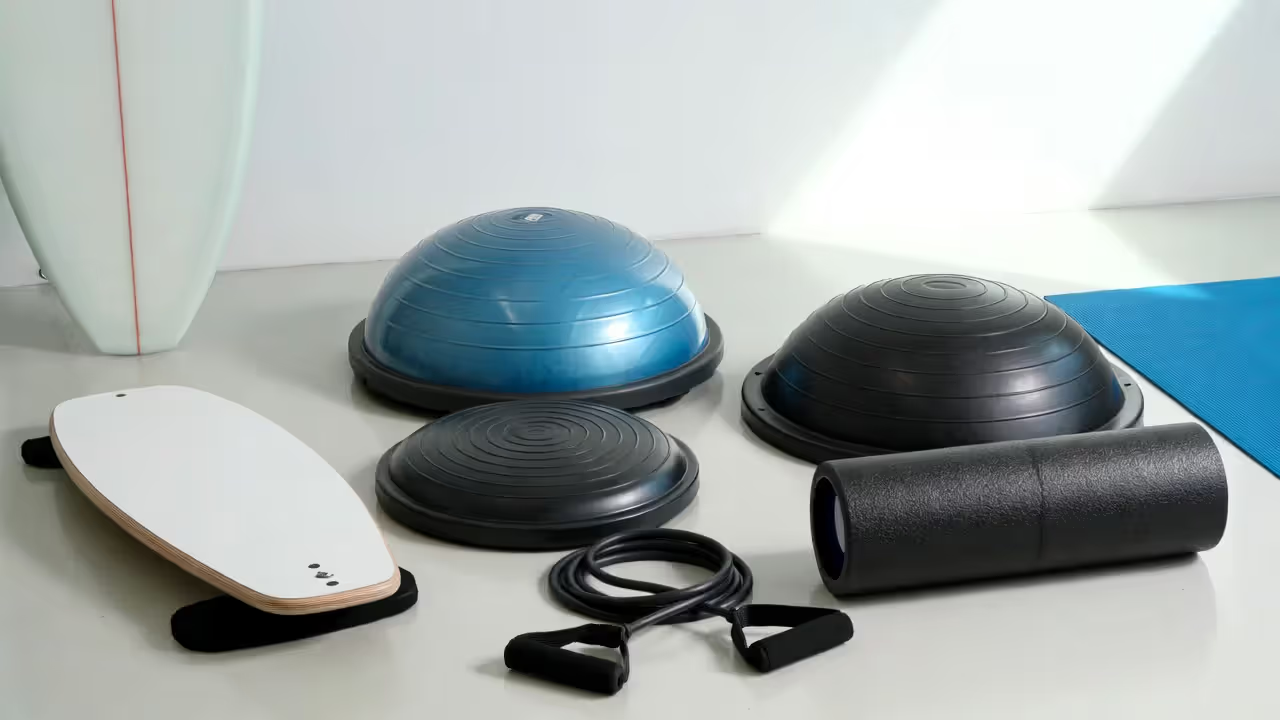
Indo Board and Balance Board Progressions
Balance boards simulate the unstable surface of a moving wave. Start with both feet planted, knees slightly bent, finding your center over the fulcrum. This basic stance builds ankle stability and teaches your nervous system to make constant micro-adjustments.
Once you can hold 60 seconds without the edges touching down, add complexity. Try closing your eyes for 10-second intervals—this removes visual feedback and forces your proprioceptive system to work harder. Shift into a surf stance with one foot forward, distributing weight 60/40 between your back and front foot.
Progress to dynamic movements: rotate your hips and shoulders in opposite directions as if setting up for a cutback. Practice quick weight transfers from heel to toe edge. Attempt shallow squats while maintaining board control. Each variation builds specific aspects of surf stability exercises that translate directly to wave riding.
A quality balance board costs $80-150, but a homemade version works fine initially. Place a 2x4 board across a section of PVC pipe on carpet. The instability is similar, though the movement pattern differs slightly.
Author: Tyson Caldwell;
Source: 2templatedesign.site
Single-Leg Stability Challenges
Your back foot drives most directional changes while surfing, often bearing your full weight during critical moments. Single-leg work builds the hip and ankle strength necessary for these positions.
Stand on one leg with a slight knee bend. Reach the opposite leg forward, tap the ground lightly, return to start. Repeat to the side, then behind you—this "airplane" pattern challenges stability in multiple planes. Perform 10 reps each direction, then switch legs.
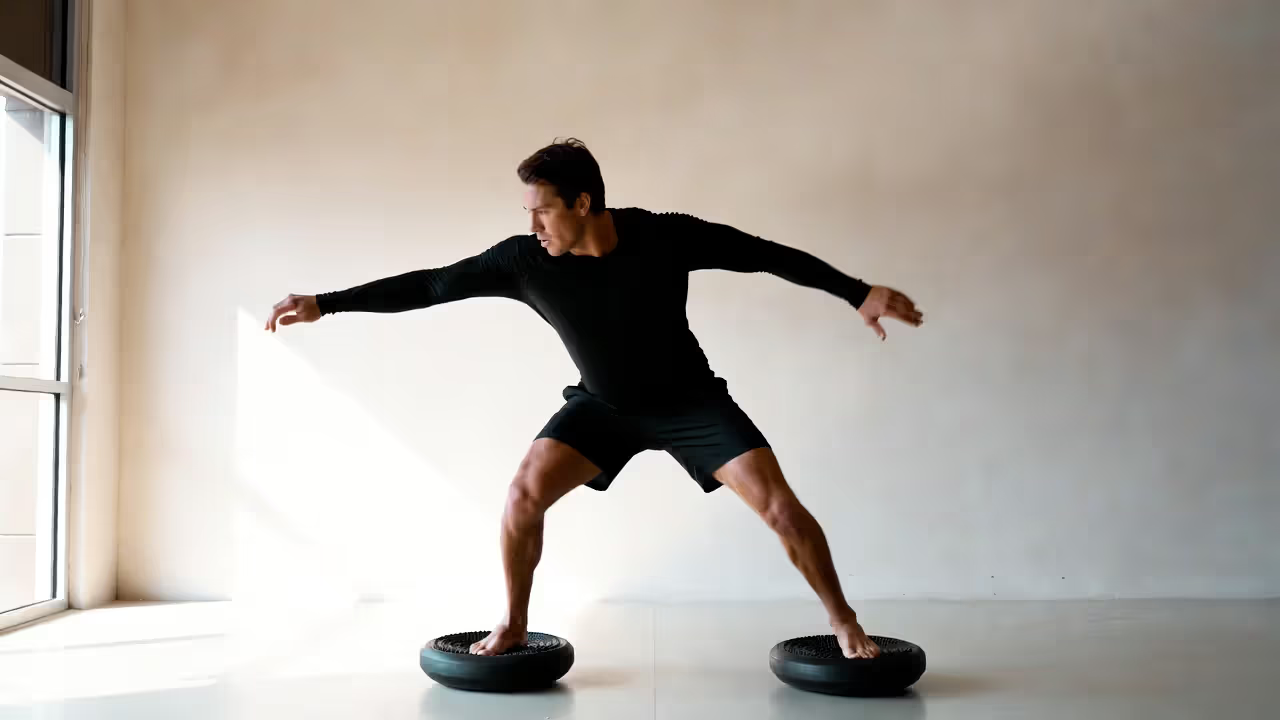
Make it harder by standing on a pillow or folded towel. The unstable surface forces your foot and ankle muscles to work overtime. Add upper body rotation: while balanced on your right leg, rotate your torso left and right as if looking over your shoulder for the next set.
For an advanced drill, try single-leg Romanian deadlifts. Hinge forward at the hip while extending one leg behind you, reaching toward the ground with the opposite hand. This builds posterior chain strength and balance simultaneously—crucial for maintaining control during bottom turns.
The Complete Surf Core Workout Routine
Core strength isn't about visible abs. It's about transmitting force between your upper and lower body while maintaining spinal stability under rotational stress. Every powerful turn starts with core engagement.
Rotational Power Exercises
Surfers need explosive rotation, not just static strength. Medicine ball slams develop this quality effectively. Stand with feet shoulder-width apart, raise a 10-15 pound ball overhead, then explosively slam it to the ground. Pick it up and repeat for 3 sets of 10 reps.
Russian twists build rotational endurance. Sit with knees bent, feet elevated slightly off the ground, leaning back 45 degrees. Hold a weight plate or dumbbell at chest level, rotate fully to one side, tap the weight on the ground, then rotate to the opposite side. That's one rep. Aim for 3 sets of 20 total reps.
Cable woodchops (or resistance band alternatives) perfectly mimic the rotation pattern of aggressive turns. Anchor a band at shoulder height, grab with both hands, and pull diagonally across your body from high to low, engaging your core to control the movement. The resistance should challenge you by rep 12-15. Complete 3 sets per side.
Anti-Rotation Holds for Stability
While explosive movements build power, anti-rotation exercises teach your core to resist unwanted movement—essential when wave forces try to knock you off balance.
Pallof presses are foundational. Stand perpendicular to an anchored resistance band at chest height. Grab the band with both hands at your sternum, then press straight forward until arms extend fully. The band pulls you toward the anchor point; your core fights to keep your torso square. Hold the extended position for 3 seconds, return to chest, repeat for 10 reps. Complete 3 sets per side.
Plank variations build anti-extension strength. A standard plank is fine, but side planks target the obliques more directly. Lie on your side, prop yourself up on one forearm, stack your feet, and lift your hips until your body forms a straight line. Hold 30-45 seconds per side, 3 sets.
For advanced training, try dead bugs. Lie on your back, arms extended toward the ceiling, knees bent at 90 degrees. Slowly lower your right arm overhead while extending your left leg, hovering just above the ground. Return to start, then switch sides. The challenge is maintaining a flat lower back throughout—no arching. Perform 3 sets of 10 reps per side.
This surf core workout routine takes 20-25 minutes. Run through it twice weekly, leaving at least two days between sessions for recovery.
The surfers who progress fastest aren't necessarily the ones spending the most time in the water. They're the ones who understand that functional land training directly translates to wave performance. A strong, balanced body makes every maneuver easier and safer.
— Mike Stewart
Surf Training for Beginners: Where to Start
New surfers often make training too complicated. You don't need a perfect program—you need consistent practice with fundamental movements.
Start with three sessions weekly: Monday, Wednesday, Friday works well. Each session lasts 20-30 minutes maximum. Focus on learning proper form rather than chasing fatigue.
Week one priorities: basic balance board work (5 minutes), bodyweight squats (3 sets of 10), standard planks (3 sets of 20 seconds), and bird-dogs (3 sets of 8 per side). Bird-dogs are performed on hands and knees—extend opposite arm and leg simultaneously, hold 2 seconds, return, switch sides. This builds core stability and coordination.
Week two adds single-leg balance work and introduces push-ups for paddling strength. If standard push-ups are difficult, perform them from your knees or against a countertop. Aim for 3 sets of as many reps as you can complete with good form.
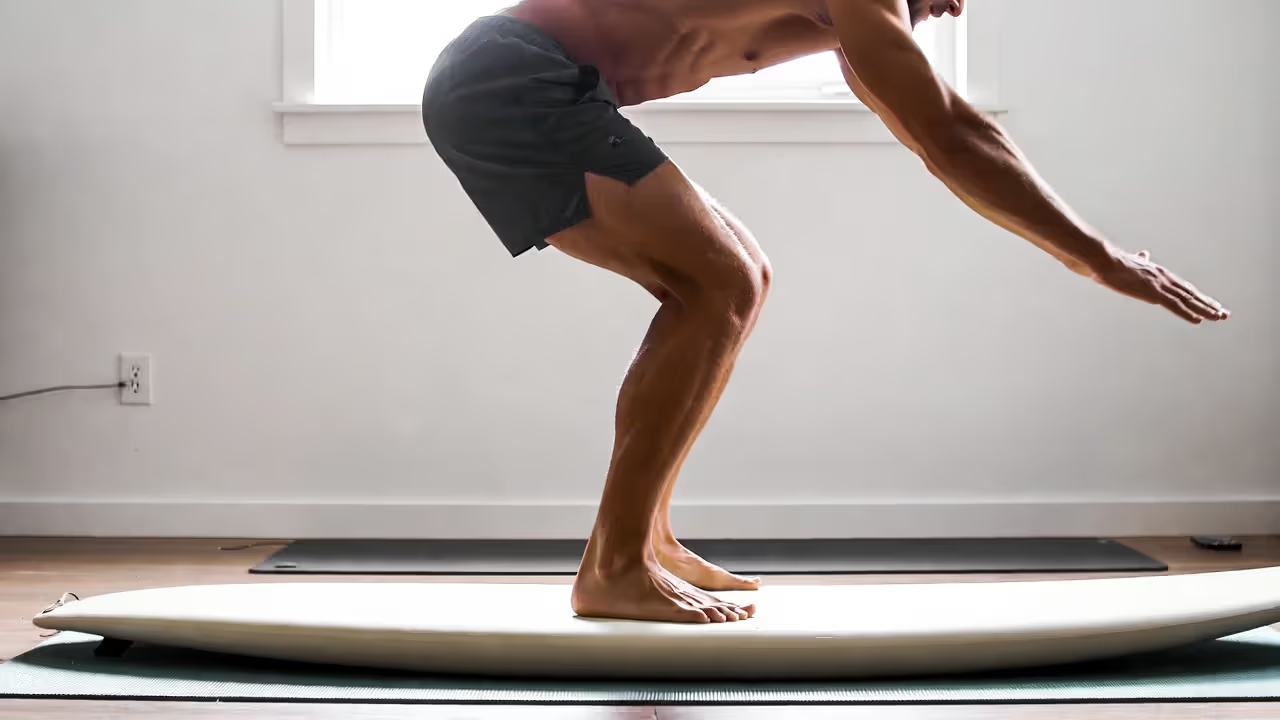
Week three incorporates rotational movements. Add Russian twists and practice pop-up drills: lie prone, place hands by your chest, explosively bring your feet under you into a surf stance. Reset and repeat. This groove the movement pattern you'll use hundreds of times per session.
Common mistakes derail beginners quickly. Training too hard too soon leads to soreness that prevents consistent practice. Skipping warm-ups increases injury risk—spend five minutes with arm circles, leg swings, and light movement before each session. Neglecting rest days prevents adaptation; your body improves during recovery, not during the workout itself.
Realistic expectations help maintain motivation. You won't transform in a week. But after four consistent weeks, you'll notice genuine differences: easier pop-ups, less fatigue during paddles, better balance on your board.
Building Your Weekly Dryland Surf Training Schedule
Effective programming balances different training stimuli while allowing adequate recovery. Beginners need simpler schedules; intermediate surfers can handle more volume and complexity.
Structure your week around three pillars: balance work, strength training, and mobility. Balance training can happen almost daily since it's less fatiguing. Strength sessions need recovery time—three weekly sessions maximum for beginners, up to four for intermediate athletes. Mobility work (stretching, foam rolling) fits anywhere but especially benefits you on rest days.
A practical beginner schedule: Monday (balance + core), Tuesday (rest or mobility), Wednesday (strength focus), Thursday (balance + light cardio), Friday (rest), Saturday (full training session), Sunday (active recovery or surf). This provides three quality training days with built-in recovery.
Intermediate surfers might train four days with higher intensity: Monday (heavy strength), Tuesday (balance + power), Wednesday (rest), Thursday (core + conditioning), Friday (rest), Saturday (balance + mobility), Sunday (surf or rest).
Periodization—varying your training focus over time—prevents plateaus. Spend 4-6 weeks building a foundation with moderate intensity and higher volume. Then shift to 2-3 weeks of higher intensity with reduced volume. Follow with a recovery week at 50% normal training load. This cycle allows progressive overload while managing fatigue.
Here's a sample progression comparing beginner and intermediate approaches:
| Week | Beginner Focus | Beginner Volume | Intermediate Focus | Intermediate Volume |
| 1 | Movement learning, form | 3 sessions, 20 min each | Strength foundation | 4 sessions, 35 min each |
| 2 | Basic balance + core | 3 sessions, 25 min each | Power development | 4 sessions, 40 min each |
| 3 | Add rotation work | 3 sessions, 25 min each | Complex movements | 4 sessions, 45 min each |
| 4 | Full integration | 3 sessions, 30 min each | Peak intensity week | 3 sessions, 40 min each |
Adjust based on how your body responds. Persistent soreness, declining performance, or motivation drops signal you're pushing too hard. Training should challenge you but not wreck you.
Author: Tyson Caldwell;
Source: 2templatedesign.site
Equipment Worth Investing In (and Free Alternatives)
Surf-specific training gear ranges from essential to gimmicky. Smart purchases accelerate progress; unnecessary items drain your wallet without delivering results.
Balance boards top the list for cost-effectiveness. A quality Indo Board or similar device ($100-150) provides years of daily use. The training stimulus directly transfers to surfing. Free alternative: practice single-leg balance work anywhere, anytime. Stand on one foot while brushing your teeth or waiting for coffee.
Resistance bands ($15-30 for a quality set) are incredibly versatile. They enable rotational exercises, shoulder strengthening for paddling, and assisted stretching. Free alternative: use your own bodyweight for exercises like push-ups, squats, and planks. You can't replicate every band exercise, but bodyweight movements build substantial strength.
A medicine ball ($30-50) adds variety to core training and power development. Slams, rotational throws, and weighted carries all benefit from one. Free alternative: fill an old backpack with books or water bottles. It's awkward, which actually increases core engagement.
Foam rollers ($20-40) aid recovery and maintain tissue quality. Rolling your lats, hip flexors, and IT bands takes 10 minutes and noticeably improves how you feel. Free alternative: a tennis ball or lacrosse ball provides targeted pressure for trigger points, though it won't cover large areas as efficiently.
Pull-up bars ($25-40 for doorway models) build pulling strength that directly improves paddling power. Free alternative: find a park with playground equipment or sturdy tree branches. Inverted rows under a table also work your back effectively.
Avoid expensive machines that promise surf-specific training. A $500 surf trainer might be fun, but it won't outperform consistent work with basics. Similarly, skip trendy gadgets marketed specifically to surfers unless they offer clear advantages over standard equipment.
The best investment is often the one you'll actually use. If a $100 balance board motivates daily practice, it's worth far more than a $30 item gathering dust in your closet.
FAQ: Common Questions About Surf Fitness Training
Surf training exercises bridge the gap between your current abilities and the performance you're chasing. Every pop-up, paddle, and turn demands specific physical qualities that land-based training develops more efficiently than water time alone.
Start simple: balance work, basic core exercises, and movement patterns that mirror surfing. Build consistency before adding complexity. Three 20-minute sessions weekly will produce noticeable improvements within a month.
The surfers who progress fastest treat their bodies as seriously as their equipment. Your board matters, but the engine driving it matters more. Invest the time now, and you'll spend less time fighting your limitations and more time riding the waves you've been watching from the shoulder.