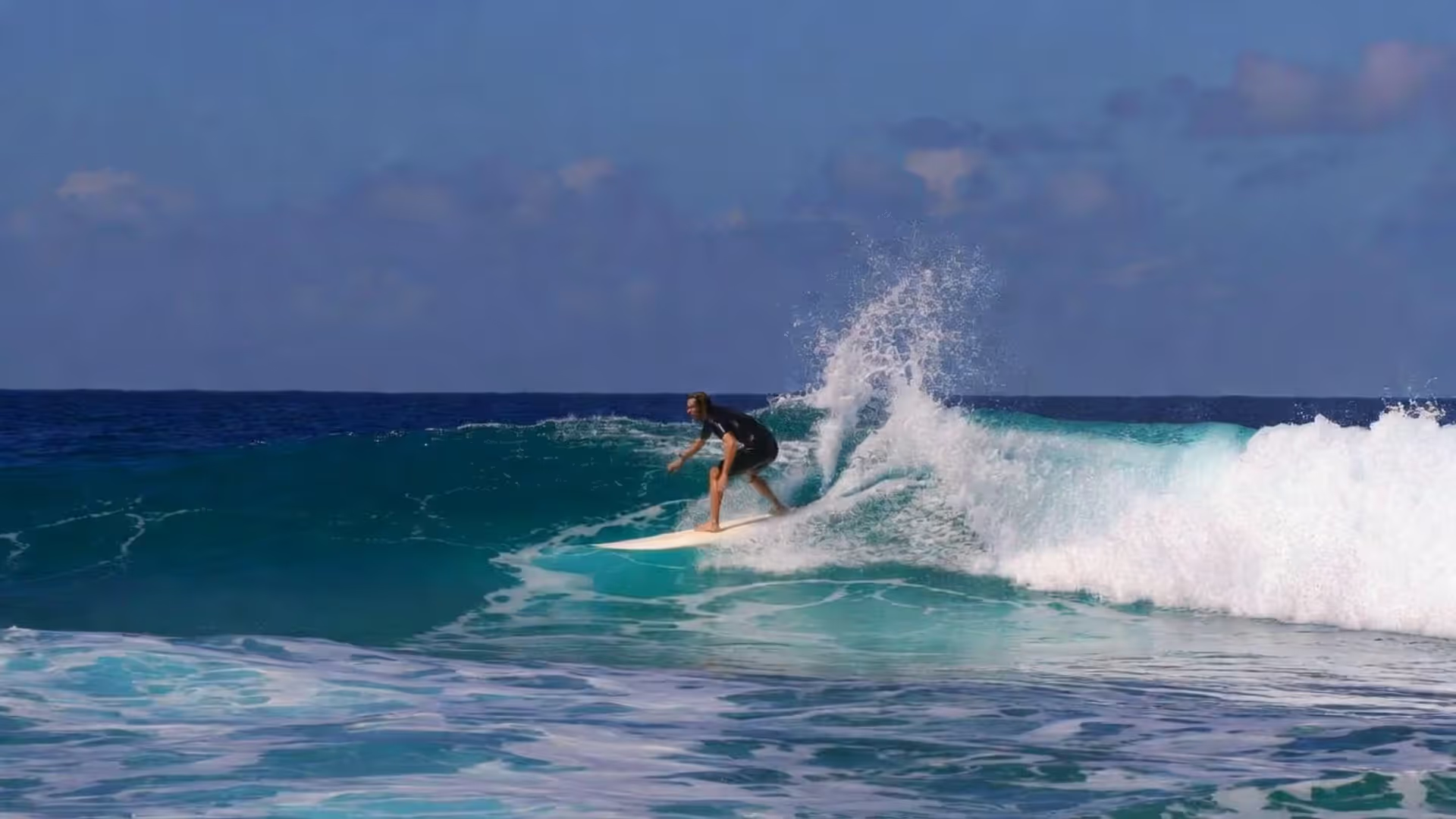
Paddling power starts with strong shoulders, lats, and core
Surfing Workout: Land-Based Training to Boost Your Wave Performance
Content
Most surfers obsess over tide charts and swell direction but ignore the one performance factor they actually control: their body's readiness. When you've driven two hours to find perfect waves, you don't want your shoulders giving out after 20 minutes or your legs shaking during critical bottom turns.
Here's what most people don't realize—surfing demands stranger physical qualities than almost any other sport. You need a marathon runner's endurance combined with a gymnast's explosive power, all while maintaining balance on a surface that never stops moving. Getting good in the water starts with getting prepared on land.
Why Land Training Matters for Surfers
Time yourself during your next session. You'll probably spend 50% paddling, another 40% sitting and waiting, maybe 5% actually riding, and the rest duck-diving or getting pummeled. That two-hour session? You're working continuously for over an hour, with sudden sprints when a set appears.
Paddling isn't just an arm workout—it lights up your shoulders, lats, upper back, and deep core muscles in ways that few gym exercises replicate. Then you spot your wave. Everything shifts. You sprint-paddle (pure anaerobic effort), execute a burpee on an unstable platform (the pop-up), then spend 10-30 seconds making split-second adjustments as the wave's face constantly changes shape beneath your feet.
Most surfers develop lopsided strength. Your pulling muscles get hammered, but your glutes, hamstrings, and rotational core often lag behind. You end up with surfer's shoulder (overuse injury), weak pop-ups, and limited turning power. I've watched intermediate surfers catch half the waves they should simply because they can't paddle fast enough when it counts.
The best surfers in the world don't just surf to get better. They train specifically for the physical demands of high-performance surfing. Your time in the gym directly translates to more waves caught and more maneuvers completed.
— Travis Mellem, Certified Surf Strength Coach
Smart surf fitness training fixes these gaps. You'll reach the lineup without burning your tank. You'll catch waves other people miss because you have one more sprint in your shoulders. You'll link turns instead of barely making sections. Three 45-minute sessions weekly can legitimately double your productive wave count per session.
Building Paddling Power and Upper Body Strength
Your paddle determines your session quality, period. Stronger, more efficient paddling means you position better, catch more waves, and have energy left when everyone else is cooked. But there's a catch—most upper body programs train the wrong energy system. You don't need three-rep-max bench press. You need muscles that keep firing for 90-second paddle battles.
Author: Brandon Hale;
Source: 2templatedesign.site
Essential Exercises for Paddle Endurance
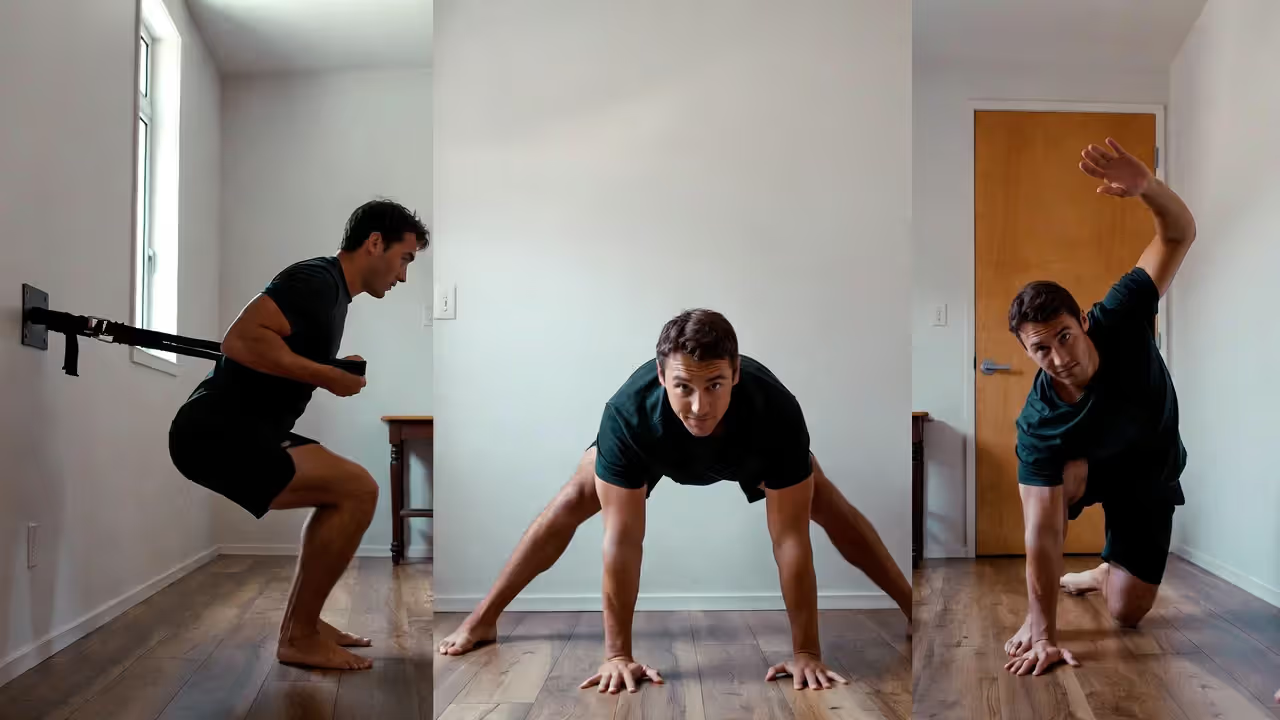
Resistance Band Pulls deliver results that swimming-pool-less surfers need. Loop a heavy band around something solid at chest height. Walk backward until you feel real tension. Now pull both hands from straight ahead to your hips, like you're taking a massive paddle stroke. Keep your elbows slightly bent. The magic number? Three sets of 20-25 reps, with the last five feeling legitimately difficult. This isn't about speed—make each rep take two full seconds.
Bent-Over Dumbbell Rows build your lats and mid-back, the engines behind sustained paddling. Hinge forward at your hips, weights hanging straight down. Pull one dumbbell to your ribcage, squeeze hard for a full second, then lower with control. That pause at the top matters more than you'd think—it trains the sustained contraction your muscles hold during long paddle-outs. Shoot for 12-15 reps where the last three require genuine effort.
Swimming beats everything else for paddle-specific conditioning, assuming you've got pool access. Twenty minutes of freestyle twice weekly transforms your paddle endurance. Swimmers who take up surfing often progress ridiculously fast in their first year—they already own the conditioning and feel for moving through water.
Push-Up Variations prepare your chest and triceps for the explosive phase of pop-ups. Regular push-ups work fine initially. Progress to archer push-ups (shift your weight heavily to one arm, then the other) or decline push-ups (feet elevated 12-18 inches). These variations create the uneven pressing forces you'll encounter popping up on a tilted, moving board.
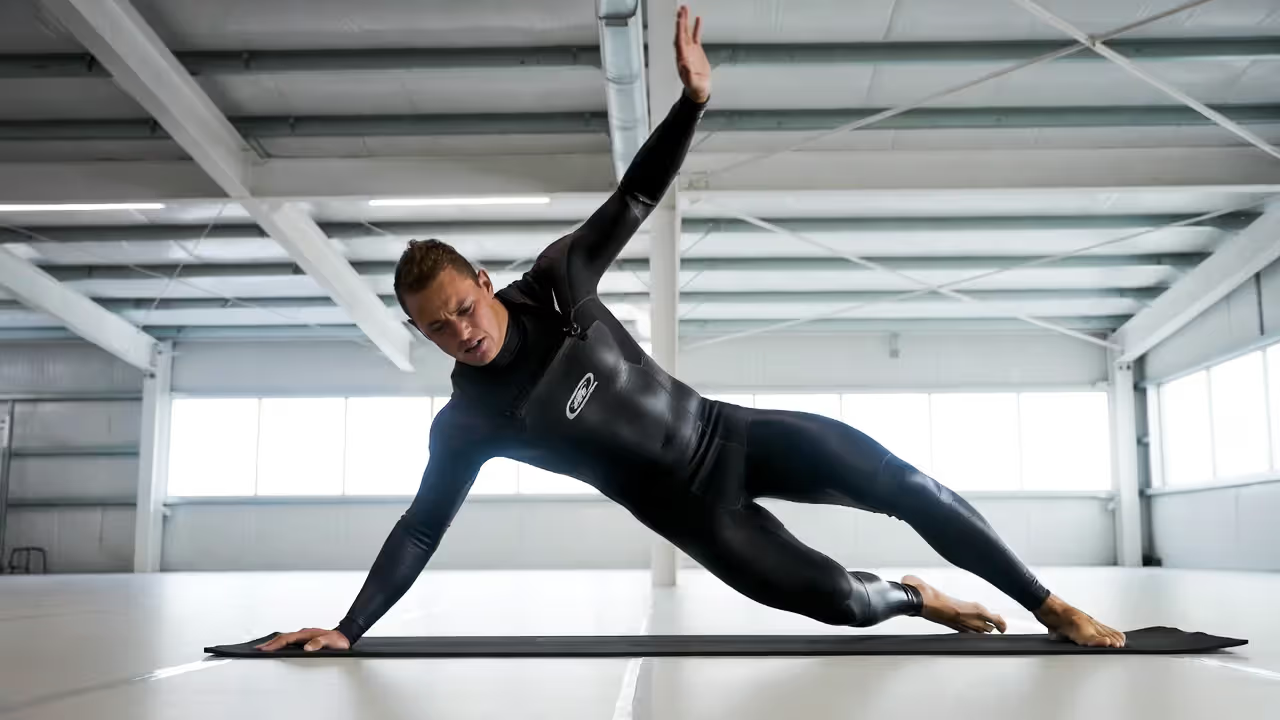
Here's something often missed: your core matters as much as your arms. During paddling, your torso stays rigid while your limbs move independently. Plank Holds lasting 45 seconds teach this pattern. Dead Bugs—lying on your back, extending opposite arm and leg while keeping your low back pressed down—train the same stability with movement. Add three sets of 10 slow reps per side.
Weekly Upper Body Training Schedule
Hit these surf strength exercises on Monday and Thursday. That 72-hour gap prevents overtraining while still building progressive strength. You want fresh shoulders, not fried ones.
Here's what works:
Start with five minutes getting loose—big arm circles, band pull-aparts (15 reps), some cat-cow stretches for your mid-back. Then:
- Resistance band pulls: 3 sets, 20 reps each
- Bent-over rows: 3 sets, 12 reps
- Push-up variation: 3 sets, 15 reps
- Plank holds: 3 sets, 45 seconds (rest 30 seconds between)
- Pull-ups or inverted rows: 3 sets, 8-10 reps
- Five-minute cool-down targeting shoulders and chest
Whole thing takes 35-40 minutes. You're building capacity, not chasing the pump. If your shoulders feel too wrecked to surf the next morning, cut your sets back by one across the board.
Developing Explosive Pop-Ups and Lower Body Strength
That moment when you transition from belly to feet decides everything. Slow, awkward pop-ups put you too far back on the board or already off-balance before you've completed one turn. Quick, controlled pop-ups position you perfectly to drive down the line.
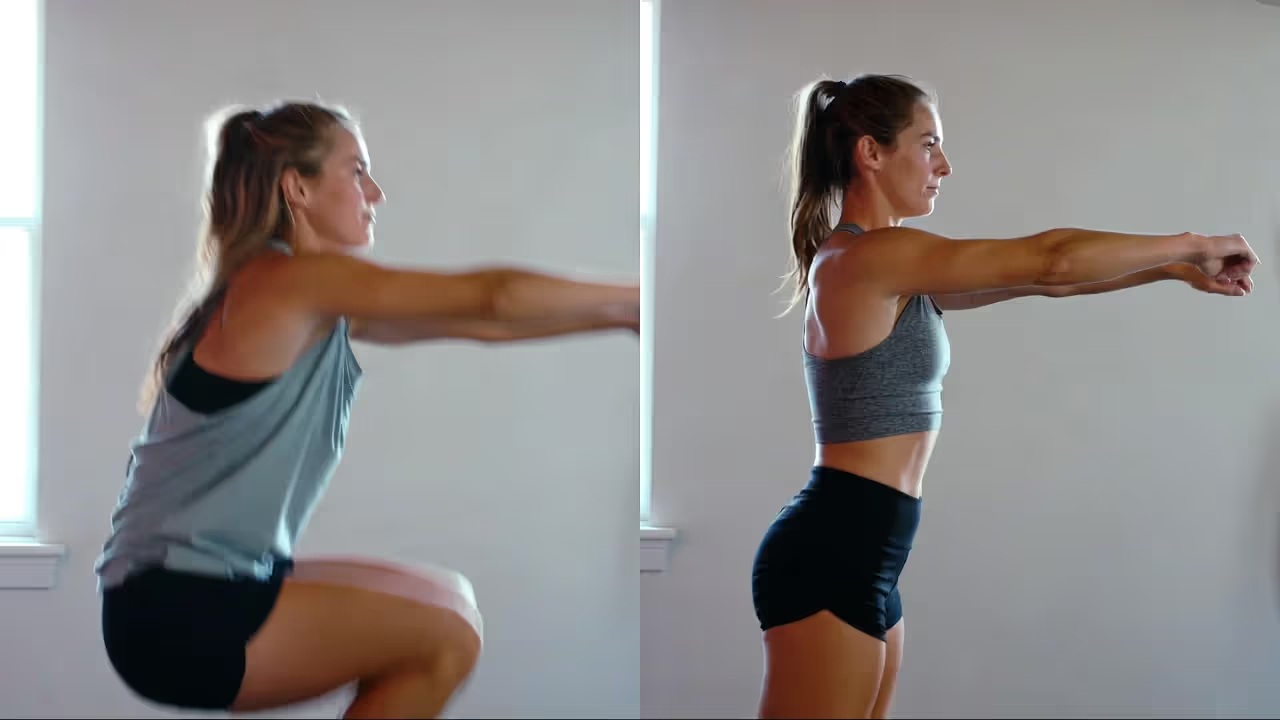
Jump Squats create the explosive leg drive that gets you to your feet fast. Squat until your thighs hit parallel, then explode upward, landing softly on your toes. Three sets of 10 reps. Once bodyweight feels easy (probably three weeks), grab 10-15 pound dumbbells. Don't go heavier than that—you're training speed, not max strength.
Author: Brandon Hale;
Source: 2templatedesign.site
Split-Stance Pop-Ups copy your actual movement pattern stroke-for-stroke. Start in a push-up position. Now explode your front foot forward between your hands while rotating your back foot perpendicular—exactly like you'd pop up on a board. Land in your surf stance. Switch lead legs each rep. Do 3 sets of 8 reps per side. If you only had time for one land drill, this would be it. You're literally practicing the exact neural pattern you'll use in the ocean.
Bulgarian Split Squats solve the single-leg strength problem that messes up most surfers' rail-to-rail transitions. Put your rear foot up on a bench or couch. Lower down until your front thigh reaches parallel. Drive through that front heel to stand back up. The balance demand alone mimics wave riding. Hit 3 sets of 10 reps per leg, twice weekly. Your stance stability will improve noticeably within three weeks.
Hip Flexor Stretches get ignored constantly, but tight hip flexors wreck your ability to get low for bottom turns or tube-riding. Kneel on your right knee (put a pad under it). Keep your torso upright and push your hips forward until you feel a pull down the front of your right hip. Hold one minute. Switch sides. Do this daily, especially if you work a desk job.
Lateral Lunges train the side-to-side strength that regular exercises miss entirely. Step wide to your right, shifting all your weight onto that leg while your left leg stays straight. Push back to center. Three sets of 12 per side strengthen the inner and outer thigh muscles that control rail transitions. Most surf strength exercises ignore this movement plane completely, which explains why so many surfers feel unstable switching edges.
Common mistake? Training legs too heavy, like you're prepping for powerlifting. You don't need to squat 300 pounds. You need explosive power you can repeat 30 times per session without your form falling apart. Keep weights moderate. Chase quality movement.
Balance and Stability Training Off the Board
Balance for surfing isn't about standing still like a yoga instructor. It's about making 50 micro-adjustments per second as the water's surface continuously shifts. Your nervous system needs to process feedback and correct your position faster than you can think about it. That automatic response system gets trained through specific surf balance exercises.
Single-Leg Romanian Deadlifts challenge your balance while building hamstrings and glutes. Stand on your right leg. Hinge at your hip, reaching your left hand toward your right foot while your left leg extends behind you. Your body forms a "T" shape. Return to standing. Move slowly—rushing defeats the purpose. Three sets of 10 per leg. Your foot and ankle work overtime to keep you stable, exactly like they will on a board.
Author: Brandon Hale;
Source: 2templatedesign.site
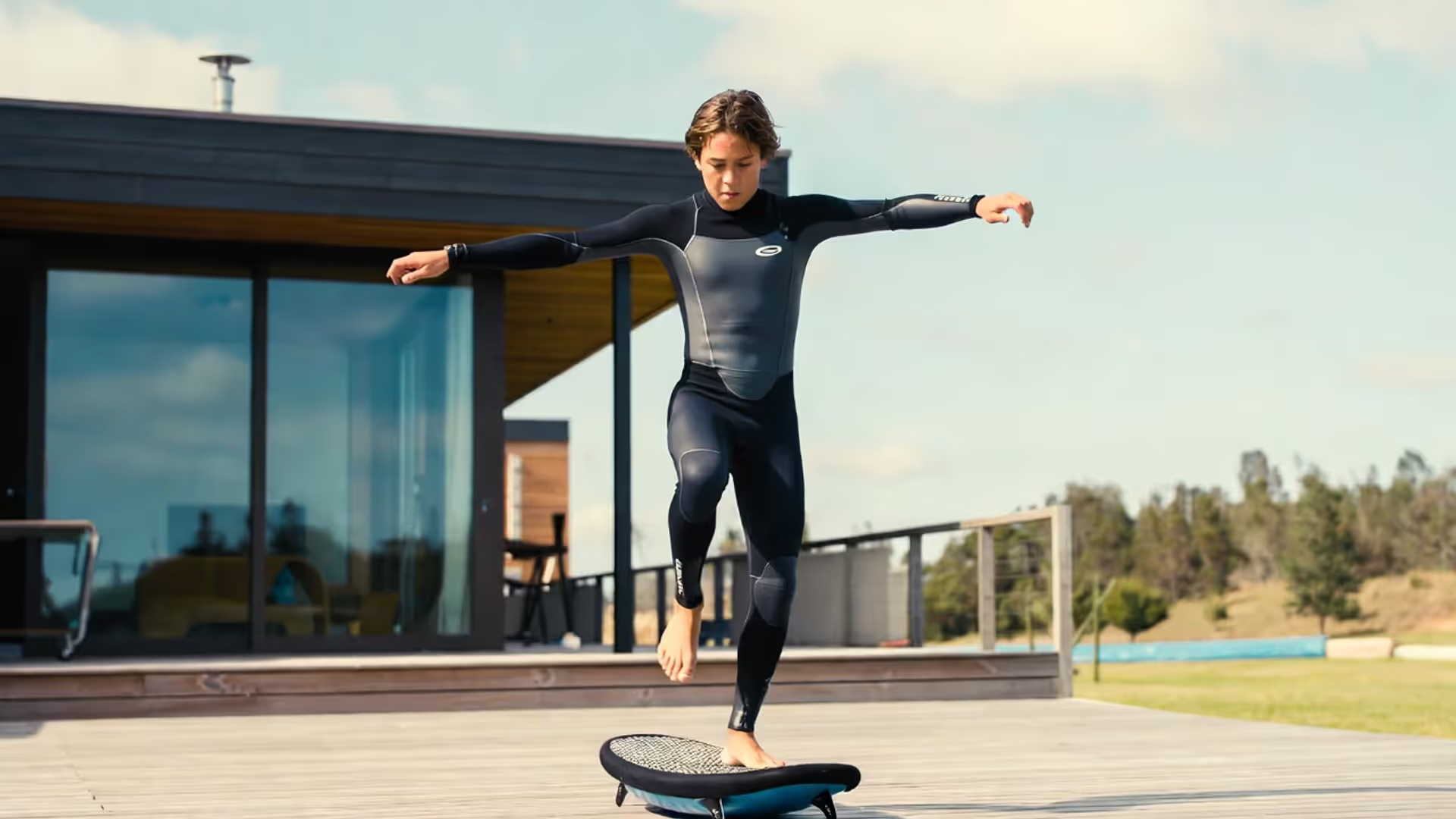
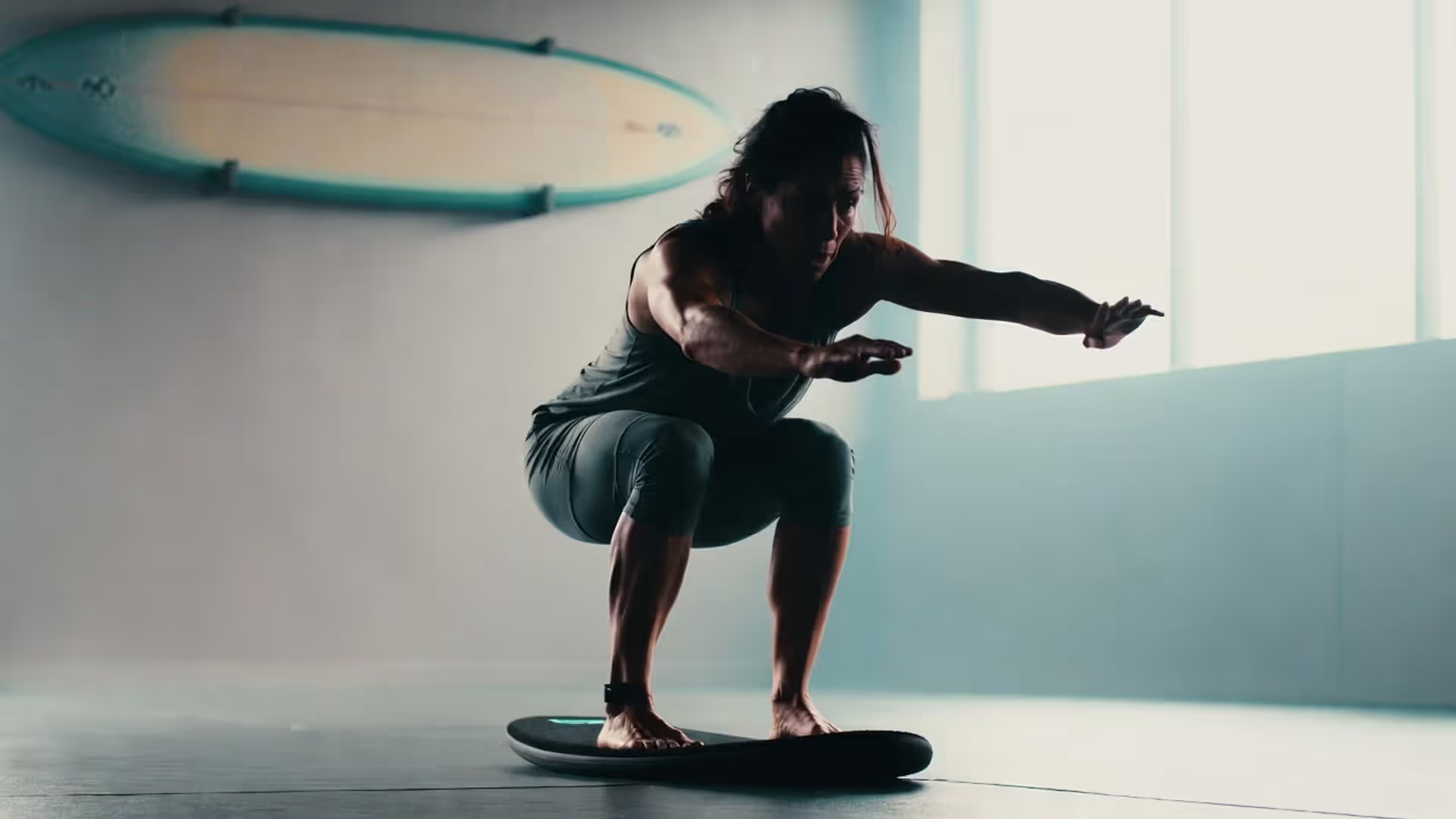
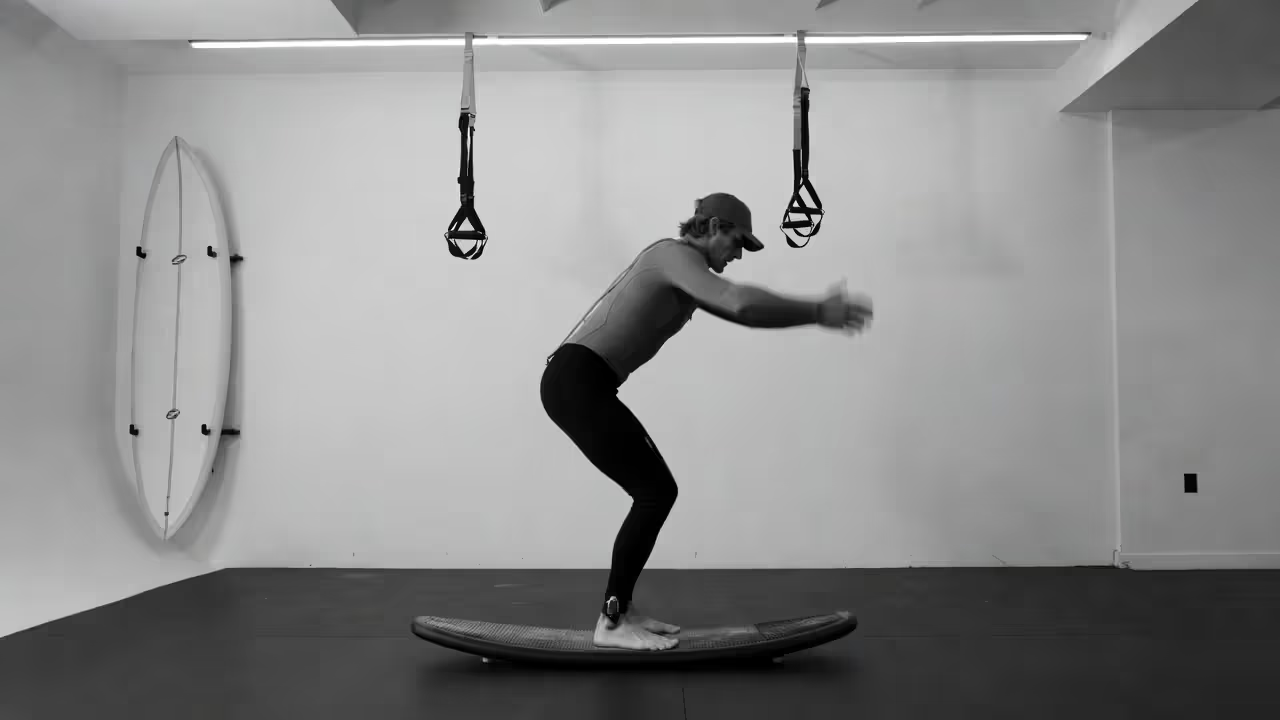
Balance Board Training gets you closest to actual wave riding without water. Start simple—just stand on it with both feet and maintain balance for 30 seconds. Progress to single-leg stands, then add squats or rotational movements. Ten focused minutes three times weekly produces real improvements in board control. Focused means no phone, no TV—just you concentrating on the feedback from your feet.
Bosu Ball Exercises provide different instability patterns worth training. Try push-ups with your hands on the dome side. Or stand on the flat platform side and perform squats. The wobbly surface forces dozens of small stabilizer muscles to fire constantly, which builds the resilience you need when waves don't behave.
Yoga for Surfers delivers both balance and mobility in one package. Warrior III pose builds single-leg stability while Tree pose challenges your ankle control. Pigeon pose opens chronically tight hips that limit your pop-up speed. Even 20 minutes twice weekly prevents the stiffness that accumulates from repeated duck-dives and paddle sessions. Kelly Slater famously credited yoga with extending his career into his 40s and beyond by maintaining the flexibility needed for late takeoffs.
Slackline Walking takes things to another level entirely. That constant wobble demands intense ankle strength and mental focus. Five minutes of slackline practice translates directly to better rail control and the ability to recover when a bump knocks you off-line mid-turn.
One key rule: never train balance when you're already exhausted. Your nervous system learns when it's fresh. Schedule these exercises to improve surfing at the start of workouts or as standalone 15-minute sessions.
Full-Body Surf Conditioning Circuits
Circuit-style training compresses strength, cardio, and mobility into efficient surf training routine formats. These workouts prepare you for surfing's actual mixed demands—sustained paddling followed by explosive movements, repeated with minimal recovery, just like a real session.
The format: complete each exercise for the prescribed reps, move immediately to the next, rest only after finishing the entire circuit, then repeat for the specified rounds.
Beginner Circuit (2-3 rounds, rest 90 seconds between): - Bodyweight squats: 15 reps - Standard push-ups: 10 reps
- Plank hold: 30 seconds - Jumping jacks: 20 reps - Bird dogs: 10 reps each side - Rest, then repeat
Intermediate Circuit (3-4 rounds, rest 60 seconds between): - Jump squats: 12 reps - Archer push-ups: 8 reps per side - Russian twists: 20 total - Burpees: 10 reps - Single-leg deadlifts: 8 reps per side
- Mountain climbers: 20 total - Rest, then repeat
Advanced Circuit (4-5 rounds, rest 45 seconds between): - Box jumps: 10 reps - Decline push-ups: 15 reps - Hanging knee raises: 12 reps - Split-stance pop-ups: 8 reps per side - Kettlebell swings: 15 reps - Plank to downward dog: 10 reps - Sprint in place: 30 seconds - Rest, then repeat
Surf Conditioning Circuits by Experience Level
| Experience Level | Weekly Frequency | Total Time | Rounds | Rest Between Rounds | Primary Goal |
| Beginner | 2 sessions | 20-25 minutes | 2-3 | 90 seconds | Learning movement patterns and building base endurance |
| Intermediate | 3 sessions | 30-35 minutes | 3-4 | 60 seconds | Developing power output and expanding work capacity |
| Advanced | 3-4 sessions | 35-45 minutes | 4-5 | 45 seconds | Achieving peak conditioning and sport-specific intensity |
Schedule these surf conditioning workout sessions on non-surf days, or at minimum four hours before you paddle out. The fatigue from high-intensity circuits temporarily dulls your coordination and slows reaction time—terrible timing for challenging surf.
Add one round every two weeks. That gradual progression builds capacity without overtraining. If you can't finish the prescribed rounds while maintaining good form, dial back rather than grinding through with sloppy technique. Bad reps teach bad patterns.
Common Training Mistakes That Hurt Your Surfing
Author: Brandon Hale;
Source: 2templatedesign.site
Overbuilding Upper Body While Ignoring Legs creates that classic V-shaped surfer look—huge shoulders, skinny legs. Except your legs provide the stable platform for every single maneuver. Your bottom turn power comes from legs, not arms. Dedicate at least 40% of training time below the waist.
Skipping Mobility Work gradually restricts your range of motion until your pop-up slows down and your turns feel limited. Five minutes of targeted stretching after every session prevents this chronic tightness. Prioritize hip flexors, chest and shoulder areas, and your mid-back region.
Training Too Close to Important Surf Sessions sabotages both activities. Hit legs hard on Wednesday, then try to surf on Thursday—you'll paddle out with pre-fatigued muscles and compromised coordination. Schedule intense sessions at least 48 hours before anticipated good swell.
Ignoring Rotational Power leaves serious performance untapped. Surfing requires constant rotation—bottom turns, cutbacks, snaps off the lip. Yet most programs focus exclusively on forward-and-back movements. Add medicine ball rotational throws, cable wood chops, and rotational lunges to build that turning power.
Neglecting Unilateral Training lets strength imbalances develop unchecked. Most surfers unconsciously favor one side, creating asymmetries that affect stance width and turning ability. Single-leg and single-arm exercises expose these imbalances before they cause injuries.
Using the Wrong Type of Cardio happens surprisingly often. Long, steady jogging at the same pace doesn't match surfing's interval demands. You need aerobic base AND anaerobic power. Mix 30-minute moderate sessions with interval training: sprint 30 seconds, recover 90 seconds, repeat 10 times. That's closer to actual surf demands.
The biggest mistake? Inconsistency. Training sporadically for two weeks before your surf trip doesn't build real fitness. Modest, consistent effort over three months produces dramatic improvements. Three 40-minute sessions per week beats cramming six hours into one weekend.
Frequently Asked Questions About Surf Fitness
Building Your Wave-Ready Body
The surfers who progress fastest share one common habit: they take physical preparation as seriously as wax choice or board selection. Smart land-based training doesn't just add strength—it extends session length, reduces injury frequency, and unlocks maneuvers that previously seemed impossible.
Begin with two or three focused sessions weekly. Emphasize movements that transfer directly: paddle-specific pulling patterns, explosive pop-up variations, and balance work challenging your proprioception. Layer in full-body conditioning circuits for building the work capacity needed during marathon sessions in demanding conditions.
Track practical metrics instead of gym numbers. Count waves caught per session. Notice how quickly you recover between rides. Ask yourself whether your final wave feels as controlled as your first. These real-world indicators reveal training effectiveness better than any bench press PR.
Consistency beats intensity every time. Moderate training sustained across months builds durable fitness carrying through entire seasons. The ocean rewards preparation. When the swell finally arrives, your body will be ready to maximize every wave.